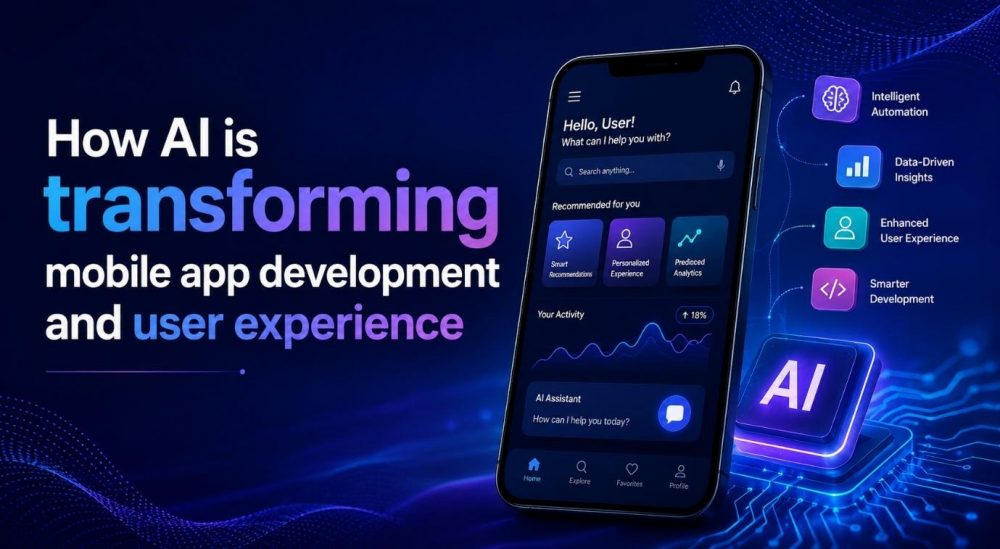
The Emergence of AI in Mobile Application Development
Artificial Intelligence (AI) has emerged as one of the biggest revolutions that have transformed the field of mobile applications. With AI technology, applications have been redesigned and enhanced to meet modern demands and improve the overall experience for the users. Smartphone continues to be the first point of interaction for individuals and businesses alike; hence, AI technology continues to play a vital role in designing and developing applications.
The increasing need for intelligent digital interaction has seen the adoption of AI in different sectors such as healthcare, finance, retail, education, entertainment, and e-commerce. Additionally, modern application users look forward to navigating easily through an app, receiving instant recommendation and engaging in a conversation with voice-based interaction. In addition, AI technology helps in making the development process of applications more efficient.
Moreover, AI is helping firms acquire more knowledge about consumer preferences by means of analysis and tracking. These insights allow companies to enhance their interactions with consumers. As AI technologies are evolving, there has been a shift in mobile application development from static to intelligent environments, where they are able to learn and adapt according to personal situations.
Development of Mobile Apps with AI Technologies: Increased Automation and Engineering Efficiency
The advent of AI technology has greatly impacted mobile app developers in the development of their apps due to automation, efficiency, and faster development. Initially, app development involved much manual coding, testing, and even maintenance processes. By incorporating AI technology in the process, developers are now able to automate the whole process, making software delivery much easier and faster. There are some platforms that have been designed to assist in the writing and debugging of code while at the same time suggesting better programming approaches.
Another area where AI has had immense influence is in the development process through automation of testing and quality assurance process. Moreover, machine learning algorithms can be used to predict bugs, performance problems, and possible system breakdowns before any actual deployment is made to ensure increased app reliability and user satisfaction.
Additionally, the adoption of AI-based low-code/no-code app development tools is revolutionizing the process of building apps since these tools make it possible for companies as well as non-technical users to create applications with little need for any coding skills. The use of DevOps tools based on artificial intelligence is helping in improving the processes involved in deployment, infrastructure, and optimization. Moreover, generative AI tools are also being used in creating user interfaces, creating content, and automating workflows.
Enhancing User Experience Through Personalization and Intelligent Interactions
The impact of AI in enhancing mobile user experience comes from the ability to create very personalized and intelligent interactions. Today’s mobile applications use artificial intelligence algorithms to gain insight into user behavior, preferences, browsing history, and interaction patterns so as to offer more personalized interactions. Through machine learning techniques, the personalization capabilities can be used to offer more tailored recommendations on goods and services and features and increase engagement and retention levels.
Another key benefit of AI in mobile user experience comes from the creation of conversational interfaces such as chatbots and virtual assistants. Using such systems will offer the ability to provide real-time support to customers, answering their inquiries as well as automating communication process. Furthermore, voice recognition technology which provides greater accessibility to users by allowing navigation through voice commands. Facial recognition technology provides another form of enhancing security and ease of use.
In addition, AI helps in implementing predictive analysis through which applications can predict what the user will require and notify the user about the same. The interface can adapt itself according to user actions or according to environmental conditions. Moreover, AI has made the application of translation and accessibility features into mobile applications easier thus making mobile applications more user-friendly for people around the globe including those who have disabilities.
The Role of AI in Advanced Mobile App Features and Emerging Technologies
AI is crucial in helping to achieve advanced functionalities of the mobile app and facilitate integration with various emerging technologies. The key one among all is the integration of AI with augmented reality (AR), virtual reality (VR), and Internet of Things (IoT). It will revolutionize the industry with advanced and smart experience offered by mobile applications. With the help of AI, AR applications can detect objects, faces, and texts around us to give an interactive visual experience to the users.
Another popular application of AI in mobile apps includes computer vision technology. Computer vision can be used for identifying objects, faces, texts, and hand gestures captured through camera lenses of smartphones. It is mainly employed in facial recognition applications, medical diagnosis applications, image editing applications, and smart retail applications. Additionally, mobile cybersecurity applications can also benefit from AI by detecting any anomaly and behavior analysis.
Moreover, edge AI and on-device machine learning are helping enhance the efficiency of apps as the process involves carrying out all the activities locally on a smartphone rather than depending only on cloud technology. This helps to minimize latency issues and provides enhanced security and privacy for users. In addition to this, AI can play a significant role in developing applications that have the ability to understand user emotions and surroundings.
Conclusion
The role of AI in the creation of apps and UX design cannot be overstated, since it brings passive apps to a new level – it makes them intelligent. Using automation of the development process, QA improvement and building low-code platforms, AI makes app development more effective. Moreover, AI can build personalized apps, predict the next steps of the user and provide intelligence in interaction via means like chatbots and voice assistants. Additionally, the range of applications of AI technologies in app development becomes even broader with such advances as computer vision, AR, VR and edge computing.