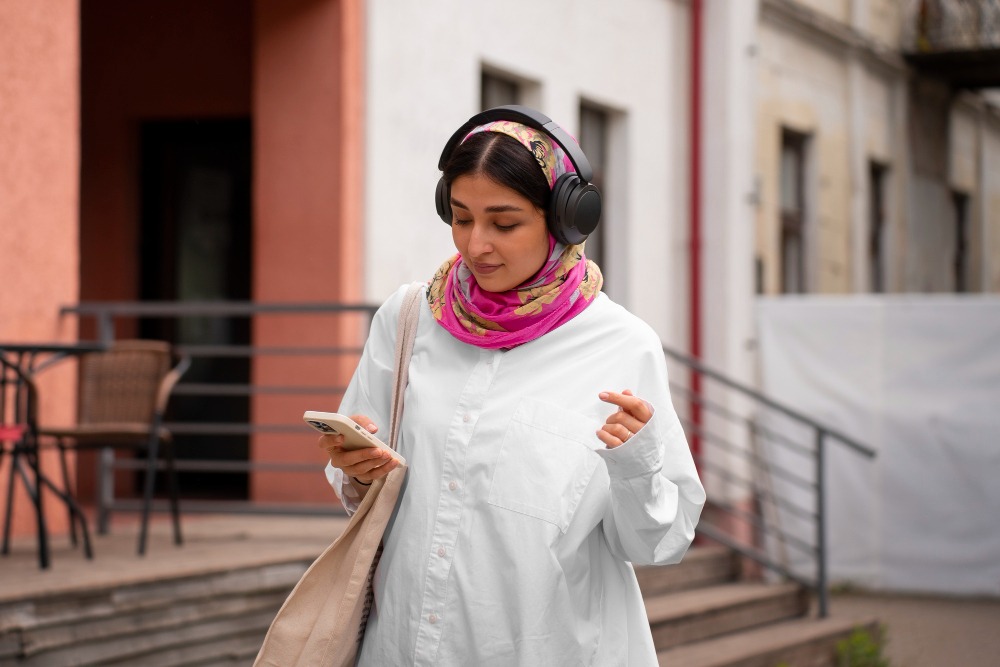
Not long ago, planning Umrah from the UK meant a lot of paperwork. You visited a travel agent in person, posted your passport off for a visa and waited weeks to hear back. Once you got to Makkah, you asked strangers for directions and hoped you were in the right place.
Today, a lot of that happens on your phone. Saudi Arabia has moved much of the Umrah process online, and travel firms now run most of their booking through websites and apps. For pilgrims, this makes the trip easier. For anyone interested in tech, it is a good example of how apps can change a very old and very busy service.
This article looks at the main ways apps now help UK pilgrims, what still needs a human touch, and why the last ten days of Ramadan show both the good and the limits of going digital.
The big change: Nusuk
The biggest shift has come from Nusuk, the official Saudi platform for pilgrims. It runs as an app and a website, and it is now at the centre of Umrah.
Pilgrims use Nusuk to:
• Get an Umrah permit. A visa lets you into Saudi Arabia, but you also need a permit to do Umrah. This is issued through Nusuk, and it is free.
• Book a time in the Rawdah. The Rawdah is a special area in the Prophet’s Mosque in Madinah. It gets very busy, so visits are booked in time slots on the app.
• Find information. The app has guides, maps and details about the holy sites.
For a country that welcomes millions of pilgrims a year, this kind of booking system helps control crowds and cut queues. It works a bit like booking a time slot at a busy museum, only on a much bigger scale.
There is one simple lesson here for app makers. Nusuk works because it solves a real problem: too many people wanting the same thing at the same time. The best apps are built around a clear need like this, not just a nice design.
Visas online
Getting a visa used to be one of the slowest parts of planning Umrah. Now, people with a British passport can apply for a Saudi visa online, and many get an answer within a few days. Travel agents can also apply for an Umrah visa on behalf of their customers through their own systems.
This change has made short-notice trips much easier. It has also made it easier for families to plan, as they no longer need to post passports away for weeks.
Booking the trip: apps versus packages
With so much now online, some pilgrims book every part of their trip themselves. They use a flight app for the flights, a hotel app for the rooms in Makkah and Madinah, and the official Haramain train website or app to book seats on the high-speed train between the two cities.
This can work well for people who travel a lot and are happy to manage several bookings at once. But it has some downsides:
- Lots of separate bookings. If one flight changes, you may need to change hotels, trains and transfers by hand.
- No single person to call. If something goes wrong at 2am in Makkah, you are on your own.
- Less protection. If you book flights and hotels separately, you may not get the same financial protection as a package.
- Hotel blocks. In busy times, many hotels near the Grand Mosque sell their rooms in blocks to travel agents. These rooms may not show on normal hotel apps at all.
This is why most people from the UK still book a package. Many all-inclusive Umrah packages cover your flights, visa, hotels in both cities and transfers in one booking. The travel agent uses their own systems in the background, but you deal with one company and one price.
It is a good example of where tech works best. The apps do the heavy lifting behind the scenes. The customer gets a simple service with a real person to call if they need help.
What to check when booking online
Whether you book through an app or with an agent’s website, check a few things before you pay:
- ATOL protection. Any UK package with flights should be ATOL protected. You can check the ATOL number on the Civil Aviation Authority website.
- Hotel names. A good booking site will tell you the exact hotel names before you pay, not just “a hotel near the Haram”.
- Walking time. Look for the walking time to the mosque in minutes. You may make the walk five times a day.
- Contact details. Make sure there is a UK phone number and an office address, not just a chat box.
- Reviews. Look for reviews on well-known review sites, not just on the company’s own page.
Apps that help during the trip
Once you arrive, your phone becomes one of the most useful things you carry. Here are the kinds of apps most pilgrims use:
• Nusuk. For your permit and Rawdah booking. Keep your phone charged, as you may need to show your permit.
• Prayer times. Many pilgrims use a prayer times app, though in Makkah and Madinah you will hear the call to prayer from almost anywhere.
• Maps. Download offline maps of Makkah and Madinah before you fly. Mobile data can be slow in very big crowds.
• Messaging. Group chats help families keep in touch if they get split up. It is still wise to agree a meeting point, such as a numbered gate.
• Quran and dua apps. These let you read the Quran and follow duas without carrying books.
• eSIMs. Many travellers now buy an eSIM before they fly, so they have data as soon as they land.
A small power bank is one of the most useful things you can pack. With so much now on your phone, a flat battery can cause real problems.
The hardest test: the last ten days of Ramadan
If you want to see the limits of any booking system, look at the last ten days of Ramadan. This is the busiest time of the whole year in Makkah.
Muslims believe that Laylatul Qadr, the Night of Power, falls on one of the odd nights in the last ten days of Ramadan. Worship on that night is better than a thousand months. Because of this, huge numbers of people want to be in Makkah at the same time.
Ramadan 2027 is expected to start on the evening of Sunday 7 February. The last ten nights are expected to run from around the end of February to early March, with Eid al-Fitr around 10 March. The exact dates depend on the moon.
For this period:
- Places sell out first. Hotels near the Grand Mosque are often fully booked many months ahead.
- Prices are at their highest. This is the most expensive part of the year to go.
- Flights home after Eid fill up fast.
- The mosque is extremely busy. The main areas can be full hours before Isha.
Here, the speed of booking matters more than anything. People who book early get the hotels closest to the mosque. People who leave it late may not find a room at all. If you want to go next year, it is worth looking at last 10 days Ramadan Umrah packages now. Fixed-date trips for this period are usually the first to sell out, and booking early also gives you more months to pay.
Even with all the apps in the world, some things still need people. Group leaders who know the crowds, staff who can rebook a missed transfer, and someone in the UK to call if a flight is cancelled all make a real difference at this time of year.
What app makers can learn from Umrah
For founders and app makers, Umrah is a useful case study. It shows that:
- Clear needs win. Permits, time slots and visas solved real problems, so people used them.
- Trust matters. When people spend a lot of money on a once-in-a-lifetime trip, they want proof that a business is real and protected.
- Tech should hide the hard parts. The best travel services use lots of systems in the background but keep things simple for the customer.
- People still matter. At the busiest times, a phone number and a real person can be worth more than any feature.
Final word
Apps have made Umrah from the UK simpler than ever. Visas are online, permits are on your phone, and you can book a whole trip in an evening. But the basics have not changed. Book early, check that your trip is ATOL protected, know your hotel and walking time, and make sure there is someone you can call. Then you can put your phone away and focus on what you went there for: your worship.