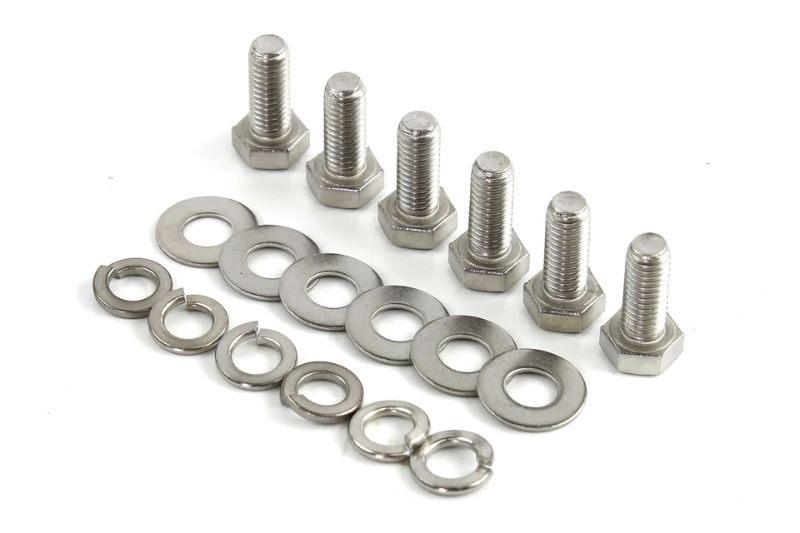
In an industry where corrosion, high pressure and chemical exposure are a daily reality, the choice of fastening material makes more difference than most people realise. The oil and gas, chemical processing, and marine operations sectors routinely encounter chloride-laden environments, aggressive media, and mechanical loads, environments where standard Stainless Steel fasteners cannot reliably perform over time. These conditions require fasteners that won’t need to be replaced or fail often. Marine Grade Duplex Fasteners are among the most commonly used options in these demanding environments. Duplex 2205 fasteners are made from a dual-phase Stainless Steel, which has both austenitic and ferritic structures. This gives much higher strength and corrosion resistance than most conventional grades. They are used in flanged joints, structural assemblies, pressure systems and pipelines across a number of industries.
What Are Duplex 2205 Fasteners?
Duplex Steel 2205 Fasteners are manufactured from Duplex Stainless Steel grade 2205 (UNS S32205 or UNS S31803 depending on specification). The microstructure is roughly equal parts austenite and ferrite, which is what gives the grade its distinctive combination of toughness and strength. These fasteners are available in a wide range of forms, including bolts, nuts, screws, studs, washers, and anchor bolts. Most production is carried out to ASTM A182 Duplex 2205 Fasteners standards, along with related specifications covering bar stock, wire, and finished hardware.
Chemical Composition and Properties
The performance of UNS S32205 Fasteners comes directly from their chemistry. The grade contains high levels of chromium, molybdenum, and nitrogen. Chromium typically sits around 22%, which provides the base corrosion resistance. Molybdenum content (typically 3%) improves resistance to pitting and crevice corrosion especially in chloride medium. The austenitic phase is enhanced and the overall corrosion resistance is increased by nitrogen alongside these elements.
In practical terms, this composition means the material resists pitting and crevice corrosion better than most austenitic grades. Stress corrosion cracking, a common failure mode for standard stainless steels in chloride environments, is much less of a concern with 2205. Yield strength is about twice that of 304 or 316 Stainless so you can use smaller cross sections or more preload without fear of deformation. The weldability and fatigue resistance are also good enough for most industrial applications.
Key Advantages of Duplex 2205 Fasteners
There are several reasons why engineers and procurement teams specify Duplex Steel 2205 Fasteners over standard austenitic grades. The main ones are listed below.
- Outstanding Corrosion Resistance in Chloride-Rich Environments
Chromium, molybdenum and nitrogen combine to provide these fasteners with good resistance to pitting and crevice corrosion in seawater and in process media containing chlorides. This feature is used in offshore and coastal installations.
- High Tensile and Yield Strength
Duplex 2205 offers yield strength typically in the range of 450 MPa minimum. This is significantly higher than 316L Stainless. In high-pressure piping and structural bolting applications, this means fewer fasteners are needed, or smaller sizes for the same load.
- Reduced Maintenance and Replacement Costs
Because the material holds up better over time in corrosive environments, replacement cycles are longer. That reduces downtime and associated costs, especially in remote or difficult-to-access installations.
- Long Service Life Under Harsh Conditions
Between the mechanical properties and the corrosion resistance, these fasteners tend to outlast alternative materials in applications involving temperature variation, cyclic loading, or chemical exposure. Not every grade manages both.
- Excellent Resistance to Seawater and Aggressive Chemicals
The grade performs well in brackish water, seawater, and a number of acidic or chemical process environments. This makes it practical across industries well beyond marine applications.
Common Industrial Applications
ASTM A182 Duplex 2205 Fasteners are used across a broad range of industries. The details vary by sector, but the underlying reason is consistent: the need for a fastener that resists corrosion while handling real mechanical loads.
1. Oil and Gas Industry
Offshore platforms and subsea equipment are some of the harshest operating environments for fasteners. Seawater exposure, pressure cycling, and H2S, in some cases, all work against standard materials. Duplex 2205 is widely used in flange connections, valve assemblies, and pressure vessel closures both onshore and offshore. Refineries and petrochemical plants also specify this grade for equipment exposed to process chemicals and elevated temperatures.
2. Marine and Shipbuilding
Materials used in marine piping systems, deck hardware and structural assemblies on commercial vessels must resist rapid corrosion in salt air and seawater. Duplex 2205 is proven to do this reliably. They are also widely used in desalination plants, which handle large volumes of seawater under pressure in the piping and equipment connections.
3. Chemical Processing
Reactors, storage tanks, and agitators in chemical plants often handle acids, solvents, and corrosive process fluids. Standard Stainless grades can suffer pitting or stress corrosion cracking in these conditions. Duplex 2205 performs better across a wider range of media. Heat exchangers and pumps in acid or chemical transfer systems are another regular application.
4. Pulp and Paper Industry
Bleaching equipment is particularly demanding because the bleaching chemicals are highly corrosive. Duplex 2205 fasteners are used in bleaching towers, washers, and associated piping. Chemical storage systems and process piping within pulp mills also benefit from the grade’s resistance to corrosive process media.
5. Water Treatment and Desalination
Reverse osmosis systems operate at high pressure and handle water with elevated chloride content at various stages of treatment. Fasteners in this environment need to resist both the pressure and the chlorides. High-pressure pumps, filtration housings, and saltwater handling equipment are common applications. The grade’s resistance to chloride pitting makes it practical throughout these systems.
6. Power Generation
Cooling water systems in power stations often use water with varying chloride content and chemistry. Duplex 2205 is used in piping, heat exchangers, and associated fastened connections in these circuits. Flue gas desulfurisation units contain wet sulphur dioxide and acidic condensates, which are aggressive to most Stainless grades. Turbine and boiler auxiliary equipment subject to corrosive process conditions also sees this grade used regularly.
Available Types of Duplex 2205 Fasteners
UNS S32205 Fasteners are available in a range of standard and custom forms to suit different jointing and structural requirements.
- Hex Bolts and Nuts: The most commonly used form in industrial bolting applications. Duplex 2205 Hex Bolt and matching Nuts are used in flange connections, structural joints and equipment assembly applications in all sectors.
- Stud Bolts: Stud bolts are threaded all the way or at both ends and are used mainly in flanged pipe connections and pressure vessel closures. A popular choice for refinery and process plant installations.
- Socket Head Cap Screws: These are used where a flush or recessed bolt head is needed, or where access is limited to an Allen key. They appear in instrumentation, valves, and equipment enclosures.
- Washers: Flat and spring washers in Duplex 2205 are supplied to accompany bolting sets. They distribute load and protect flange faces from direct contact with the bolt head or nut.
- U-Bolts and Custom Fasteners: U-bolts are used for pipe clamps and structural support. Custom fasteners are made to a drawing for unique applications where off-the-shelf sizes will not meet requirements.
Standards and Specifications
Duplex 2205 Fasteners are manufactured to a range of international standards depending on the application. The base material designation is UNS S32205 or UNS S31803. Fastener production follows ASTM A182 Duplex 2205 Fasteners requirements for flanges and fittings used in pressure systems. Bar and wire feedstock may be covered by ASTM A479. Finished fasteners for commercial applications are sometimes produced to ASTM F593. DIN, ISO, and ASME specifications are also applicable depending on the project and customer requirements.
Testing and Quality Assurance
All Duplex 2205 fasteners are tested prior to shipment. Spectrometric analysis confirms the chemical composition to verify that chromium, molybdenum, nitrogen and other alloying elements are within the specified range. Mechanical properties, tensile and hardness tests, meet the requirements of the relevant grade. Corrosion resistance testing is carried out where specified by the customer or the applicable standard. Positive Material Identification (PMI) is available for customers who need element-level traceability on received material. Mill Test Certificates are provided with each supply, covering the heat number, chemical and mechanical results, and applicable standard references.
Conclusion
Duplex 2205 Fasteners are a practical and well-established choice for applications that combine corrosive media with meaningful mechanical loads. The grade’s dual-phase microstructure, combined with its chromium, molybdenum, and nitrogen content, gives it a level of corrosion and strength performance that standard austenitic grades don’t match. Across marine, oil and gas, chemical processing, and water treatment industries, they reduce failure risk and replacement frequency over the service life of the installation. As a Duplex 2205 fasteners supplier, Metracore Alloys stocks and supplies these fasteners across a range of forms and sizes, with full documentation and testing support. For specific requirements or technical queries, reach out to our team directly.