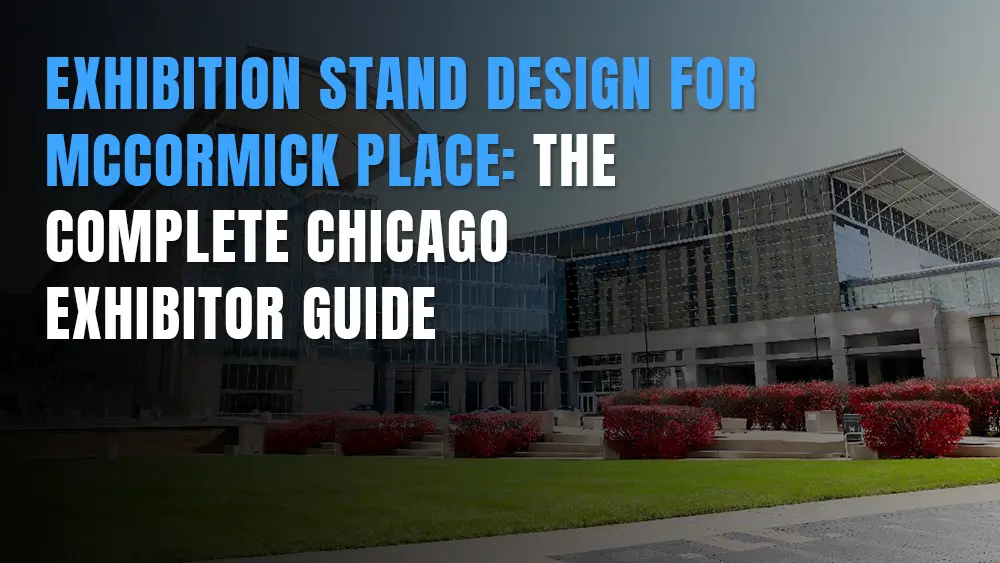
Designing an exhibition stand for McCormick Place takes far more than a good-looking 3D render. This is North America’s premier exhibition complex, a Chicago venue with four buildings (West, South, North, and Lakeside Center) and a staggering 2.6 million square feet of exhibit space.
Your stand has to fight for attention on a huge show floor while respecting hall dimensions, ceiling limits, utility layouts, and strict event regulations. Whether you’re a veteran or a first-timer weighing up Chicago trade show booth rentals, this guide shows you how to design, execute, and get real ROI from your stand.
1. Understand the Venue and Your Specific Location
The biggest exhibitor mistake is designing first and studying the venue later. McCormick Place isn’t generic; each of its four buildings has distinct technical quirks.
In the North Building, Hall B1 offers roughly 369,000 square feet with a soaring 40-foot ceiling under lights, while Hall B2 sits at 18 feet. A towering structure that looks magnificent in a high-ceiling hall will flop in a lower one. Before any design work, pin down your building, hall, booth dimensions, column locations, freight access, and utility drops.
Location matters too. A stand near a major entrance, cross-aisle, or registration area needs a different visibility approach than one tucked deep inside the hall. Design for your assigned hall, not just the booth footprint.
2. Define Your Goals and Know Your Audience
Before choosing materials, lighting, or architecture, decide what job your stand has to do. Skip vague goals like “generating more booth traffic” and aim for something measurable, like “200 meaningful visitor conversations and 40 qualified sales opportunities.”
Make it relevant to the Chicago trade show audience too. Which industries will attend? Do visitors want highly technical product specs, or are they executives looking for high-level partnerships? Let your layout and messaging answer that.
3. Choose the Right Architecture and Visitor Journey
Match your design to your booth configuration:
- Inline Stands: Need punchy, front-facing messaging to maximize limited depth.
- Corner & Peninsula Stands: Use multiple open sides to draw traffic from intersecting aisles.
- Island Stands: Offer 360-degree freedom for architectural features, experience zones, and hanging signs.
Whatever your layout, keep the architecture open and inviting, and skip large reception counters that block entryways. Build a seamless visitor journey: Attract → Enter → Explore → Experience → Discuss → Convert.
Design around your product, not just your walls. Start with what visitors must see, then build the architecture around that journey. For a physical product, build a strong demo area with touchscreens, test stations, or working equipment visible from the aisle.
4. Maximize Visibility: Height, Graphics, and Lighting
McCormick Place floors are crowded‚ so create a clear visual hierarchy․
Use Strategic Height: Hanging signs‚ brand towers, and LED features can help draw attention and be seen throughout large halls․ At McCormick Place‚ hanging items are subject to review by show management․ Anything weighing 500 pounds or more needs drawings stamped by a licensed structural engineer.
The 3-Distance Graphic Strategy:
- Far Distance: Core brand identity and primary message (e.g., “Automate Global Supply Chains”).
- Medium Distance: Product category and value proposition.
- Close Distance: Detailed specs, proof points, and a clear call to action (CTA).
Lighting as a Tool: Don’t light everything equally. Backlit graphics, LED strips, and spotlights pull the eye toward key branding, product displays, and meeting areas.
5. Integrate Functionality: Meetings, Storage, and Technology
No booth is worth anything if it doesn’t work in real life․ Build three elements:
- Dedicated Meeting Areas: Not every visitor needs a full demo․ Networking or private conversations for enterprise deals can be conducted at a quick-conversation standing table or a dedicated‚ acoustically separated meeting room․
- Integrated Storage: The most overlooked element․ Without it‚ the booth can get cluttered very quickly․ Plan hidden storage (lockable counters‚ cabinets‚ or back rooms) for personal items‚ giveaways‚ or back stock before determining the furniture layout․
- Information technology: Planning for LED walls‚ touchscreens‚ lead capture devices‚ and charging stations may be needed․ McCormick Place strongly recommends bringing dedicated wired internet for mission-critical technology․
- Plan Submission: Highly accurate floor plans are submitted for services․ McCormick Place requests final templates for internet‚ electric‚ and utility drops․ Final Design = Final Service Plan = Final Submission․
6. Navigate Compliance, Fire Safety, and Labor Rules
Consider safety at the concept stage. McCormick Place enforces strict facility rules on fire-retardant materials, open flames, smoke detectors, and fire extinguishers.
Double-deck or multi-level stands face tougher hurdles, including staircase designs, occupancy limits, and Fire Marshal reviews. The venue also protects its floors (especially terrazzo), so your contractor must plan protective measures for heavy components, pallet jacks, and material handling.
Ask your builder about labor early. How many installers are required? What arrives pre-assembled? Coordinating this keeps costs under control.
7. Select Smart Materials and Prioritize Sustainability
Your materials set the feel of your brand. Premium tech brands often lean toward glass, metal, and high-quality laminates, while industrial brands might go with textured steel and durable graphics.
For a better return, build sustainability in with a flexible, modular system rather than a one-event design. A well-designed modular structure can scale from a 10×20 inline booth to a 20×20 or 20×30 island booth. That cuts waste and turns your stand into a long-term, multi-show asset.
If custom builds for every show feel too resource-intensive or complex, an Exhibitor Appointed Contractor (EAC) can help. Premium Chicago trade show booth rentals give you a high-impact, sustainable presence with a fraction of the logistical headache and freight costs.
8. Budgeting and Lead Generation Integration
Never judge design apart from total cost. Your budget must cover everything:
Total Stand Investment = Design + Build + Technology + Services + Logistics + Marketing + Contingency.
Your design should support business development too: build lead-generation zones into the layout to capture visitor data, buying stage, and timelines. Every stand needs an obvious, bold CTA (e.g., “Book a Private Demo,” “Talk to an Expert”). The real goal isn’t scanning badges; it’s high-quality business conversions.
9. The Ultimate Pre-Show Timeline
Build your timeline around the official Chicago convention center calendar so you never miss a service ordering deadline:
- 4-6 Months Out: Confirm your booth location, review the hall floor plan, define objectives, set your budget, and select your builder.
- 10-12 Weeks Out: Approve the final architectural design, begin engineering, confirm graphics, and cross-reference all plans with McCormick Place safety requirements.
- 6-8 Weeks Out: Submit final approvals, order all venue utilities (electricity, internet), plan freight logistics, and launch pre-show marketing.
- 3-4 Weeks Out: Finalize graphics production and, most importantly, run a full pre-build inspection. Have your builder assemble the stand off-site to test structures, lighting, and tech before shipping.
- Show Week: Oversee freight delivery, manage installation, test all AV equipment, brief your booth staff, and open the stand.
- Post-Show: Supervise dismantling, safely pack reusable components, analyze lead performance, and document improvements for your next event.
Conclusion
It all starts with McCormick Place‚ not some pretty 3D booth design. When you have four buildings and 2․6 million square feet of space‚ one size does not fit all․
They balance stand design‚ exhibition hall layout, and business objectives; they understand how visitors will move through their stand‚ apply best practices in technology‚ health and safety‚ and use the exhibit to generate leads․ Do that, and your booth will be easy to find, inviting to enter, and highly functional. Custom build or high-end rental, these strategies turn an exhibition stand into a profitable Chicago trade show experience.