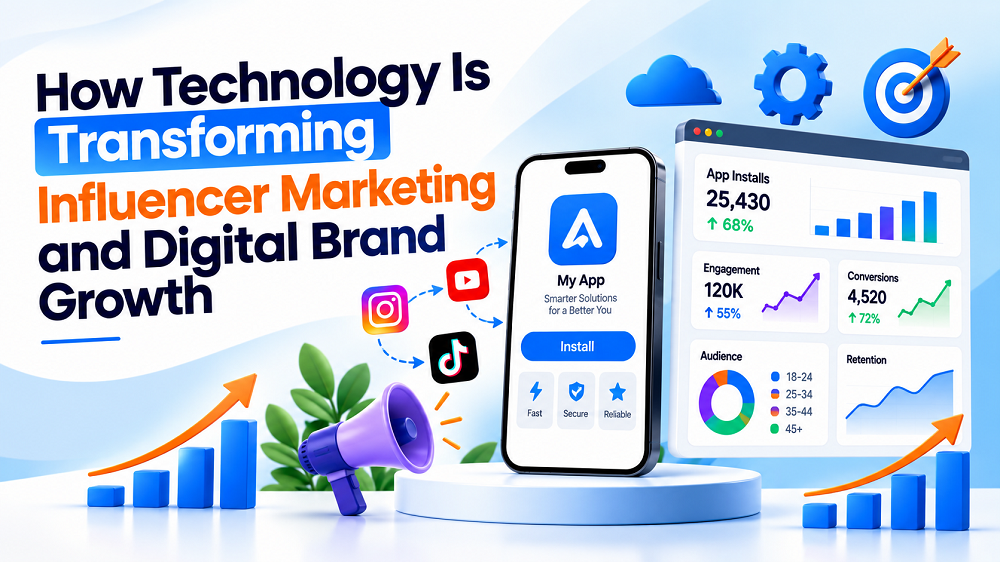
This is a very common blunder when developing an app. You spend months developing your product; you provide the creator with a script and a link to download the app, and that’s about it.
Two weeks later, and you have thousands of downloads with no idea who the creators are or whether anyone ever opened the app again. But that’s when technology steps in – provided you put in deliberate effort to utilize technology.
AI, analytics, automation, and mobility have changed the entire dynamics of influencer marketing. These are ways that brands using apps and technology can benefit from them, along with some roles that require human intervention.
Why Apps and Creators Pair Well
People discover apps right on their phones, making it clear why creators would be good at promoting them. A creator could launch an app, show three different features, and describe an example of how it’s used all within one minute.
Select the developers whose audience matches your demographic profile – whether it is students, freelancers, or gamers. And then divert the audience to the app store page.
Speed is important, too. It will be possible to publish a creation in just a few days, which means that it will be possible to test your message, get feedback in the comments, and improve the pitch without extra costs.
One cautionary note: downloads inflate your ego. Make sure you check registration, onboarding completion, and retention. Otherwise, a deleted download the following day won’t help much.
Stop Choosing Creators Based on Their Follower Count
Follower count is the most easily obtainable statistic, but perhaps one of the least effective statistics too. Through analytical software, you are now able to filter creators by specialty, location, language, platform, and demographics, and even compare their engagement levels with those of many other creators within minutes.
You could be better off working with an average-sized creator who works within a great community instead of a large creator.
AI speeds up the research. It shouldn’t make the final call. Read the comments yourself. Do they sound like real people? What product creators use? A tool can’t tell you that.
Before signing on anyone, ask for screenshots of the audience with details of the country, city, and age. You need to check the last ten posts. The creator should see his viewers graph changing between different posts should be considered carefully.
Brands that lack internal knowledge turn to influencer marketing services for sourcing influencers, creating briefs, and reporting in a single platform. It’s up to you which path to take as long as the influencer has an audience and style aligned with your objectives.
Tracking: Get it ready before the first post
The tech people use for measurement should be considered carefully at the time of measurement phase, and it must already be set up before the app launches. It cannot be retrofitted after the fact. The bare essentials include:
The UTM links would be used to find out whose link it is, so GA4 and other tracking software would know who sent the visitors.
Deep links would take people straight to that particular page in your app, and you can attribute the app installation to the right creator using attribution tools like AppsFlyer and Adjust.
Landing pages for campaigns will identify from which creators sign-ups originated.
Promo codes will identify purchases from a particular creator even if the user doesn’t follow the link.
Names carry more weight than most people realize. Decide how campaign, creator, and content names will be structured even before you create any links; otherwise, you’ll spend three weeks deciphering your report.
Now you’ll see why all that work is worth it. For instance, let’s assume that a tech reviewer has many clicks while a finance reviewer has few clicks, but these clickers actually complete the onboarding process. You can allocate your budget accordingly if you track things.
Once the report is delivered, start reading it in the following sequence: clicks, sign-ups, and retention. The problem in case when the creator performs well on one side and poorly on the other one can be caused by the discrepancy between the target audience and the application, rather than a video.
Not all the metrics should be reported. Focus on the two to three metrics which are relevant to the goal.
The Evolution of Discovery with Short-Form Video
Short videos allow users to see a product more clearly and make better decision before purchasing it. Comments sections have become review boards of their own.
UGC and Honest Content
Creators unboxing videos, reviews, and how-to videos are more authentic than any marketing videos.
If you have the right to use that video clip, then you can reuse that clip anywhere on your website and social media pages, including any paid advertisements.
However, accuracy is key. Be accurate about your product and do not make any baseless claims.
Before your campaign make sure that:
Check you have chosen creators that your target audience follows and also check you have set tracking posts.
You have plans to measure retention not just downloads.
A person was involved in each of your creator choices
You have made the payment and partnership clear
What Technology Can’t Do
Thanks to technology, influencer marketing has become more organized in terms of identifying creators and measuring outcomes. This makes it easier for app and technology companies to find the correct audience and see what works.
Conclusion
The advent of technology has helped organize influencer marketing, starting from the discovery of the influencer to result measurement. The implication is that app companies will find it easier to identify the appropriate consumers for their products.
Before your next campaign, ensure that:
You’ve selected creators that your intended target audience follows
Tracking was put in place before the first post
You had plans to measure retention instead of just downloads
You’ve made the payment partnership transparent
Start small by testing your strategy with 3-5 creators