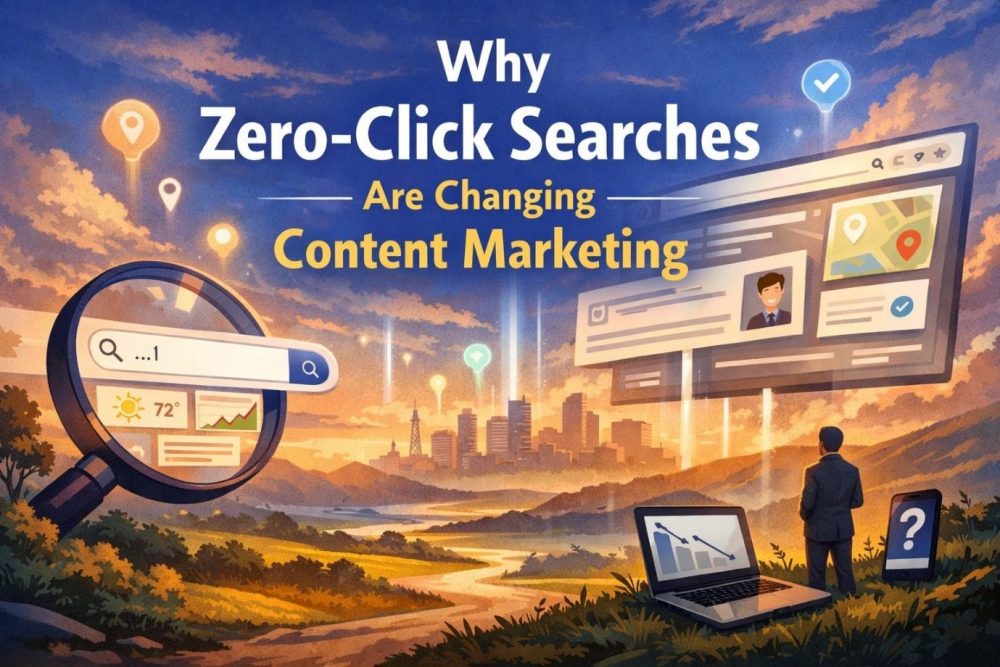
The Rise of Zero-Click Searches in the Digital Landscape
Zero click searches can be defined as the search queries where a user is able to get the information needed from the Search Engine Result Page (SERP) without needing to go to other websites. This increasing trend represents an immense change in how information is obtained online. The growth of zero-click searches has been primarily driven by users wanting to obtain information quickly without having to go through several web pages for answers to their questions.
As a result of this need, search engines such as Google are continually adapting their search engines to prioritize instant answer formats such as featured snippets, Knowledge Panel, AI-generated summaries, and providing shortened, relevant, and concise pieces of information directly on the search interface.
These new formats are designed to continue improving the user experience; therefore, the user will continue to spend less time searching for, and effort to find, the information they seek. Additionally, users have increased their use of mobile devices which has led to an accelerated demand for instant, on-the-go answers through zero-click searches. Voice search technology has further supported this change by encouraging the use of shorter, conversational-style search queries that require instant answers. This cascade of changes in the way users behave will continue to change how users discover, consume, and place value on digital content within the online ecosystem. This shift also places greater importance on effective Web Content Management strategies to ensure content is structured, optimized, and discoverable across search platforms
How Search Engines Are Delivering Instant Answers Without Clicks?
Search engines have evolved in terms of their ability to provide instantaneous answers in the form of snippets and direct answers that do not necessarily require a person to leave the SERP page and visit an external site. Some of the most notable changes in this regard are the use of featured snippets, which summarize key information from external sites and post them on SERPs. Another similar change in this direction includes the use of knowledge graphs, which are designed to offer factual information regarding various entities like people, places, or topics. The use of AI search overviews can also help in this regard, whereby AI algorithms consolidate all information from different sources and provide a comprehensive answer according to user intent.
Moreover, “People Also Ask” allows users to expand queries on topics directly from the search interface without visiting any other website. Local packs are yet another aspect that makes search engines advanced and reduces click rates by providing information about local businesses, reviews, and contact information. Additionally, the inclusion of calculators, converters, and even definition capabilities enable users to obtain all necessary information on search interfaces.
The Impact of Zero-Click Searches on Website Traffic and SEO Strategies
The effect of zero-click searches on website traffic trends and traditional SEO practices has been considerable. One of the major impacts of zero-clicks is the decrease in the number of organic clicks, especially in case of informational keywords when answers to the questions are provided right on the search engine results page. In this regard, websites ranking well in the search results might experience a decrease in the amount of traffic since users get their information instantly, without going to any other webpage. Thus, the very notion of SEO success should be reconsidered, since nowadays the main goal is not only traffic but also visibility and authority on the SERP. Another issue that arises from zero-click searches is the fact that more competitive clickable space is required due to the use of SERP features like featured snippets or knowledge panels that occupy valuable space on the screen. Thus, organic content becomes harder to see and attracts less traffic. The measurement of performance in such cases should include not only number of clicks but also impressions and visibility in SERP among other parameters.
Adapting New Content Strategies for Visibility
The adaptation process involves shifting to a new strategy for creating valuable content, whereby emphasis would be made on visibility through search engines instead of clicks on your site. For instance, you should work on featured snippets, which involve providing a particular set of information in a clear manner, such as providing a definition, using bullet points, and answering the question directly. Another crucial way to adapt to zero click is applying schema markup since it enables search engines to understand what kind of content is being provided on the site, thus boosting the chances of receiving featured snippets. It is necessary to use long-tail and intention-specific keywords because the brands will have the possibility to attract more specific people who will click on your content since it meets their requirements perfectly.
Furthermore, the production of multi-format content will contribute to your success since videos, FAQ pages, and infographics will increase the number of opportunities for visibility through various SERPs. At last, but not least, you should work on your brand authority since people are much likely to conduct a search on your brand or believe the information presented to them online.
Conclusion
Finally, zero-click searches represent the paradigm shift in the digital searching space that is aimed at offering people immediate access to information via SERPs. This strategy does not contribute much to the web traffic, but it is vital that the focus should be placed not only on gaining clicks but also on increasing visibility and authority and positioning content strategically. It is crucial for companies to understand that modern search engines are developing rapidly thanks to such innovations as snippets, knowledge cards, and AI summaries, which makes it necessary for organizations to change their SEO strategy accordingly.