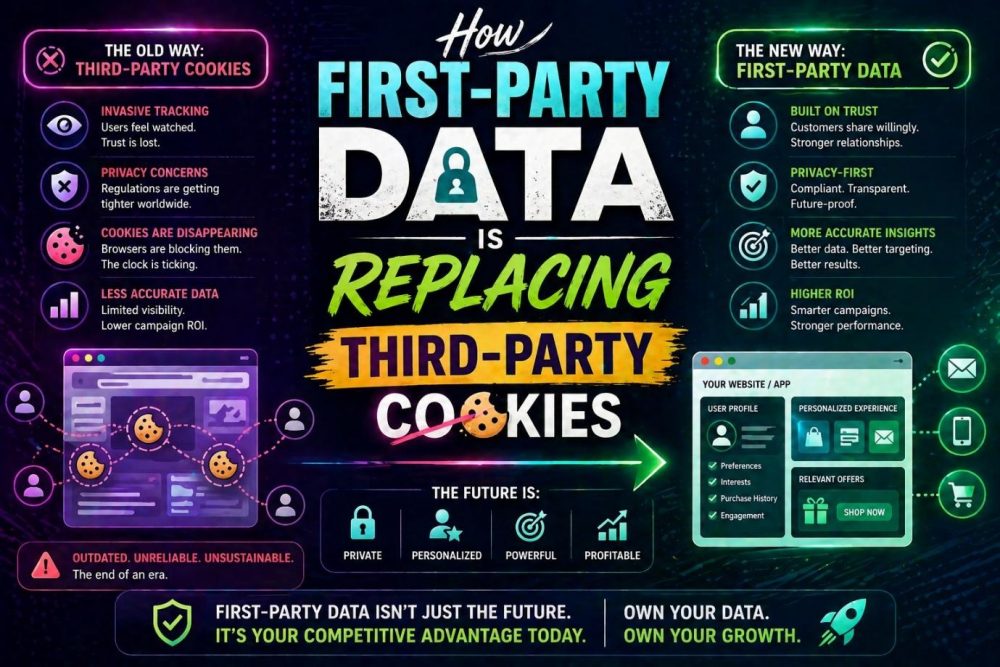
For a long time, marketers leaned heavily on third-party cookies. They were everywhere in digital advertising, even if most regular users had no clue what they were. You’d browse one site, then suddenly see ads for the same product on five other websites. It felt a little creepy sometimes, if we’re being honest.
Now that system is fading out. Browsers are blocking more tracking tools, privacy laws are stricter, and people have become less comfortable with being followed around online. So businesses are being forced to rethink how they collect and use data.
That’s where first-party data comes in. And unlike cookies, it starts with a direct relationship.
What Makes First-Party Data Different
First-party data is information customers share with a business through real interactions. That might be signing up for a newsletter, making a purchase, browsing products on a website, filling out a form, or contacting support.
It sounds basic, but that’s the point. The data comes straight from the source. No guessing, no renting audience insights from ad networks, no stitched-together behavior profiles floating around the internet.
In many ways, it’s cleaner and more useful because it reflects genuine intent. Someone who buys from you is usually more valuable than someone who vaguely looked at a similar product elsewhere two months ago.
Why the Cookie Era Is Slipping Away
Third-party cookies worked well for advertisers because they made targeting easier. But they also created trust issues. Most users never clearly agreed to how much tracking was happening, and many businesses overused the system.
Eventually, people pushed back. Regulators noticed. Tech companies adjusted.
So now we’re in this strange transition period where marketers still remember the old system, but they know it’s not the future. Some are adapting quickly. Others are still acting like it’s 2018. That usually doesn’t end well.
Better Data Often Comes From Smaller Pools
One common myth is that more data automatically means better marketing. It doesn’t. Huge amounts of vague or outdated information can be surprisingly useless.
First-party data tends to be smaller in volume but stronger in quality. You know what a customer bought, when they visited, what category they care about, and whether they engaged with your emails. That’s practical information you can actually use.
It’s less glamorous than giant audience datasets, sure. But it often performs better.
Kind of like having five honest answers instead of fifty guesses.
Why a Customer Information System Matters
As brands collect more direct data, they need a way to organize it. Otherwise, things get messy fast.
A Customer Information System helps store and connect customer records, purchase history, preferences, service interactions, and engagement data in one place. That makes it easier for teams to understand who they’re talking to and what those customers actually need.
Without a proper system, businesses often end up with scattered spreadsheets, duplicate contacts, outdated notes, and confusion nobody admits out loud.
That chaos wastes opportunities.
Marketing Starts Feeling More Relevant
When first-party data is used well, marketing gets less annoying. That alone is worth mentioning.
Instead of random ads chasing someone for weeks, brands can send useful recommendations based on real purchases, reminders tied to timing, or content related to actual interests. It feels less like surveillance and more like service.
Of course, some companies still overdo it. We’ve all seen emails that are way too eager. But the potential is much better when the data comes from consent-based interactions.
You Have to Earn the Data Now
This is the part many businesses are still adjusting to. First-party data is not something you simply extract. You have to give people a reason to share it.
That could mean useful content, loyalty rewards, better customer support, smoother checkout experiences, or personalized benefits that genuinely help.
If someone lands on a website and immediately gets hit with three popups asking for details, chances are they leave. Probably annoyed too.
So yes, privacy changes are technical. But they’re also pushing brands to improve the basics. Better experiences earn better data.
Smaller Brands Have a Real Chance Here
Large companies may have scale, but smaller brands often have stronger relationships. That matters more now.
A niche store with a loyal email list and a clean Customer Information System can do excellent marketing because they actually know their audience. They don’t need millions of records. They need relevance, trust, and consistency.
Sometimes being smaller makes listening easier. Big companies forget that.
Where This Is Heading
Third-party cookies are fading because the internet changed. People expect more control, more transparency, and less invisible tracking. That expectation is not going backward.
First-party data is growing because it fits the new environment. It’s based on permission, direct engagement, and real customer relationships.
The brands that win from here probably won’t be the loudest or the ones collecting the most data. They’ll be the ones people trust enough to share it with in the first place.
That’s a tougher model, maybe. But honestly, it’s a healthier one.