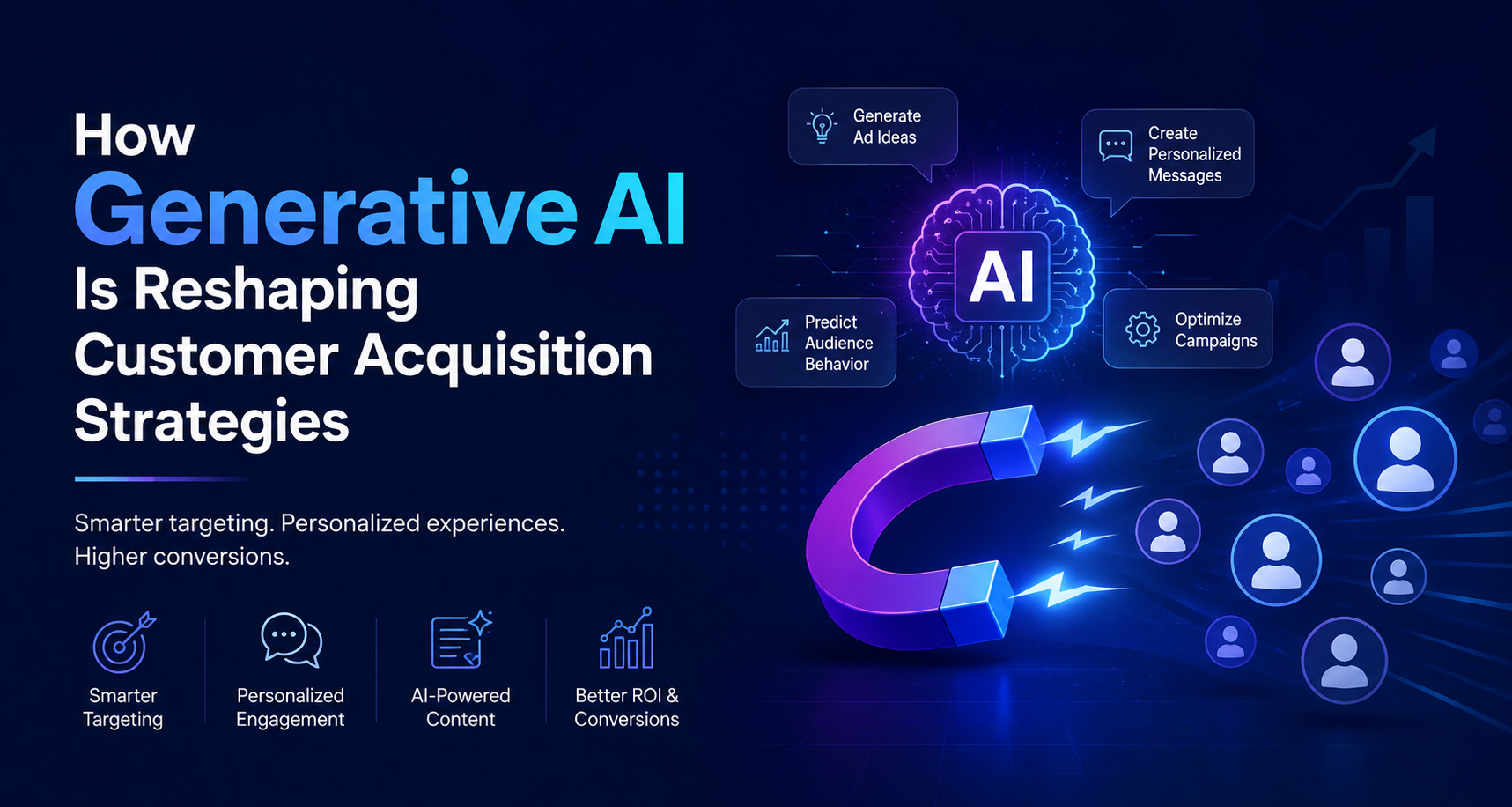
Generative AI is no longer a futuristic concept; it is the driving force behind modern customer acquisition for ecommerce stores. By automating content creation, personalising messaging, and optimising social media delivery, AI tools allow PrestaShop merchants to compete effectively with much larger brands. The data is conclusive: 83% of sales teams using AI reported revenue growthand the adoption rate among marketers has skyrocketed. The smartest stores are using a hybrid model, where AI handles the heavy lifting and humans provide the strategic oversight.
This article breaks down the key trends, explains how the technology works, and shows you exactly how to put it into action in your store.
The Silent Revolution: How AI Writes Your Customer’s Next Conversation
Generative AI is revolutionising customer acquisition by automating content creation, personalising messaging at scale, and optimising social media scheduling. For PrestaShop merchants, modules like the AI Social Media Content Generator leverage ChatGPT or Google Gemini to create and post targeted content automatically, reducing CAC and freeing time for strategic tasks. This trend enables even small businesses to compete with larger rivals in customer engagement.
The numbers behind this shift are hard to ignore. 83% of sales teams using AI reported revenue growth compared to 66% of teams that didn’t use it. Meanwhile, the share of marketers using generative AI in recurring workflows jumped from 51% in Q1 2024 to 87% by Q1 2026a 70% increase in just two years. This is not a fringe experiment anymore; it is the standard operating procedure for growing brands.
For PrestaShop merchants, the practical effect is straightforward. Instead of staring at a blank calendar every Monday, you generate a week of platform-specific posts in minutes. The AI handles the tone, the hashtags, and the format variations for Facebook, Instagram, X, LinkedIn, and Pinterest. You review, approve, and publish. The competitive advantage no longer comes from having a content team, but from how effectively you direct the AI you already have.
This matters because acquisition costs are shifting. Organisations implementing AI in marketing see around a 32% reduction in customer acquisition costs. The savings do not come from replacing your best people; they come from eliminating the repetitive drafting, resizing, and scheduling work that consumes hours every week. Those hours go back into strategy, product development, and the human conversations that still close the biggest deals.
The transition is not about handing your entire funnel to a bot. It is about building a hybrid workflow where the AI drafts and you decide. The sections below break down the specific trends driving this change, what the data says, and the exact steps you can take inside your PrestaShop admin to stay ahead.
From Batch to Real-Time: The New Playbook for PrestaShop Social Media Automation
The days of planning a month of social posts in one sitting are fading. Batch scheduling still has its place, but the retailers gaining real momentum in 2026 are shifting toward real-time, predictive posting. Instead of publishing the same content on a fixed calendar, they are letting generative AI decide what to publish and whenbased on live customer behaviour and engagement signals.
The shift matters because customer attention no longer follows a predictable pattern. A product that gains sudden traction on Instagram at 9 pm on a Tuesday, or a trending topic that connects directly to your catalogue, creates a window of opportunity. Waiting for the next scheduled slot means missing it entirely. The new playbook is about publishing when relevance peaks, not when your spreadsheet says so.
What Real-Time, Predictive Posting Actually Looks Like
On PrestaShop, this approach typically involves a module that connects your store’s data to AI models. The AI Social Media Content Generator- Gemini, ChatGPT, is a practical example of this. It uses OpenAI or Google Gemini to create content for Facebook, Instagram, Twitter/X, LinkedIn, and Pinterest, and it can work from the live context of your shop rather than a static batch file.
Instead of manually exporting product data and pasting it into a scheduling tool, the module pulls from your catalogue and generates posts that reflect current stock, prices, and promotions. When a product’s inventory changes or a new collection goes live, the AI can generate and publish a post without a human writing a single line. The manager’s role shifts to reviewing and approving, not creating from scratch.
This is a meaningful difference from the old workflow:
- Batch scheduling relies on assumptions about when your audience is online, and it treats all products as equal.
- Real-time generation responds to what is actually happening in your store and in the wider conversation, so content stays relevant.
- Predictive timing uses historical engagement data to estimate the best moment to publish, rather than using a one-size-fits-all schedule.
Why the Data Supports This Change
The evidence for this shift is strong. One survey found that 63% of marketers are currently using generative AI, and the share of marketers using it in recurring workflows grew from 51% in Q1 2024 to 87% by Q1 2026, a 70% increase in just two years, according to AI customer acquisition statistics. That jump is not about experimentation. It reflects a structural change in how marketing teams operate.
The commercial case is equally compelling. Organisations implementing AI in marketing see around a 32% reduction in customer acquisition costs, as reported in AI in Marketing Statistics 2026. When a PrestaShop merchant can generate a week of platform-specific posts in minutes rather than hours, the cost per acquired customer naturally drops. The time saved is redirected toward engagement, community management, and conversion optimisation.
What This Means for Your PrestaShop Store
For a small or mid-sized retailer, the practical implication is simple. You no longer need a dedicated social media manager to maintain a consistent presence on multiple platforms. The AI handles the heavy lifting of content creation, and you retain control through approval workflows. That is a hybrid model: the machine generates, the human decides.
If you pair this with other AI-driven modules, the effect compounds. The SEO: AI-Powered SEO module can ensure the blog posts supporting your social content are optimised, while the Automatic AI SEO Alt Tags module keeps your image content accessible and relevant. Together, they create a content ecosystem where every piece reinforces the others, all driven by the same AI engine.
The transition does not require abandoning your existing workflow. Start by using generative AI for one platform, measure the engagement compared to your batch posts, and expand from there. The retailers winning in 2026 are not the ones with the biggest teams. They are the ones using AI to be in the right place at the right moment, consistently.
ChatGPT vs Google Gemini: Which AI Engine Powers a PrestaShop Integration Better?
Choosing between ChatGPT and Google Gemini for your PrestaShop content generation is less about picking a winner and more about matching an engine to your workflow. Both models produce high-quality social media copy, product descriptions, and customer replies. The real difference lies in how each handles tone, context, and volume, which matters when you are generating dozens of posts per week from your admin panel.
ChatGPT, built by OpenAI, excels at conversational nuance and brand voice consistency. It understands complex instructions well, so you can train it to match your store’s tone with detailed prompts. Google Gemini, by contrast, pulls on Google’s broader search and entity understanding, which makes it strong at generating content that aligns with how customers actually search for products. For a merchant, that can mean social posts that feel more aligned with what shoppers are typing into Google.
PrestaShop AI Social Media Content Generator – Gemini, ChatGPT gives you access to both engines from a single module, so you are not locked into one provider. You can switch between OpenAI (GPT-4 or GPT-3.5) and Google Gemini depending on the task. For example, you might use ChatGPT for polished Instagram captions that carry your brand personality, and Gemini for Facebook posts where search-friendly phrasing matters more.
| Consideration | ChatGPT (OpenAI) | Google Gemini |
| Best for | Conversational tone, brand voice, creative copy | Search-aligned phrasing, entity recognition, factual grounding |
| Integration in PrestaShop | Available within the module, selectable per task | Available within the module, selectable per task |
| Typical use case | Instagram captions, LinkedIn posts, engaging replies | Product-focused posts, SEO-aware content, Pinterest descriptions |
With 87% of marketers using generative AI in recurring workflows by Q1 2026, up from 51% in Q1 2024, per AI customer acquisition statisticsthe question is no longer whether to adopt AI, but which engine fits your content calendar. Testing both inside your existing PrestaShop setup takes minutes, and the cost of experimentation is low compared to the time saved on manual posting.
The right choice depends on whether your priority is brand personality or search visibility, and the best PrestaShop approach is to keep both engines available rather than commit to one.
How Does AI Content Generation Actually Work in an Ecommerce Module?
For a PrestaShop store owner, the magic underneath generative AI customer acquisition is simpler than it looks. A module like AI Social Media Content Generator – Gemini, ChatGPT acts as the bridge between your product catalogue and the AI engines that write your posts. You don’t need a data science team to make it work.
The core loop has three stages. First, the module pulls structured product data from your database: product names, descriptions, prices, and features. Second, it combines that data with prompt templates designed for each social platform. Finally, it sends the request to an AI engine like OpenAI (GPT-4 or GPT-3.5) or Google Gemini, then formats the response for publishing.
What makes this practical for small retailers is the control layer. Before anything goes live, you set your brand voice parameters. That means defining tone (professional versus playful), key selling points to highlight, and calls-to-action that match your audience. The module stores these preferences and applies them to every generated post, so the output stays consistent with your existing marketing language.
Multi-platform output is where the time savings compound. A single product update can generate:
- a short, hashtag-heavy post for Instagram
- a concise update with a link for Twitter/X
- a longer product story for Facebook
- a professional announcement for LinkedIn
The module publishes these directly from your PrestaShop admin, which removes the friction of copying content between tools. The real shift is that your product data becomes the input, and consistent, on-brand social content becomes the output. That is the hybrid model: AI handles the drafting, you handle the approval.
Why Customer Acquisition Cost Falls When AI Writes Your Social Posts
The economics of customer acquisition have shifted. When a store replaces manual social content production with a generative AI module, the cost per new customer drops through two channels: cheaper creative production and better-performing content. This is not speculative. Organisations implementing AI in marketing see around a 32% reduction in customer acquisition costsa figure that reflects both reduced labour hours and improved campaign efficiency.
The creative cost reduction is immediate. A small retailer typically spends several hours per week drafting posts, sourcing images, and scheduling across platforms. AI Social Media Content Generator – Gemini, ChatGPT collapses that workflow into minutes. The module drafts on-brand posts for Facebook, Instagram, Twitter/X, LinkedIn, and Pinterest directly from the admin panel, meaning the store owner approves content rather than producing it from scratch. That time saving translates directly into a lower blended cost per acquisition, because the same marketing budget now funds a higher volume of testing and iteration rather than administrative production.
The second channel is relevance. AI-generated posts can be tailored to specific audience segments and product angles far more easily than a single human-written batch. When ad platforms reward relevant creative with lower cost-per-click, the effect compounds. The 82% of marketers using AI personalization who report a 5 to 8x return on marketing spend are seeing exactly this dynamic: better-matched content, engaged users, cheaper clicks. For a PrestaShop store, this means the same budget acquires more customers because the content resonates before a single euro is spent on boosting.
The practical implication is that generative AI for social acquisition is not a content shortcut; it is a margin tool. The module lowers the cost of testing new angles, lets stores abandon underperforming posts without sunk creative costs, and keeps the content calendar full across all five platforms. For retailers who previously outsourced social production to an agency or freelancer, the saving is even more pronounced. The shift from human-only to AI-human hybrid production is not about replacing judgment; it is about paying for creative output only when data proves it works.
How to Implement an AI Social Media Strategy on PrestaShop without a Data Scientist
You do not need a technical team to put generative AI to work on your store’s social channels. The entire setup for a module like the PrestaShop AI Social Media Content Generator happens inside your admin panel, and most retailers get from installation to first published post within an afternoon.
Here is the practical sequence we recommend, based on how PrestaShop merchants typically roll this out:
- Install and configure your API key. The module acts as a bridge between your store and an AI engine. You will connect either an OpenAI key (for GPT-4 or GPT-3.5) or a Google Gemini key, depending on which model you prefer. Both give you the same core capability: generating on-brand social posts from your product data.
- Define your brand voice in the module settings. This is the step most people skip, and it is the difference between generic output and posts that sound like your store. Add your tone, your typical vocabulary, and any phrases you want the AI to avoid. The module uses this context every time it generates copy.
- Generate a test batch. Pick three products from different categories and create posts for a single platform, say Instagram. Review the output against your brand guidelines. The first batch is rarely perfect; that is normal. Make small adjustments to your brand instructions and regenerate.
- Expand to all platforms. Once you are happy with the tone, generate posts for Facebook, Instagram, Twitter/X, LinkedIn, and Pinterest. The module adapts the same product information to each platform’s conventions, so you are not copy-pasting the same caption everywhere.
- Publish and monitor. You can schedule and publish directly from your PrestaShop admin. Track engagement metrics for two to three weeks, then return to the module to refine your brand instructions based on what your audience responds to.
The iteration loop matters more than the initial setup. Treat the AI as a junior copywriter who needs clear briefs, not as a set-and-forget tool. The merchants who see the strongest results revisit their brand settings monthly, feeding what they learn from real engagement data back into the module.
This workflow also pairs well with other AI-driven modules if you want to extend the approach. A PrestaShop AI review generator can handle customer feedback, while the social module covers your outbound content, and the AI-powered SEO module keeps your product pages aligned with the same topics you are posting about.
The barrier to entry for generative AI customer acquisition is lower than most retailers assume, and the main cost is not the software but the discipline to test and refine your outputs. The ROI case is compelling: organisations implementing AI in marketing see around a 32% reduction in customer acquisition costs. For a small store competing against brands with dedicated social media teams, that efficiency gap is exactly what AI closes.
The Next Horizon: What 2027 Brings for AI-Driven Acquisition
If 2025 and 2026 were about getting comfortable with generative AI, 2027 is the year the technology stops being a novelty and becomes the default operating system for customer acquisition. The direction of travel is already visible in the data: the share of marketers using generative AI in recurring workflows grew from 51% in Q1 2024 to 87% by Q1 2026a 70% increase in just two years. That curve does not flatten; it compounds. For merchants, the practical question is no longer whether to adopt AI, but which capabilities will separate the stores that grow from the ones that stall.
Three trends will shape the next 18 months for AI-driven acquisition on PrestaShop.
Hyper-personalisation moves from email to every touchpoint. The 82% of marketers already using AI personalisation to improve customer experience report 5 to 8x return on marketing spend and 15% higher retention. In 2027, that personalisation will extend beyond product recommendations into AI-generated social content tailored to individual segments, not just broad audiences. A PrestaShop store using the PrestaShop AI Social Media Content Generator will generate different post variations for first-time visitors, repeat buyers, and high-value customers, all without a dedicated content team.
AI-generated video becomes a standard social asset. Static images and text posts are table stakes. Generative video, produced from a product description or a handful of source images, is dropping in cost and rising in quality. By 2027, merchants who publish short-form video content generated or assisted by AI will hold a visible advantage in feed visibility and engagement. The integration point is social shopping: platforms are closing the gap between a video post and a checkout, and PrestaShop stores that feed AI-generated video into that loop will capture demand that text-only competitors miss.
Agentic AI handles the acquisition conversation. Cisco’s survey of 7,950 global professionals projects that 56% of customer support interactions will use agentic AI by mid-2026, rising to 68% by 2028. The same technology will work upstream of support, engaging prospects on social channels, answering product questions, and moving them toward a first purchase. This is not a chatbot bolted onto a helpdesk; it is an acquisition layer that works alongside your content calendar.
What to do now
You do not need a data science team to prepare for 2027. Start with the workflows you already run:
- Test hyper-personalised social variations. Use the PrestaShop AI Social Media Content Generator to create two or three versions of each post, tuned to different customer segments, and track which drives the strongest engagement.
- Plan for video early. Even if you are not producing AI video this quarter, structure your product data so it is ready to feed a video generator when the quality and price point make sense.
- Keep your acquisition stack modular. The 93% of CMOs who say generative AI is changing their marketing function are not replacing their platforms; they are layering AI on top. A module approach means you can adopt AI in one channel, measure the result, and expand without re-platforming.
The store that wins in 2027 is not the one with the biggest budget. It is the one that treats AI as a permanent part of its acquisition workflow and starts refining that workflow now.