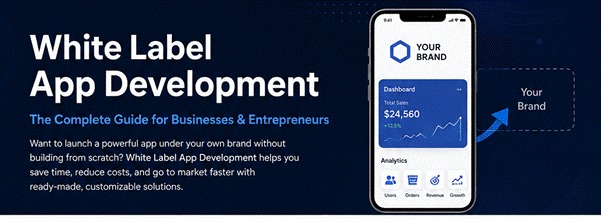
Building a mobile or web application from scratch can be expensive, time-consuming, and technically demanding. That’s why many startups, agencies, and entrepreneurs are shifting toward White Label App Development as a faster and more efficient alternative. Instead of investing months in coding and testing, you can launch a fully functional app under your own brand in a fraction of the time.
In this guide, we’ll break down everything you need to know—from how it works to its benefits, use cases, costs, and how to choose the right solution.
What is White Label App Development?
White Label App Development refers to the process of purchasing or licensing a pre-built application developed by another company and rebranding it as your own. You don’t need to build the product from scratch; instead, you customize the design, logo, features, and branding to match your business identity.
Similarly, this model is widely used in industries like SaaS, eCommerce, fintech, and AI platforms where speed-to-market is critical.
Key Characteristics:
- Pre-built core functionality
- Custom branding and UI changes
- Faster deployment
- Lower development cost
- Scalable architecture
How White Label Apps Work
The process is relatively straightforward:
- Select a ready-made app solution
Choose from a marketplace or provider offering pre-developed apps. - Customize branding
Add your logo, brand colors, domain, and UI elements. - Modify features (if needed)
Some providers allow feature-level customization or plugin integrations. - Deploy under your brand
Launch the app on app stores or web platforms. - Maintain and scale
Use updates and support from the original developer.
In particular, businesses that want to buy ready-made mobile apps or purchase pre-built apps benefit the most from this workflow.
Why Businesses Are Choosing White Label Solutions in 2026
The demand for white label solutions has grown significantly due to evolving market conditions.
1. Faster Time-to-Market
Developing an app from scratch can take 6–12 months. White label solutions reduce this to weeks or even days.
2. Cost Efficiency
Instead of hiring a full development team, businesses can launch using buy pre-developed apps at a fraction of the cost.
3. Reduced Risk
You’re using a tested product, which minimizes bugs and technical failures.
4. Focus on Marketing & Growth
Rather than spending time on development, you can focus on acquiring users and scaling revenue.
Types of White Label Applications
White label solutions are available across multiple industries. Some popular categories include:
1. SaaS Applications
- CRM systems
- Project management tools
- Marketing automation platforms
2. AI-Based Apps
- AI chatbots
- AI companion apps
- Content generation tools
3. eCommerce Apps
- Online store platforms
- Marketplace apps
- Dropshipping systems
4. On-Demand Apps
- Food delivery
- Ride-sharing
- Service booking platforms
5. Social & Community Apps
- Dating platforms
- Content-sharing apps
- Membership-based communities
Likewise, businesses often look for ready-to-launch apps for sale in these categories to quickly enter competitive markets.
Key Features of a Good White Label App
Not all solutions are created equal. A high-quality white label app should include:
- Custom Branding Options
- Scalable Infrastructure
- User-Friendly Dashboard
- API Integrations
- Security & Compliance Features
- Regular Updates & Support
Despite the convenience, you should always verify the flexibility of customization before committing.
White Label vs Custom App Development
| Feature | White Label App Development | Custom Development |
| Cost | Low to Medium | High |
| Time | Fast (days/weeks) | Slow (months) |
| Customization | Limited to moderate | Fully customizable |
| Risk | Low | High |
| Scalability | Depends on provider | Fully controlled |
Even though custom development offers full control, white label solutions are ideal for businesses that prioritize speed and efficiency.
Cost of White Label App Development
The cost varies depending on features, complexity, and provider.
Typical Price Range:
- Basic apps: $500 – $2,000
- Mid-level apps: $2,000 – $10,000
- Advanced platforms: $10,000+
Many platforms now offer a mobile app cost calculator, which helps estimate pricing based on:
- Features required
- Number of users
- Customization level
- Hosting requirements
This makes budgeting much easier for startups.
Benefits of Using White Label App Development
1. Quick Business Launch
You can launch your product almost instantly without heavy development.
2. Proven Technology
Since the app is already tested, reliability is higher.
3. Lower Technical Barrier
No need for deep coding knowledge.
4. Easy Scalability
Most solutions are built to handle growth.
5. Recurring Revenue Opportunities
You can monetize through subscriptions, ads, or premium features.
Challenges You Should Consider
Even though the model is powerful, there are some limitations:
1. Limited Customization
You may not be able to modify core features extensively.
2. Dependency on Provider
You rely on the original developer for updates and maintenance.
3. Licensing Restrictions
Some providers have strict usage terms.
4. Competition
Many businesses might use the same base product.
In spite of these challenges, the benefits often outweigh the drawbacks for most startups.
Use Cases of White Label App Development
White label apps are suitable for:
- Entrepreneurs launching startups
- Agencies offering SaaS solutions
- Developers monetizing their products
- Businesses entering new markets quickly
For example, someone looking to buy turnkey mobile applications can quickly rebrand and start selling services without technical overhead.
How to Choose the Right White Label App
Choosing the right solution is critical. Here’s what you should evaluate:
1. Feature Set
Ensure the app meets your business requirements.
2. Customization Options
Check how much branding and UI flexibility is available.
3. Pricing Model
Look for transparent pricing without hidden fees.
4. Support & Updates
Reliable customer support is essential.
5. Scalability
Make sure the platform can handle future growth.
6. Reviews & Reputation
Always verify the credibility of the provider.
Monetization Strategies
Once your app is ready, you can generate revenue in multiple ways:
- Subscription plans
- Freemium model
- In-app purchases
- Advertising
- Affiliate integrations
Similarly, many businesses combine multiple strategies to maximize profits.
Future Trends in White Label App Development
The industry is evolving rapidly. Key trends include:
- AI-powered white label apps
- No-code and low-code customization
- Cloud-native architectures
- Integration with Web3 technologies
- Automation-driven platforms
As a result, the demand for White Label App Development will continue to grow in the coming years.
Conclusion
White Label App Development has transformed how businesses launch digital products. Instead of spending months building from scratch, companies can now deploy ready-made solutions quickly and efficiently.
Whether you want to test a startup idea, expand your service offerings, or enter a new market, white label apps provide a practical and scalable solution. However, choosing the right provider and understanding your business goals remain critical for long-term success.