Weighted carrying and lifting is a main occupational hazard, especially if employees have to carry heavy loads multiple times during the workday.
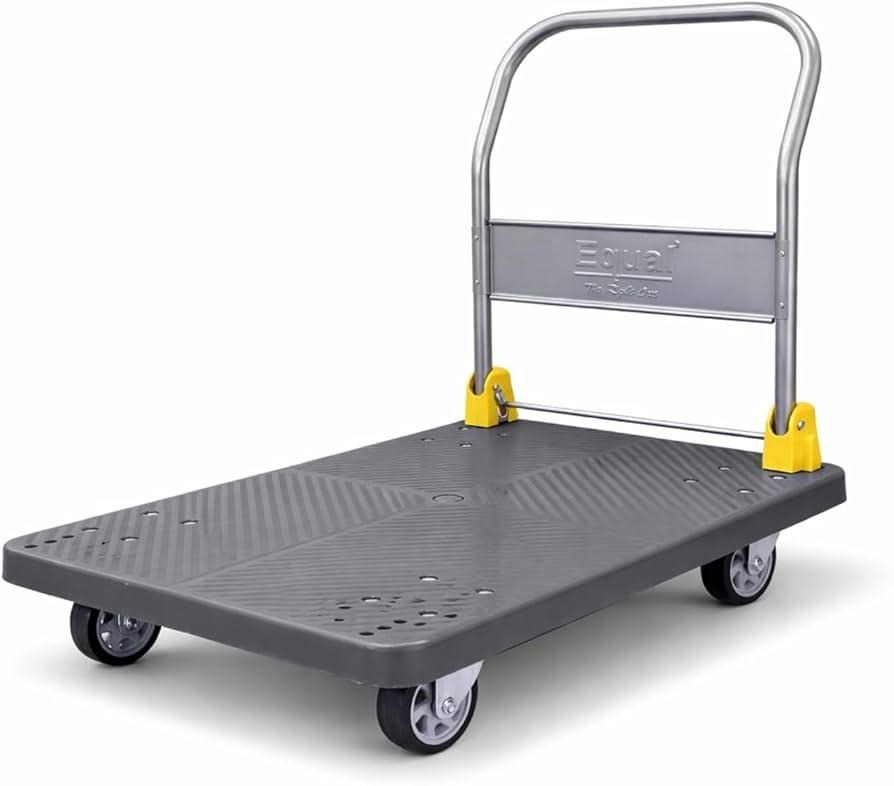
Such risks are mitigated with the help of warehouse trolleys, which ensure that goods are transported through a safe and stable platform. You do not need to manually lift and carry items as the workers only need to tap on some products and load them in the trolley, then these trolleys can easily take them from point A to B.
Less physical strain leads to a safer workplace helping reduce the risk of repetitive motion and overexertion-related injuries.Know the operational requirements and invest for longevity in equipment that performs.
Assess Your Load Requirements
Decide what kind of materials and how much you will have to ship.
Ask yourself:
- How heavy are the loads?
- How frequently are materials moved?
- What are the dimensions of the products?
- Are items fragile or bulky?
By understanding these factors, it enables you to make an informed decision as to the load capacity and design of trolley needed by you.
Consider the Working Environment
Different warehouse environments need different types of trolleys.
For example:
- Some narrow aisles may need space-saving trolleys.
- Platform trolley with high load capacity is beneficial for large warehouses.
- Order-picking trolleys are needed in distribution centres.
This means that heavy-duty models may be needed for industrial facilities.
Optimizing the trolley to suit their environment yields efficiencies and make them more user-friendly.
Evaluate Wheel Quality
Trolley wheels are critical to trolley performance. Quality casters make it easier to steer and allow the load to be moved with less effort.
When evaluating warehouse trolleys, consider:
- Wheel material
- Floor compatibility
- Noise levels
- Rolling resistance
- Durability
Operator comfort and productivity heavily rely on the right wheels.
Choose the Appropriate Trolley Type
Different kinds of warehouse trolleys are available yet designed for various applications.
Common options include:
- Platform Trolleys: Best to transport big or heavy goods.
- Shelf Trolleys: Ideal for transporting different products while keeping things neat and tidy.
- Cage Trolleys: Further isolate and secure goods during transport
- Order Picking Trolleys: The aim is to enhance the processes of inventory selection and fulfilment.
Prioritise Safety Features
Always one of the most important aspects to consider when buying warehouse equipment, safety never should be neglected.
Look for features such as:
- Non-slip surfaces
- Ergonomic handles
- Secure load platforms
- Brake systems
- Stable construction
These characteristics help decrease accidents and boost operator confidence.
Consider Long-Term Durability
Although equipment over the short term will be considered lower in cost, it is usually a poor long-term value compared to something better.
Quality warehouse trolleys typically offer:
- Longer service life
- Reduced maintenance costs
- Better performance
- Greater reliability
- Higher return on investment
Work with Trusted Suppliers
Opting for a recognised wholesaler means that you can always expect high-quality products and expert advice, but help when things aren′t going as planned too.
Many businesses choose www.reflexequip.com.au due to its wide variety of material handling equipment and services along with the continuous provision of refined warehouse solutions.
Conclusion
Warehouse carts which can be a game-changer for how materials flow through your facility.Partnering with reliable vendors like www. reflexequip.com.au even makes sure that you get high-quality solutions which are time-tested to sustain your business for years down the lane.