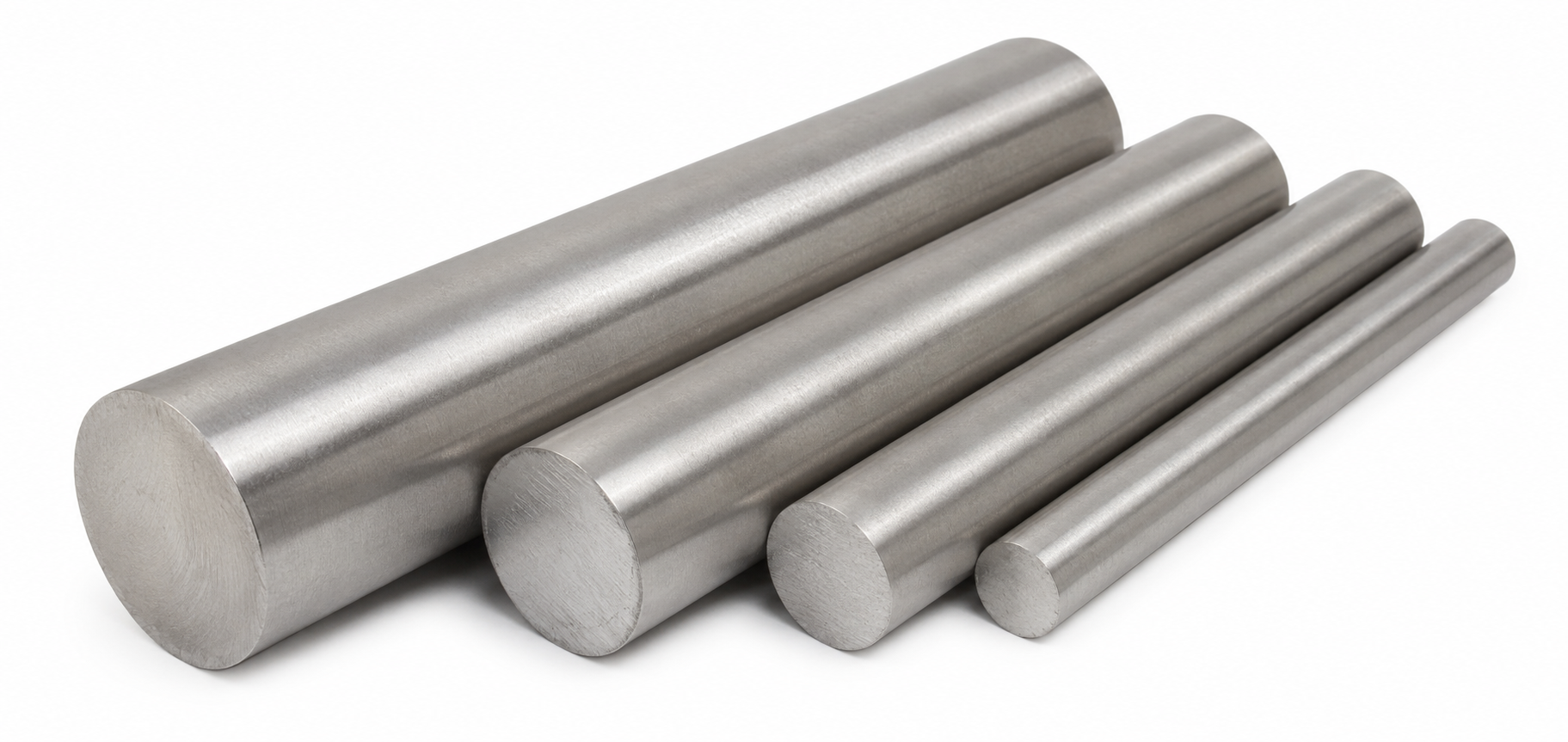
Getting the material wrong is costly. The result is components that fail prematurely, unplanned downtime and replacement costs that could have been avoided. Inconel round bars and stainless steel bars are both widely used, but they are not interchangeable. They perform differently depending on the environment, and picking the wrong one can cause serious problems. This comparison covers performance, cost, and application suitability so you can make a clear decision.
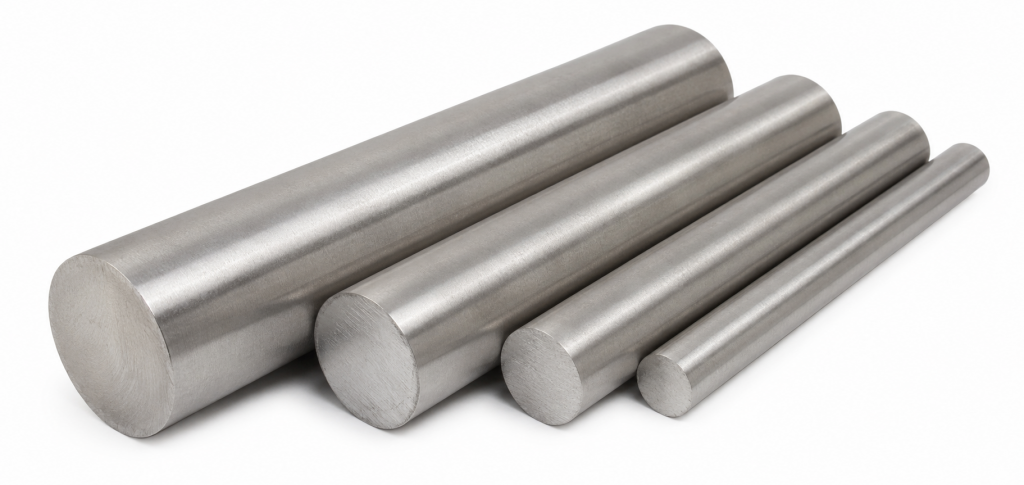
What Are Inconel Round Bars?
Inconel round bars are made from nickel-chromium superalloys. These bars hold their mechanical strength at very high temperatures where standard metals would begin to soften or deform. They also provide strong oxidation resistance and remain stable under heavy pressure.
Common grades available in the market include Inconel 600, Inconel 625, and Inconel 718. Grade 625 is known for its corrosion resistance. Grade 718 is the preferred choice when maximum strength at high temperatures is the priority.
What Are Stainless Steel Bars?
Stainless steel bars are iron-based alloys. They contain a minimum of 10.5% chromium along with varying amounts of nickel, manganese, and other elements. The material is grouped into families such as austenitic, ferritic, and martensitic, based on the internal crystalline structure.
Stainless steel offers reliable corrosion resistance, decent durability, and good tensile strength. It is widely used across general manufacturing because it balances mechanical performance with cost.
Chemical Composition Comparison
The main difference depends on the element base. Inconel is mostly nickel based (often more than 50% nickel). This high concentration of nickel makes it stable at extreme temperatures. Stainless steel is based on iron, and iron is the main structural element.
Chromium is used in both materials to create a protective oxide layer on the surface. Inconel also contains large amounts of molybdenum, niobium and iron, which improve its structural performance under thermal and chemical stress. It is the difference in composition that alters the behavior of each material in demanding environments.
Mechanical Properties Comparison
Inconel round bars are generally better than stainless steel under high stress conditions. The material exhibits high tensile and yield strength at high temperatures and it can tolerate cyclic loading without significant fatigue problems.
Under normal conditions stainless steel is a strong and rigid material. It works reliably at static loads and at normal temperatures. However, its mechanical performance deteriorates under continuous dynamic loads or sustained high thermal stress. In those situations, a superalloy is a better choice.
Corrosion Resistance Performance
Inconel is good for aggressive environments. It resists pitting, crevice corrosion and stress corrosion cracking in severe marine, acidic solutions and chemical processing environments.
Stainless steel can withstand moderate conditions such as exposure to freshwater or light atmospheric environments. Typical stainless steel grades may pit and eventually fail in high-chloride or strongly acidic environments. Inconel is the safer bet for those applications.
Temperature and Heat Resistance
Inconel holds a clear advantage here. These bars are structurally sound and resistant to oxidation at temperatures over 1,000 degrees Fahrenheit. Stainless steel becomes weaker at higher temperature and is prone to scaling or deformation. For this reason nickel superalloys are used for components in industrial furnaces, gas turbines and exhaust systems.
Machinability and Fabrication
Stainless steel is much easier to handle. It can be machined, cut and shaped fairly easily with standard shop tools. Inconel cutting wears tooling rapidly through work hardening. It needs special setups and slower cutting speeds to be machined.
Both materials are weldable. Inconel must be very careful in the welding parameters to prevent cracking while cooling. This makes fabrication more labor-intensive and adds to project costs.
Cost Comparison and Economic Factors
Inconel round bars are much costlier than stainless steel. The high nickel and molybdenum content increases the cost of raw materials and the more complex manufacturing process only adds to that. Stainless steel is often the most economical option for any standard application.
Using stainless steel in an environment it cannot handle means frequent replacements and higher maintenance costs. Over time, that can work out more expensive than buying the right material from the start.
Industrial Applications Comparison
Applications of Inconel Round Bars
- Aerospace and jet engines: Used for exhaust ducts and turbine blades that operate under extreme heat.
- Chemical processing plants: Applied in vessels and piping that handle aggressive acids.
- Marine and offshore industries: Used for submarine components and offshore drilling equipment exposed to saltwater.
Applications of Stainless Steel Bars
- Construction and infrastructure: Used for structural supports, brackets, and architectural fixtures.
- Automotive components: Found in exhaust tubes, chassis parts, and trim pieces.
- Food and pharmaceutical industries: Used in processing machinery because it is easy to clean and sanitise.
Durability and Lifespan
In harsh environments, Inconel has a longer service life. It degrades slowly under corrosive or high temperature conditions, which directly reduces maintenance overhead and risk of unexpected shutdowns.
Under normal industrial conditions, stainless steel has a long life and can be depended upon for many years. On the other hand, if the chemical or thermal limits of the environment are crossed, degradation occurs rapidly. It’s the environment it’s in that makes the difference.
How to Choose Between Inconel Round Bars and Stainless Steel Bars
Consider your operating temperature, structural load requirements, any corrosive chemical exposure, and your budget. Inconel is required to ensure the system operates safely and reliably. If the system is running at extreme heat or processing highly corrosive acids. Stainless steel is sufficient for normal temperatures and usual industrial surroundings and it helps in keeping the cost of the project within reach.
Industry Standards and Quality Considerations
Both materials conform to the international quality standards like ASTM, ASME and ISO. Using certified suppliers for your materials will mean you will have accurate material test certificates and verified compositions. We are an established manufacturer, supplier, importer and stockist of flanges, fasteners, forgings, pipe fittings and round bars. We provide them in standard and custom sizes at competitive prices.
Common Mistakes to Avoid When Selecting Material
A common mistake is to select stainless steel for the reduction of initial costs alone, without considering the environment in which it will be working. That decision often leads to early component failure and higher long-term costs.
Specifying material grades that are over the top when stainless steel would work perfectly well pushes project costs up unnecessarily. Buyers also tend to look only at the purchase price and ignore what the cost of maintenance and replacement will be over the life of the component. Both mistakes are preventable with a clear evaluation of the operating conditions prior to procurement.
Conclusion
The best material totally depends on your operating conditions. Inconel round bars are the right materials for extreme heat and very corrosive environments where stainless steel wouldn’t hold up. Stainless steel remains the most popular and economical choice for structural, automotive and general industrial applications. The project is reliable as it avoids unnecessary costs of the operational life. It also ensures that the material is adequate for the actual needs.