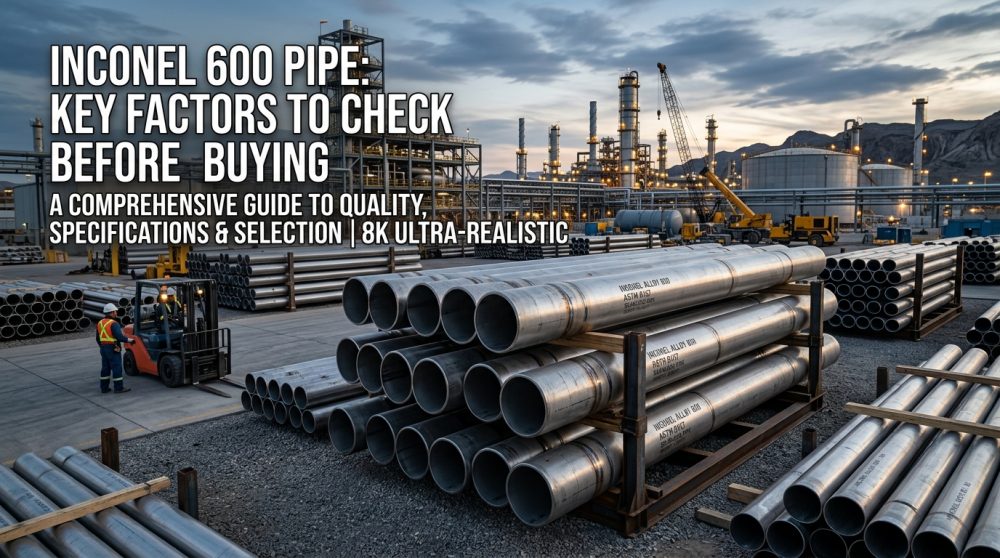
Nickel alloy piping demand has risen across industries that cannot afford corrosion failures or thermal breakdowns. Chemical plants, refineries, furnace manufacturers, most have shifted away from standard stainless grades wherever temperatures or chemical exposure push beyond safe limits. Inconel 600 pipes are in a category where both heat resistance and corrosion resistance both need to be present. Getting procurement wrong is not just a cost issue; it becomes a maintenance and safety problem. A proper Inconel 600 Pipe Supplier with traceable stock and full documentation matters more than the lowest price.
What Are Inconel 600 Pipes?
Inconel 600 is a nickel-chromium alloy. Nickel content is 72% minimum, chromium runs 14 to 17%, and iron fills most of the rest. The combination handles high-temperature oxidation and a fair range of corrosive environments.
Inconel 600 pipes show up in furnace components, chemical reactors, and heat exchangers. The material does not soften significantly at temperatures where most stainless grades become unreliable. Inconel 600 tubing covers the smaller diameter, tighter-tolerance side of the same alloy, used in heat exchanger bundles and instrumentation lines. Same composition, different form.
Understanding Inconel Pipe Specification
ASTM B167 covers seamless pipe and tube in this alloy family. The material designation is UNS N06600, which should appear on any mill test report.
Pipe schedules run from 5S up through XXS. Which schedule applies depends on operating pressure and wall thickness requirements. Temperature capability for sustained service goes up to roughly 1093°C in oxidizing conditions, though that ceiling drops under significant mechanical load. Inconel pipe specification covers more than chemical composition. Dimension, schedule, and the temperature-pressure combination all need evaluation before ordering.
Key Factors to Check Before Buying Inconel 600 Pipes
Material Certification and Standards
Ask for the mill test certificate before committing to any purchase. It should show chemical analysis, mechanical test results, heat number, and ASTM B167 compliance with N06600 designation. If a supplier hesitates on documentation, that is already a problem. Third-party inspection and heat traceability are worth requesting for critical service.
Seamless vs Welded Pipe Selection
Inconel 600 seamless pipes are made without a weld seam, so the structure is consistent through the full cross-section. For high-pressure service, that uniformity matters. Welded pipes have a seam, which can be a weak point in aggressive chemical environments or under cyclic pressure loading. Welded is more affordable and fine for lower-pressure use. Seamless is worth the extra cost when the service demands it.
Corrosion Resistance Requirements
Chemical processing involves strong acids and alkalis. Marine service means chloride exposure. Heat exchangers deal with both thermal cycling and process fluid chemistry. Inconel 600 handles most of these without any problem. Sulfur-containing atmospheres at high temperatures are the exception; sulfidation damage is a known risk there. Verify chemical compatibility before locking in the grade.
Temperature and Pressure Conditions
Industrial furnaces are a primary application, including radiant tubes, retorts, and muffles. Mechanical properties hold after long heat exposure better than most alternatives. Thermal cycling is handled well, too. But temperature capability is not a fixed number. At higher stress levels, the safe upper limit drops. Temperature and pressure need to be looked at together, not separately.
Pipe Dimensions and Thickness
Outer diameter must match the piping system connections. Wall thickness follows from the schedule, and the schedule determines pressure rating. Thicker wall, higher pressure rating, more weight. Check OD, wall thickness, and schedule against engineering drawings before ordering. Verbal descriptions cause site mismatches.
Choosing Reliable Inconel 600 Pipe Suppliers
Not all suppliers who advertise nickel alloys actually buy and stock them on a regular basis with traceability. The right questions for inconel 600 pipe suppliers are not just about catalog listing but about manufacturing capability. Check if they can supply non-standard sizes and certifications. PED compliance matters for European pressure equipment projects. Preston Alloys is one supplier with a specific focus on nickel and special alloys. Whoever you source from, verify lead times, documentation, and quality control processes before committing.
Common Applications of Inconel 600 Pipes
- Chemical processing: Reactors and pipelines carrying corrosive acids and alkalis.
- Oil and gas: Downhole equipment and surface processing lines with hydrogen sulfide exposure.
- Aerospace: High-heat exhaust components and structural parts near engines.
- Heat treatment: Furnace radiant tubes, muffles, and retort systems.
- Marine engineering: Seawater handling equipment and offshore structural components.
- Power generation: Steam generator tubes and high-temperature service lines.
Benefits of Using Inconel 600 Tubing and Pipes
The oxidation resistance of inconel 600 tubing and pipes comes from chromium forming a protective oxide layer at elevated temperatures. Mechanical strength stays acceptable even after extended high-temperature exposure. Resistance to chloride stress corrosion cracking is a practical advantage where austenitic stainless steels crack over time. Fewer replacements reduce operational interruptions. Maintenance overhead drops when the base material is not failing prematurely.
Mistakes to Avoid When Purchasing Inconel Pipes
Ordering by alloy name without confirming specification, schedule and certification is the most common problem. Inconel 600, 625 and 718 are not interchangeable.
Wrong schedule selection is another frequent issue. Too light a wall for the operating pressure causes failures. Re-procurement costs then far exceed what a correct first order would have cost.
Buying uncertified material to cut costs creates traceability problems and audit failures. The chance of receiving off-specification material goes up significantly.
Focusing only on price without considering lead time, documentation quality, and supplier reliability is a pattern that causes downstream delays every time.
Conclusion
Specification verification is not a formality when buying inconel 600 pipes. ASTM compliance, UNS designation, pipe schedule, and mill certification need to be confirmed before any order is placed. Seamless versus welded, correct schedule for operating conditions, and chemical compatibility with the process are details to sort out after delivery. A supplier with proper documentation, consistent inventory, and actual material knowledge makes the process far simpler. Quality Inconel piping holds up over a long service life. More inexpensive alternatives generally do not.