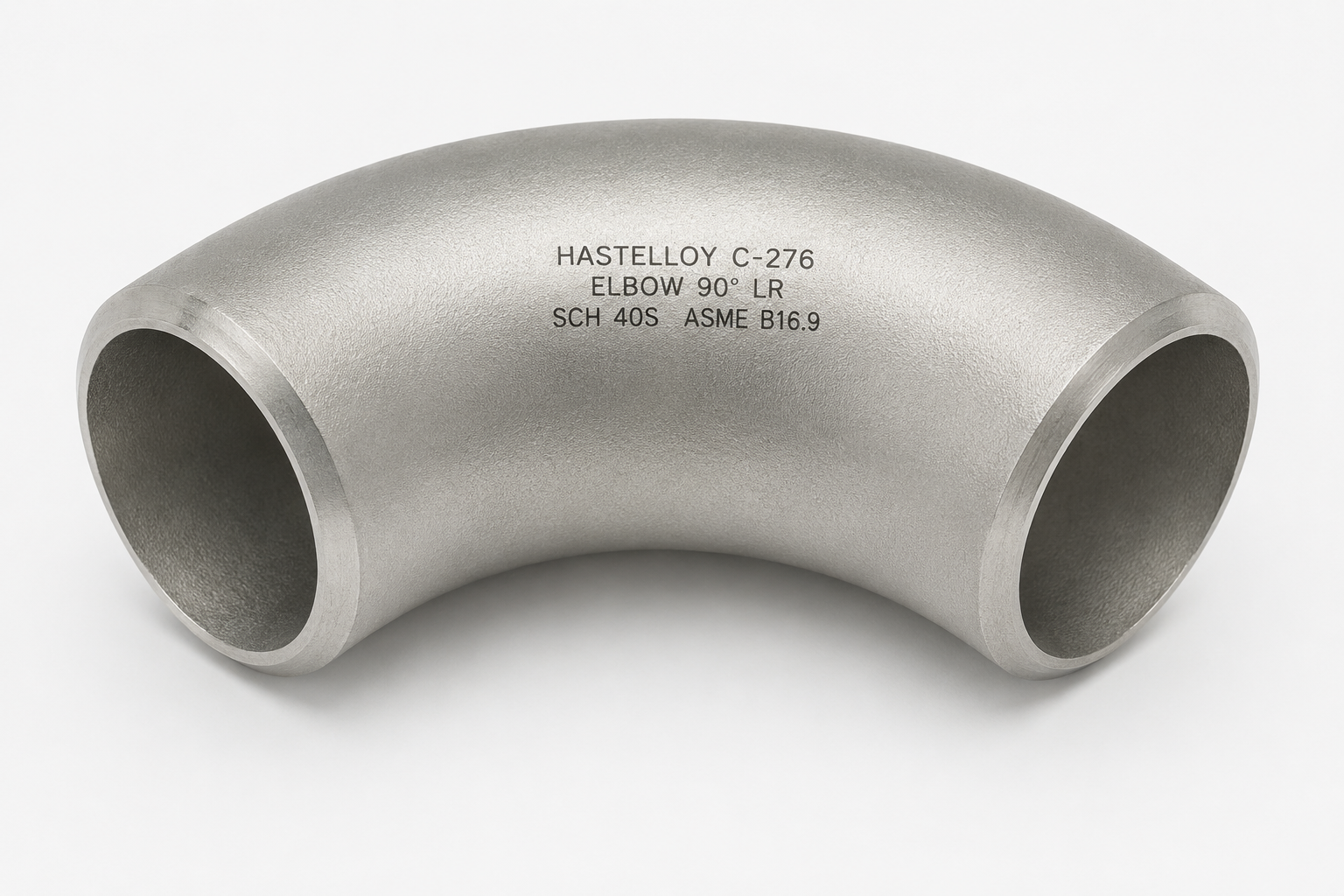
A single point of failure in a high-stakes engineering environment can cause catastrophic consequences. Pipe fittings have a great responsibility to keep systems intact under pressure, heat and chemical exposure. Selecting the wrong material can lead to safety risks, faster wear and tear and increased operating costs. Demand for corrosion-resistant alloys continues to grow in oil refineries, chemical plants and aerospace systems.
What Are Hastelloy Pipe Fittings?
Hastelloy is a nickel-based super alloy intended to resist conditions that would quickly corrode standard stainless steel or carbon steel. Usually, it is made from an alloy of molybdenum, chromium and tungsten. It is resistant to both oxidising and reducing chemical environments. Elbows, tees, reducers, couplings and flanges are common Hastelloy pipe fittings. Hastelloy will remain structurally sound after years of exposure, while carbon steel will corrode in months in acidic service. Premium Hastelloy pipe fittings are made with precision to exact tolerances and tested to meet the demands of extreme operating environments.
Key Properties That Make Hastelloy Ideal for Critical Applications
Hastelloy’s performance record is built on a set of properties that separate it from every conventional piping material on the market today.
- Hastelloy resists corrosion in both oxidising and reducing environments, making it serviceable across a wider range of process conditions than most competing alloys.
- The alloy demonstrates strong resistance to pitting and crevice corrosion, which are the most common failure mechanisms in standard stainless steel fittings.
- Mechanical strength remains stable at elevated temperatures and pressures, allowing consistent performance where thermal cycling would compromise lesser materials.
- Highly acidic process streams do not degrade Hastelloy’s structure at the rate they affect carbon or low-alloy steels.
- Under continuous industrial stress, Hastelloy fittings retain integrity far beyond the service life of conventional alternatives.
Why Engineers Prefer Premium Hastelloy Pipe Fittings for Critical Projects
In chemical processing or offshore drilling, a fitting failure means production is halted, environmental incidents occur, and in the worst cases, loss of life. That risk is directly mitigated by Hastelloy’s resistance profile. Mechanical stability at high pressure and temperature guarantees safety margins for the entire operational cycle. Maintenance intervals are much longer than with standard alloy fittings, reducing labour costs and unplanned downtime.
Common Industrial Applications of Hastelloy Pipe Fittings
Hastelloy pipe fittings are specified across a wide range of industries where conventional materials cannot withstand aggressive operating conditions. The following sectors are environments in which operational safety is defined by consistent performance.
Chemical Processing Plants
Hastelloy fittings are used in plants processing sulphuric acid and chlorine-based compounds to prevent corrosion failures, which can jeopardize the safety of personnel and continuity of production.
Oil and Gas Industries
Offshore drilling systems are subjected to extreme pressure and corrosive brines. Standard steel fittings deteriorate in months. Hastelloy maintains structural integrity.
Aerospace Engineering
High-performance fuel systems require materials resisting thermal stress and chemical degradation simultaneously. Hastelloy meets both demands reliably.
Marine Applications
Saltwater is among the most corrosive environments for metallic components. Hastelloy resists chloride-induced pitting that routinely destroys conventional stainless steel.
Food Processing and Pharma
Hastelloy’s resistance to sensitive compounds leads to the inert behavior necessary for compliance with the hygiene and purity requirements of regulatory frameworks.
Power Generating Plants
Fittings are exposed to sustained high temperatures and fluctuating pressures in thermal processing units. The mechanical degradation of Hastelloy is insignificant over these cycles.
Performance in Extreme Operating Conditions
Over time, thermal cycling creates stresses from expansion and contraction that fracture conventional fittings. The degradation is limited by the microstructural stability of Hastelloy. In a chloride-rich stream, Hastelloy remains intact for years under the same exposure, while ordinary stainless steel shows localized corrosion in weeks. Deep-sea installations, high altitude aerospace systems and high-vibration environments all present different challenges. In comparison, conventional carbon steel needs much more frequent inspection and replacement under similar conditions.
Manufacturing Standards and Quality Considerations
Dimensional and metallurgical reliability is achieved in components made to ASTM B366 and ASME B16.9 standards that uncertified components cannot match. Dimensional inaccuracies create points of stress concentration that become points of failure under load. Hydrostatic testing ensures pressure integrity and radiography and ultrasonic inspection reveal subsurface defects not visible to visual inspection. Surface finish quality directly affects corrosion performance and weld compatibility. Mill test reports ensure every fitting is traceable back to its original material composition, a hard requirement across most regulated industries.
Common Hastelloy Grades Used in Pipe Fittings
Different project environments demand different alloy compositions. Choosing the correct grade is as consequential as choosing the correct fitting geometry.
- Hastelloy C-22 provides exceptional resistance to oxidizing chemicals and performs reliably in mixed acid environments where process chemistry may change.
- The most versatile grade is Hastelloy C-276, which has demonstrated performance in mixed corrosive environments, wet chlorine gas and hypochlorite services.
- C-22 is intended for oxidizing service, and C-276 for reducing service. The two grades differ in chromium and molybdenum content.
- The grade is selected based on a detailed assessment of the concentrations of the chemicals, the operating temperature and the predominant type of environment in the application.
How to Choose the Right Hastelloy Pipe Fittings
The proper selection of fittings depends on a thorough understanding of the process environment. The right grade is defined by the chemicals involved and whether they form oxidizing or reducing environments. The available pressure ratings and temperature ranges should match the mechanical specifications of the fitting. Compatible with the existing piping, flange standards and wall thicknesses so as not to cause stress concentration at the connection points. Supplier credibility and certification documentation are not an afterthought. A fitting without traceable mill certificates cannot be reliably verified, regardless of what grade is stamped on it.
Maintenance, Durability, and Lifecycle Benefits
When exposed to the same corrosive environment, hastelloy pipe fittings require significantly less maintenance than standard alloy fittings. The resistance against surface degradation allows longer inspection intervals without increasing the operational risk. Hastelloy fittings are more durable than stainless steel in aggressive applications. Fewer replacement cycles mean lower total material costs and less system downtime over the lifetime of the project.
Cost vs Long-Term Value Analysis
Hastelloy pipe fittings carry a higher procurement cost than standard alternatives. That gap narrows significantly when total cost of ownership is calculated across the full operational lifecycle. A carbon steel fitting in acid service may require replacement within 12 to 18 months. A Hastelloy fitting in the same application can run for a decade without intervention. Downtime costs in refineries and chemical plants often reach tens of thousands of dollars per hour. Reducing replacement frequency by a factor of five or ten produces an ROI that justifies the initial premium in any serious lifecycle analysis.
Common Mistakes to Avoid When Selecting Hastelloy Fittings
Selecting a Hastelloy fitting without fully understanding the process environment remains one of the most costly errors in industrial procurement.
- Selecting the wrong alloy grade for a specific environment can produce corrosion rates comparable to standard steel, negating the premium investment.
- Ignoring ASTM and ASME certification standards creates compliance gaps that invalidate project approvals and create safety liabilities.
- Stress points that are not dimensionally compatible with the existing piping create failure points under operating pressure.
- The lowest purchase price is not always the best choice. Verified quality means a longer service life and a lower total cost of operation.
- Sourcing from unverified suppliers increases the risk of receiving substandard material that does not meet the grade specifications on the component.
Role of Trusted Supply Partners in Ensuring Quality
Fittings made by experienced manufacturers with established metallurgical controls meet ASTM and ASME specifications in actual operating performance. Quality control at the point of manufacture determines if a fitting will perform as specified. There are some things that are non-negotiable, such as hydrostatic testing, chemical composition verification and dimensional inspection. The reliability of supply is just as important to project timelines as product quality. Full material traceability from the mill to installation is ensured with proper documentation, including mill test reports and heat certificates. Companies like Robust Special Metals maintain material specifications without compromise throughout the supply chain, ensuring a consistent supply of certified Hastelloy pipe fittings.
Conclusion
Hastelloy pipe fittings provide a unique combination of corrosion resistance, mechanical strength and longevity that surpasses traditional alloys in harsh industrial environments. They are the material of choice for critical applications where failure is not an option. Any additional up-front cost is more than offset by the savings over the service life of the component. And in mission-critical operations, the use of the highest grade materials possible is an engineering imperative, not a choice.