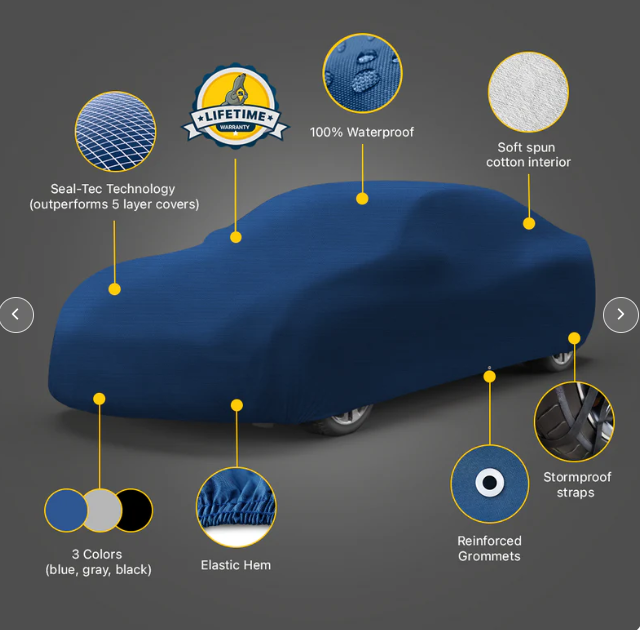
While many people own their cars, most tend to leave them outside when they are not using them. In such cases, it is important to have an excellent car cover to ensure that the paint of the car is not damaged by the elements.
However, not all covers are appropriate for the outdoors because a cover made for indoors will provide inadequate protection when there are severe weather conditions and a cheap cover meant for the outdoors will trap water and rip off after some time when subjected to the elements of nature.
What then are the best outdoor car covers?
The best outdoor cover for a car is one that fits well on the car, has materials that resist the weather, allows for the passage of moisture vapors and one that remains securely on the car even when it is windy.
What Is the Best Outdoor Car Cover?
For the majority of cars, the best outdoor car cover would be a custom-fit or vehicle-specific cover, made of strong, breathable material with UV protection.
An ideal outdoor cover for your car will keep it safe from:
UV rays, sun exposure
Rain and light moisture
Dust and dirt
Bird droppings
Tree sap and leaves
Snow and frost
Wind-blown particles
Scratches from outside
But there is no cover that is ideal for all cars and weather conditions at once. If you live in a hot, sunny climate, then you would need to pay more attention to the UV-protection feature, whereas in rainy or snowy regions, the water-resistant and wind-resistant features will be more important.
So, the best cover is that which suits your car, the climate and conditions of parking.
Why Do You Need an Outdoor Car Cover?
Parking the car outside puts it at risk of elements that may cause wear and tear to its paint and exterior components over time.
One such element is the sun. The sun’s UV rays can have an impact on the car if exposed daily.
Rains can also cause issues, especially if accompanied by dirt or other elements, since once the water dries up, it may leave water marks. Another potential issue could be bird droppings or tree sap which can be difficult to get off the car and cause damage.
Using an outdoor cover provides a barrier for the car and keeps the contaminants away from the car’s exterior.
However, it does not eliminate the need to maintain your car through washing.
7 Features to Look for in the Best Outdoor Car Covers
Choosing a car cover based only on price or looks is a mistake many times. Material, fit and construction all influence how well it performs outdoors.
1.Weather Resistant Material
An outdoor cover has to take the weather.
Choose a material that will stand up to rain and moisture, but still allow the trapped vapour to escape. A totally non-breathable cover will keep rain out, but can trap condensation underneath.
The goal is to strike a balance between water resistance and breathability.
Depending on your climate, you may also wish to have a cover that is built to take snow, frost, strong sunlight or frequent temperature changes.
2. Protection from UV rays
If your car is sitting in the sun for hours on end during the day, then you need to be looking for UV protection.
UV resistant material on the cover can help offset the effects of long-term sun exposure on the exterior. This is especially helpful for vehicles that are parked outside for long periods of time and are not driven regularly.
If you live in a hot and sunny climate, look for a cover that’s designed to block out UV exposure well.
3. A Safe and Secure Fit
Fit is one of the most important factors to consider when choosing an outdoor car cover.
Loose cover can flap against the paint if it gets windy. Repeated movement over time may cause unnecessary friction between the vehicle and the cover.
If the cover is too tight, this can be difficult to put on and take off and may not cover all parts of the car properly.
Typically a custom fit or vehicle specific cover will fit better than a universal cover.
Look for features like:
Sides of elastic
Straps fixed
Buckles,
Tiedown systems
Mirror pockets (if applicable)
Reinforced mounting points
These features help to keep the cover in place during windy weather.
4. Air permeability
People tend to forget about breathability when buying a car cover.
Condensation, humidity or a damp vehicle surface can cause moisture to accumulate under a cover, even when it’s not raining. If that moisture can’t get out, the conditions under the cover could be bad for the paint and exterior.
A breathable cover permits moisture vapour to escape but still provides protection from outdoor elements.
Important feature to consider for vehicles parked outside regularly.
5. Sturdy Construction
Outdoor car covers have to deal with tougher conditions than indoor covers.
Verify the quality of:
Sewing the Seams
Hems
Straps.
Buckles
Reinforcement points
A cover can look great when it is brand new, but if it has poor quality attachment points or weak stitching then it is going to cut down the life of the cover.
If you live in an area with severe weather or high winds, durability is even more important.
6. Interior Lining, Soft
Car covers require a tough exterior but a gentle interior to protect your vehicle’s finish.
A soft layer on the inside can help to reduce the risk of the paint rubbing against itself. This is especially important when dust or small debris accumulates between the cover and the vehicle.
You should reasonably clean your car before putting a cover on it. A cover should cover a clean surface, not rub dirt across the paint.
7. The Right Size For Your Car
Car covers are not a one size fits all.
A cover made for a small sedan may not be enough to protect an SUV, truck or sports car. Before you buy, check the manufacturer’s sizing guide and compare it with your vehicle’s dimensions.
Note that:
Length of vehicle
Broad
Height
Body style
Looking glasses
antennae
Accessories for roof
Spoilers or other alterations
The better the fit, the better the cover can stay in place and cover the whole vehicle.
Best Outdoor Car Cover Materials
The primary feature of a car cover that most affects its performance is the material of which it is made.
Below are some of the most popular materials.
Polyester
This is one of the most demanded materials for covering cars outdoors due to its excellent lightness, manipulability, and durability.
Depending on the technology of its processing, the polyester fabric provides the driver with different levels of UV-protection, dust-proofness, and water resistance, making it a great option for a regular outdoor parking.
Polypropylene
Another material used in manufacturing car covers is polypropylene. Compared to polyester, it has lower moisture resistance and, therefore, is usually used in composite covers. Its indicators vary from cover to cover, so it is better to study the characteristics of a particular product before purchasing.
Multi-Layer Fabrics
Multi-layer covers offer the ability to receive more than one type of protection.
For instance, one layer may repel water, another may enhance breathability, and finally, the layer closest to the paint will be more gentle.
For cars that are parked outside for long periods of time, having a multi-layer cover can be a wise investment.
Single-Layer Covers
Single layer covers are typically much lighter than their multi-layer counterparts.
While single-layer covers can be used for casual parking, if you expect to park outside regularly, or live in an area with very sunny weather, you may want to think about purchasing a sturdier, multi-layer cover.
Outdoor vs Indoor Car Covers: What’s the Difference?
The biggest difference is the environment the cover is designed to handle.
| Feature | Outdoor Car Cover | Indoor Car Cover |
| UV protection | Important | Usually less important |
| Rain resistance | Important | Usually not required |
| Breathability | Important | Important |
| Wind resistance | Important | Less important |
| Dust protection | Important | Important |
| Durability | Higher | Often lighter |
| Secure fastening | Recommended | Often less critical |
An indoor cover is usually designed for a controlled environment where the car is protected from rain, sunlight and wind.
An outdoor cover needs to withstand much more demanding conditions.
If your car is parked outside, choosing an indoor cover simply because it is cheaper may not provide the protection you need.
Are Waterproof Car Covers Better?
Not necessarily.
It sounds logical that a completely waterproof cover would be the best option for outdoor use, but there is an important consideration: breathability.
A cover that prevents rain from entering but also traps moisture underneath may create other problems.
For most outdoor vehicles, a water-resistant and breathable cover is often a better balance than a completely impermeable one.
If you live in an area with frequent heavy rain, look for a cover with strong water resistance while also checking how the manufacturer addresses ventilation and moisture vapour.
What Is the Best Car Cover for Hot and Sunny Weather?
If your car is regularly exposed to intense sunlight, prioritise:
- Strong UV protection
- Reflective or heat-resistant exterior
- Breathable construction
- Secure fit
- Durable material
- Soft interior lining
A quality cover can help reduce direct exposure to sunlight, but it is still worth parking in the shade whenever possible.
Remember that a car cover is part of a wider vehicle protection routine. Regular washing, waxing or paint protection can also help maintain the exterior.
What Is the Best Outdoor Car Cover for Rain?
For rainy conditions, look for a cover that offers:
- Strong water resistance
- Breathable fabric
- Secure seams
- Reliable fastening
- Good coverage around the vehicle
- Durable construction
Avoid assuming that “waterproof” automatically means “best”. The cover should be able to manage moisture effectively, including moisture that forms underneath.
If your car is already wet, allow it to dry when possible before covering it for a long period.
What Is the Best Outdoor Car Cover for Windy Areas?
Wind can be one of the biggest challenges for an outdoor car cover.
A cover that constantly moves against the vehicle may cause friction, particularly if dust and grit become trapped underneath.
For windy locations, look for:
- A close-fitting design
- Elasticised edges
- Strong straps
- Buckle or tie-down systems
- Reinforced attachment points
- Durable fabric
A good fit is particularly important. Even a high-quality cover can become a problem if it is too loose and repeatedly flaps against the car.
Are Custom-Fit Car Covers Better Than Universal Covers?
In many cases, yes.
A custom-fit or vehicle-specific cover is designed around the shape and dimensions of a particular vehicle.
This can provide:
- Better overall coverage
- A more secure fit
- Less movement in windy conditions
- Better protection around mirrors and body panels
- A cleaner appearance
Universal covers can still be useful, particularly if you want a more affordable option or regularly change vehicles.
However, if your car is parked outdoors every day, investing in a better-fitting cover may be worthwhile.
How to Choose the Best Outdoor Car Cover for Your Car
Start by thinking about where and how you park your vehicle.
If you park in direct sunlight
Prioritise UV protection and heat resistance.
If you live in a rainy climate
Look for water resistance combined with breathability.
If you experience strong winds
Choose a secure, close-fitting cover with strong straps or fastening systems.
If you park under trees
Focus on protection against bird droppings, tree sap and falling leaves.
If you experience snow or frost
Look for a durable cover designed for colder conditions and make sure it can handle the expected weather.
If you only use the cover occasionally
A lighter cover may be easier to install and store.
If your car is parked outside every day
Consider investing in a durable, vehicle-specific outdoor cover designed for long-term use.
Common Mistakes to Avoid When Buying an Outdoor Car Cover
Choosing the cheapest option
A low price can be attractive, but replacing a poor-quality cover repeatedly may cost more over time.
Buying the wrong size
A cover that does not fit properly may leave parts of your vehicle exposed or move excessively in the wind.
Ignoring breathability
Keeping rain out is important, but moisture management underneath the cover matters too.
Using an indoor cover outdoors
Indoor covers are not designed to handle the same level of UV exposure, rain and wind.
Covering a dirty car
Dust and grit trapped between the cover and paint can increase the risk of surface scratches.
Forgetting to secure the cover
Even a well-fitting cover should be properly secured if the vehicle is parked in a windy location.
Leaving a damaged cover in use
Torn fabric, broken straps or damaged seams can reduce protection. Inspect your cover regularly and replace it when it is no longer doing its job.
How to Use an Outdoor Car Cover Properly
Using the right cover is only part of protecting your vehicle. How you use it also matters.
Before covering your car:
- Park in a suitable location.
- Make sure the vehicle is reasonably clean.
- Allow the exterior to dry if it is wet.
- Check the inside of the cover for dirt or debris.
- Place the cover carefully over the vehicle.
- Secure all straps and fasteners.
- Check that the cover is not rubbing excessively against any area.
- Remove and clean the cover periodically according to the manufacturer’s instructions.
When removing the cover, avoid dragging it across the paint. Fold or roll it carefully instead.
How Often Should You Wash a Car Cover?
There is no single answer because it depends on the environment.
If your car is parked under trees, near construction or in a dusty area, the cover may collect dirt more quickly.
Inspect the cover regularly. If the outside becomes heavily soiled, clean it according to the manufacturer’s care instructions.
Always check the product’s washing and drying recommendations before cleaning it. Some materials may require hand washing or specific cleaning methods.
Can a Car Cover Scratch Your Paint?
A car cover itself should not normally scratch a clean, properly maintained vehicle. However, problems can occur when dirt, sand or other abrasive particles become trapped between the cover and the paint.
Wind can make this worse by causing the cover to move repeatedly against the vehicle.
To reduce the risk:
- Clean your car before covering it when practical.
- Keep the inside of the cover clean.
- Choose a soft-lined cover.
- Use a proper-fitting cover.
- Secure the cover correctly.
- Avoid using a damaged or excessively dirty cover.
How Long Does an Outdoor Car Cover Last?
The lifespan of an outdoor car cover depends on its material, construction, climate and frequency of use.
A cover exposed to intense sunlight, heavy rain and strong winds every day will generally experience more wear than one used occasionally in mild weather.
Signs that it may be time for a replacement include:
- Fading or brittle fabric
- Tears
- Damaged seams
- Broken straps
- Loss of water resistance
- Significant wear around high-contact areas
A higher-quality cover may cost more initially but can be a better long-term investment if it lasts longer and provides more reliable protection.
Frequently Asked Questions
What is the best outdoor car cover?
The best outdoor car cover is one that fits your vehicle properly and provides the right combination of UV protection, weather resistance, breathability and durability for your local climate.
Should an outdoor car cover be waterproof?
It should provide strong water resistance, but complete waterproofing is not always the only consideration. Breathability is also important because moisture can become trapped underneath the cover.
Is it better to use a custom-fit car cover?
For many outdoor applications, yes. A custom-fit cover generally provides better coverage and stays more securely in place than a loose universal cover.
Can I leave my car cover on all the time?
You can use an outdoor cover for extended periods, provided it is designed for outdoor use and is used correctly. Check the vehicle and cover periodically for dirt, moisture and signs of wear.
Can I put a car cover on a wet car?
It is generally better to allow the vehicle to dry before covering it for an extended period. Trapped moisture can remain underneath the cover and may contribute to problems over time.
Do outdoor car covers protect against hail?
Some covers may offer limited protection against small hail, but standard outdoor car covers are not designed to guarantee protection from severe hailstorms. Specialised hail protection covers are better suited to that purpose.
Will a car cover stop bird droppings from damaging paint?
A cover creates a physical barrier between the droppings and the vehicle’s paint, which can help protect the finish. However, the cover itself should be cleaned regularly to prevent contamination from building up.
What size car cover do I need?
Choose a cover based on your vehicle’s make, model, body style and dimensions. Always check the manufacturer’s sizing chart before purchasing.
How do I stop my outdoor car cover from blowing away?
Choose a close-fitting cover with secure straps, buckles or tie-down systems. Make sure the fastening points are properly secured, particularly when strong winds are expected.
Is a thick car cover always better?
Not necessarily. A thicker cover may offer greater durability, but the overall design, material quality, breathability, fit and weather resistance are equally important.
Final Thoughts: Finding the Best Outdoor Car Cover
The best outdoor car cover is not necessarily the thickest, most expensive or most heavily marketed option. It is the one that provides the right protection for your vehicle and the environment where it is parked.
For most outdoor vehicles, focus on five essentials: a good fit, weather resistance, UV protection, breathability and secure fastening.
If your car sits outside every day, take the time to consider your local weather conditions before choosing a cover. A vehicle parked under the hot sun needs different protection from one exposed to heavy rain or strong winds.
Most importantly, choose a cover that fits properly and use it correctly. When combined with regular cleaning and routine vehicle care, a quality outdoor car cover can be a simple and practical way to help keep your car looking its best for longer.