Introduction
In December 2021, the controversial decision has been made by YouTube which impacted millions of its users who communicate via videos uploaded on it. Namely, the feature of public disliking videos became unavailable for viewers. Thus, the users were left on their own to decide whether a certain tutorial or review video is good enough to be watched.
This decision caused heated debates in the community. The number of dislikes of the video of a creator is available through YouTube Studio, but regular users cannot view it. However, a special software was developed to solve the problem. This software is called YouTube video dislike viewers and is to be discussed further in the essay.
What Is a YouTube Video Dislike Viewer?
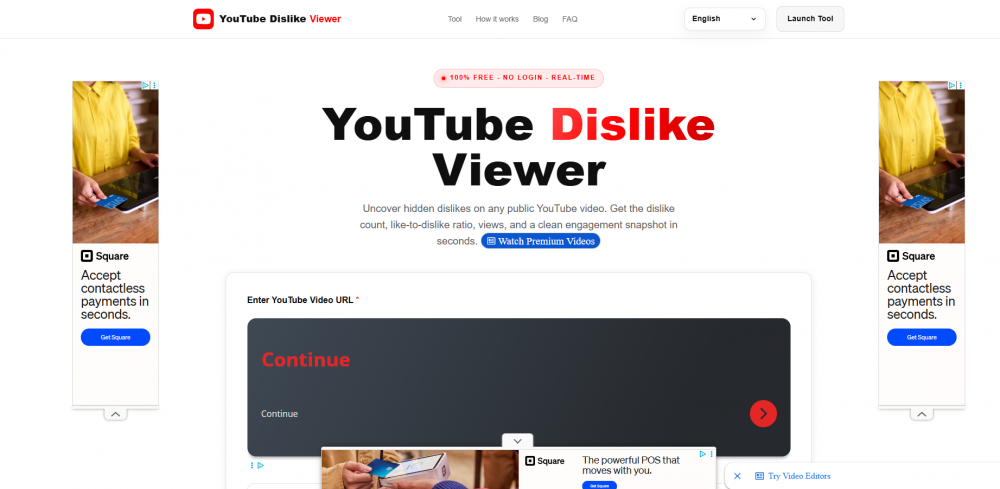
YouTube video dislike viewer are special software programs (mostly extensions for browsers) which allow the users to see the public disliking of YouTube videos. Using such program gives the opportunity to see the number of likes and dislikes of videos as it was before December changes in YouTube.
There are plenty of extensions working with different browsers. In Chrome browser, the most popular ones are “Return YouTube Dislike”, “YouTube Dislike Counter”, and “Dislikes in YouTube”. The first of those three is recognized as the most popular. There are extensions for Firefox among which “YouTube Dislike Viewer” and “Dislikes for YouTube Shorts” are to be named. Also, there are extensions which work only with specific videos, e.g. “Dislikes for YouTube Shorts”.
Apart from the main functionality, there are some extensions which have some extra features. One of them is “YouTube Companion: Dislikes & Watch Time”.
How Does the Work of These Dislike Viewer Tools Function?
Since the official API of YouTube does not provide the number of dislikes any longer, the developers of the dislike viewer tools have started to use some alternative ways to get the information or restore it.
Data Archive and User Votes
First of all, let us consider how the Return YouTube Dislike and other similar tools function. There are two sources of data used by these tools. The first source is the data, which was archived before YouTube decided to remove it. The second source is the data provided by the users themselves who installed these tools. In other words, as soon as the user puts a like, the tool becomes more precise in the information it gives.
There is even an open API (returnyoutubedislikeapi.com) created by the developers of Return YouTube Dislike and available to many tools. In other words, as you may see, the approach is quite based on crowdsourcing.
Accuracy Issues
However, there is one issue that the users of these dislike viewer tools should know regarding the number of dislikes. The point is that since YouTube removed the information about dislikes completely, the data provided by these tools could not be totally accurate. Moreover, it is especially not accurate when it comes to the video, which had few views and few dislikes. Besides, if YouTube decides to make an update, the tools will stop functioning.
Significance. Importance of dislikes for viewers
Almost all users use dislikes to assess whether this video should be viewed or not. Educational videos, tutorial videos, and other types of content can be filtered by the ratio between likes and dislikes.
Furthermore, dislikes can be used as a quality indicator for educational videos as well. According to one developer of YouTube extensions, “dislikes can determine the quality of education, especially when talking about tutorials and instructional videos”. When this ratio is low, it means that the video is not perfect as there might be inaccuracies in the tutorial video.
Dislike Viewer and more
Apart from filtering videos by dislikes, it also provides transparency and feedback from viewers. People who think that hiding dislikes from viewers prevents creators from being accountable believe that users need to have access to dislikes.
Before 2021, viewers had an opportunity to see their attitudes towards videos. But then, why did YouTube hide the number of dislikes? As YouTube claims, it helps protect creators from harassment. According to YouTube, some users use the opportunity to leave dislikes in order to launch a harassment campaign against creators, leaving dislikes on their videos not because of video quality but because of insulting the creator.
Therefore, YouTube decided to ensure its platform safety for creators and began to conceal the number of dislikes from all users except for the creators. However, creators can see the number of dislikes left on their videos via YouTube Studio. Users still can give dislikes on videos using the button.
Alternative Dislike Viewers
There are also some alternative ways of assessment of video content quality without dislikes. For example, viewers can leave comments such as “the audio was hard to understand” or “the solution doesn’t work”. In case of inappropriate content, viewers can click on the report button. Besides, users can influence recommendations of YouTube through feedback.
Conclusion
The existence of like counters for the people watching videos on YouTube is the direct consequence of the critical update made by the site, which is one of the most obvious proofs of the importance of this step for the users of the site who evaluate the quality of videos.
Nevertheless, the users need to be careful about those numbers because they are just estimations and the accuracy of the numbers depends on the popularity of the creator. This issue, however, is a broader topic related to transparency and creators’ wellbeing.