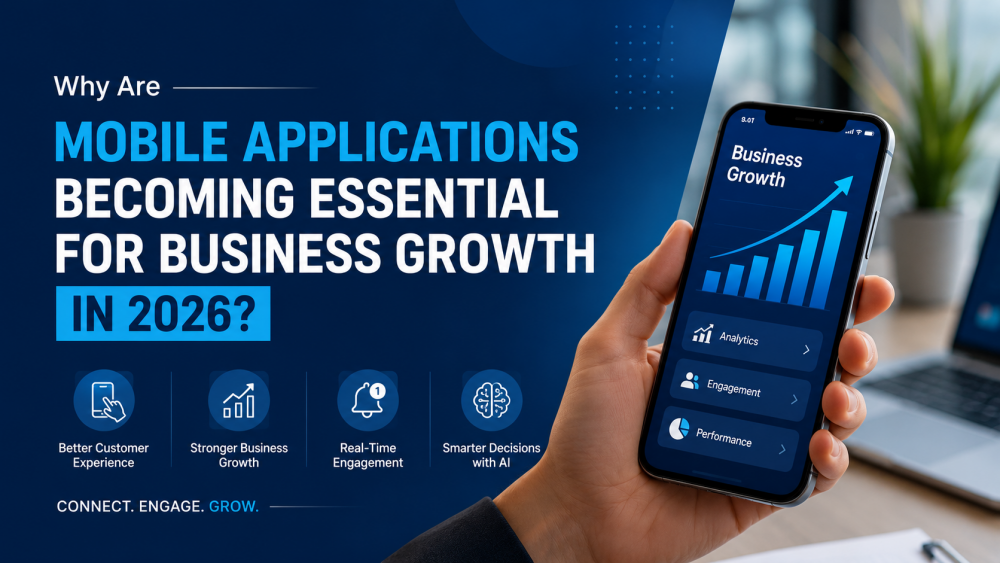
Most people don’t really think of it as “using the internet” anymore. They just open an app and get things done. Order food, transfer money, check deliveries, book appointments it all happens in a few taps without much thought.
That shift didn’t happen overnight. But it has completely changed what users expect from businesses.
A website still matters, of course. It’s still the base layer of online presence. But on its own, it often feels like something users visit briefly and leave. Mobile apps are different. They sit on the phone, right where attention already is.
That alone changes how often people engage.
Convenience Has Quietly Become the Standard
A few years ago, “easy to use” was a selling point. Now it’s just expected.
If something feels slow or requires too many steps, users don’t usually complain—they just stop using it. That’s the reality most businesses are dealing with in 2026.
Mobile apps reduce that friction in a very practical way. Once installed, users don’t need to search again or repeat basic actions every time.
It shows up in small ways:
- Saved logins that avoid repeated sign-ins
- Checkout processes that remember past details
- Direct access instead of opening a browser and typing URLs
None of these feel revolutionary on their own. But together, they change how effortless the experience feels. And when something feels effortless, people tend to return to it without thinking too much.
Staying Visible Without Constant Effort
One of the harder parts of running any business is not just attracting users—but staying in their mind afterward.
Websites depend on users coming back intentionally. Apps don’t rely on that as much. Once installed, they can reach users directly.
- A notification is a simple example, but it works:
- A reminder about something left incomplete.
- A short update about a feature or service.
- A limited-time offer that actually feels relevant instead of random.
The tricky part is not overdoing it. Too many messages and users switch them off or uninstall the app altogether. But when it’s done with restraint, it works quietly in the background.
Over time, this creates a sense of familiarity. And familiarity is usually what keeps a brand from being forgotten in a crowded market.
Real User Behavior Changes How Decisions Are Made
There was a time when businesses had to rely heavily on assumptions. Feedback forms, surveys, and guesswork filled the gaps.
Mobile apps changed that in a more direct way.
Now businesses can actually see how people behave inside the app, not just rely on what users say in surveys or feedback forms. That gap matters more than it seems.
Instead of assumptions, they’re looking at real interaction patterns:
- Where users hesitate or leave midway
- Which features get ignored without a second thought
- What consistently brings people back again
And interestingly, this kind of behavior data often tells a clearer story than direct feedback. People don’t always describe their experience accurately, but their actions tend to show the reality pretty clearly.
AI Is Becoming Part of the Background Experience
Artificial intelligence isn’t always obvious inside mobile apps. In fact, when it works well, users don’t really notice it at all.
They just feel that things are a bit smoother than expected.
- Maybe recommendations actually make sense.
- Maybe customer support replies faster than usual.
- Maybe the app adapts slightly based on past behavior.
From a business point of view, AI reduces manual workload and helps process large amounts of data. From a user point of view, it just removes small frustrations.
It’s not about making apps feel futuristic. It’s more about reducing effort in places where people don’t want to think too much.
Mobile Apps Are Now Direct Revenue Channels
Earlier, apps were mostly seen as support tools for websites or offline businesses. That has changed quite a bit.
In many industries now, the app is where the actual business happens.
Different models are being used depending on the industry:
- Subscription access for ongoing services
- Paid upgrades for advanced features
- Digital goods or tools delivered inside the app
This is especially visible in fintech, e-learning platforms, and digital trading platforms. Users are already comfortable completing transactions on mobile, so the shift feels natural rather than forced.
And in many cases, businesses are finding that mobile users convert faster than web users simply because the process is shorter.
Expectations Have Quietly Shifted
What’s interesting in 2026 is not just that apps are popular—it’s how normal they’ve become.
Users don’t compare apps with websites anymore. They compare one app experience with another. That’s a much higher standard than before.
If something feels slightly slower or less smooth, users notice it immediately, even if they don’t consciously think about it.
That puts pressure on businesses, but it also pushes better design and simpler systems.
And in practice, simpler apps often perform better anyway. Not because they have fewer features, but because they don’t overload the user with unnecessary steps.
Final Thought
At this point, mobile apps are less about “digital transformation” and more about basic user expectation.
People already live on their phones. The question isn’t whether businesses should adapt to that—it’s how quickly they can make the experience feel natural instead of forced.
Because in the end, users don’t really remember platforms or technology choices. They remember how easy or difficult something felt.
And that feeling usually decides everything else.