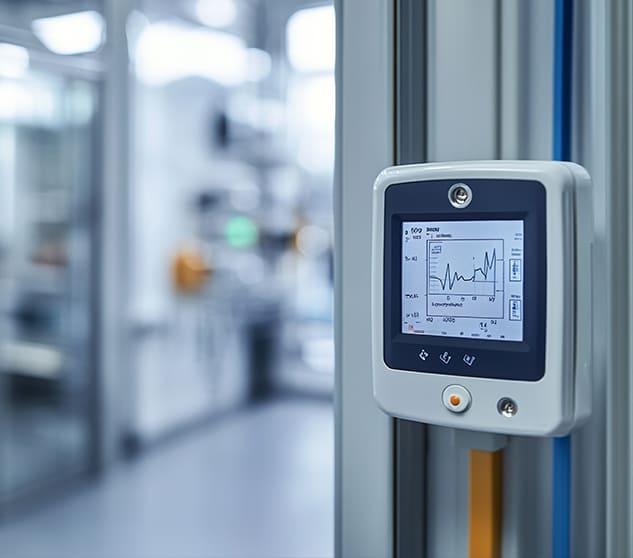
All industry sectors require operating under specific conditions in order to sustain ideal environmental conditions, including the pharmaceutical industry, food storage requirements, and healthcare, and all Logistics sectors. Temperatures and/or Humidity that are outside of acceptable ranges can expose products to risks and/or create non-compliance issues with Quality or Safety.
This is where a Data Logger becomes extremely useful.
Although many people associate monitoring systems with large industrial setups, data loggers are now widely used across operations of all sizes. They can record and monitor environmental conditions and this makes them an important part of modern cold chain and storage management.
What Is a Data Logger?
The Digital Data Logger is a type of electronic device that records environmental conditions automatically over a period of time (e.g., temperature and humidity).
In contrast to manual monitoring (i.e., periodic checking), the data logger records the data (i.e., collects) on a continuous basis at preset intervals so that organizations can maintain an accurate record of their environmental conditions and easily identify changes or trends before they become a problem.
Today, businesses commonly use:
- Temperature data loggers
- Temperature and Humidity Data Logger Systems
- USB data logger temperature devices
- depending on their operational requirements.
Why Monitoring Matters More Than Ever
In industries that handle sensitive products, monitoring is no longer optional; it’s essential.
For example:
Vaccines must be stored at specific temperature ranges, food items must be stored in controlled environments and laboratories depend on accurate environmental conditions for their operations.
If products are continually exposed to the wrong temperatures, even for small amounts of time, they will spoil, cause compliance issues and lead to financial losses.
Therefore, businesses are turning to data logger temperature systems as their preferred method of monitoring the storage or transportation of their products with respect to temperature control.
Common Types of Data Loggers
Different industries require different monitoring solutions. As a result, several types of data loggers are now available.
Single-Use Data Loggers
Single-Use Data Loggers are built for one-time applications including transportation or shipment tracking.
They are often used in:
- pharmaceutical logistics
- vaccine shipping
- export shipments
Disposable data loggers offer a quick, easy way to track conditions during a single trip.
Multi-Use Loggers
Multi-Use Loggers are multi-use, not designed for a single use but can be used multiple times in several cycles.
They are often utilized in:
- warehouses
- cold storage facilities
- labs
- long-term operational monitoring
Reusable data loggers tend to be more economical for companies that require constant monitoring.
Temperature and Humidity Monitoring Devices
Some environments require monitoring beyond temperature alone.
In such cases, businesses use:
Live Temperature Monitoring and Humidity Device Systems
Data logger for temperature and humidity Solutions
These devices help maintain stable environmental conditions where both factors directly affect product quality.
How Data Loggers Support Cold Chain Operations
In order to run a cold chain business successfully, it is imperative that you monitor and keep the temperatures of all shipments at the same level. Proper temperature keeping will make sure that your products are being stored, moved, and handled properly.
Temperature data loggers will give you all the data that you need to know how your cold chain is functioning.
These are a few ways they help businesses with-
- Keeping temperature fluctuation logs
- Recording compliance requirements
- Minimizing spoilage
- Quickly identifying operational inefficiencies.
If a deviation does occur, businesses can quickly refer to their recording history to help them pinpoint down when the issue started as well as where it occurred.
For businesses in industries that depend heavily upon both regulatory compliance and product quality, this degree of visibility is particularly valuable.
Benefits of Using Data Loggers
One reason why data loggers are becoming more common is their practical value across industries.
Improved Accuracy
Automated monitoring reduces the chances of human error and provides more reliable records.
Better Compliance
Many industries now require documented environmental monitoring. Data loggers help maintain accurate historical records for audits and inspections.
Reduced Product Loss
Continuous monitoring helps businesses identify issues early before they lead to spoilage or damage.
Operational Efficiency
Instead of manually checking conditions, businesses can rely on automated systems for ongoing monitoring.
Real-Time Visibility
Advanced monitoring systems now provide live tracking, allowing businesses to respond quickly when conditions change.
Choosing the Right Data Logger
Not all monitoring devices are designed for the same purpose. Businesses should consider the following:
- monitoring requirements
- storage environment
- transportation duration
- data access needs
- compliance requirements
In the event of a deviation, businesses can quickly analyze their history log of recordings to identify when and where the problem took place.
For businesses in industries that depend heavily upon both regulatory compliance and product quality, this degree of visibility is particularly valuable.
The Growing Importance of Smart Monitoring
As cold chain operations become more advanced, businesses are moving toward smarter monitoring systems.
Modern Digital Data Logger solutions now offer:
- cloud connectivity
- real-time alerts
- remote monitoring
- automated reporting
This shift allows businesses to improve decision-making and respond faster to operational risks.
Conclusion
Environmental watch has become very important to today’s world operations, especially in any industry where ultimately quality is based upon consistent conditions.
Whether it be pharmaceuticals or food supply chain operations, data logger systems provide the ability for companies to maintain visibility, support compliance, and reduce risk in their businesses.
As cold chain and storage requirements continue to change, we will only see an increase in the need for dependable monitoring systems.