Walk through any urban hospital during peak hours and the pressure on the system becomes immediately visible. Long queues, limited consultation time, and stretched medical staff are no longer exceptions, they are routine. In smaller cities, the constraint is not congestion but access itself, especially for specialist care.
This imbalance between healthcare demand and delivery capacity is steadily reshaping how patients first interact with medical services. Increasingly, that first interaction is not happening inside a hospital but through a mobile screen. Telemedicine apps are becoming that entry layer, not as a replacement for physical healthcare but as a structural response to how overloaded the system has become.
What Telemedicine Actually Represents Today
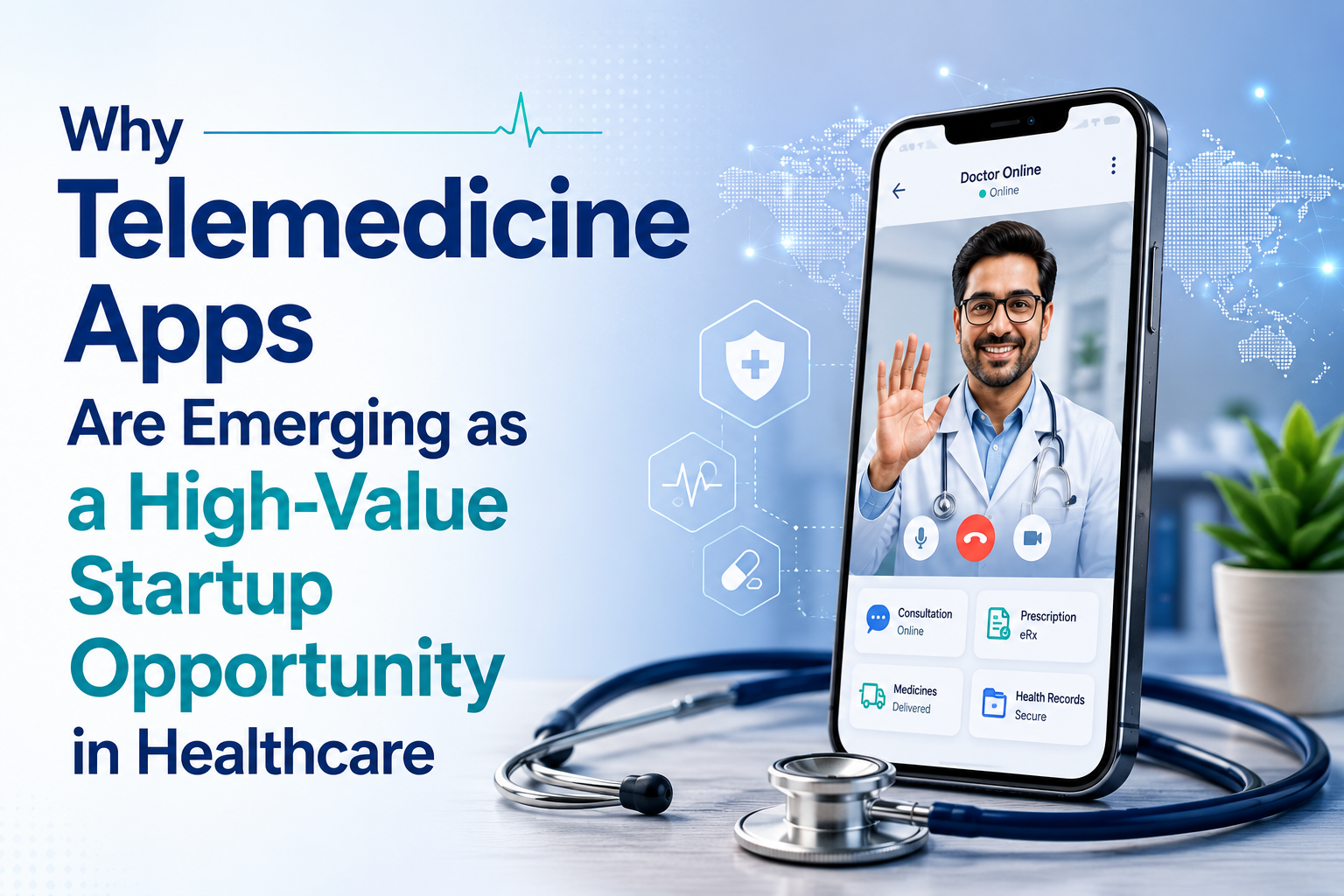
Telemedicine is often reduced to the idea of video consultations, but its functional role is broader. At its core, it enables medical interaction without physical presence, covering consultations, follow-ups, prescriptions, and increasingly, connected services such as diagnostics and pharmacy delivery.
The more important shift is structural. Telemedicine is becoming a triage layer in healthcare systems. Now no patients need to enter the physical facility directly as the digital platforms are able to determine the level of care required and the route patients
System Pressure Driving the Adoption for Digital Healthcare
The adoption of telemedicine is being driven by the capacity constraints in traditional healthcare systems instead of novelty. The regular inflow of patients exceeds the doctor capacity in most regions. Overcrowding could be seen in the urban hospital while rural and semi-urban regions struggle with specialist shortages. Telemedicine helps absorb part of this pressure by shifting low and moderate complexity cases away from physical infrastructure. It does not eliminate demand; it redistributes it in a way that improves system efficiency.
Changing Patient Behavior Is Reinforcing the Shift
Healthcare consumption patterns have also changed significantly over the last few years. Patients have started comparing healthcare experiences with other digital services where speed and convenience are the major scaling factors.
Once users experience a consultation flow that eliminates travel, waiting time, and administrative friction, the preference structure changes. Digital Consultation has become the default option for routine medical needs like prescription, minor infections, or follow-ups. This current shift allows the system to be trusted more and patients could become self dependable for the tasks.
The Real Opportunity Lies Beyond Video Consultations
The early phase of telemedicine followed heavily through the connection of doctors and patients with the help of video interface. That layer is now widely replicated and no longer represents meaningful differentiation.
The emerging opportunity lies in system design rather than interface design.
- Triage and Entry Management
Some platforms are evolving into structured entry systems that assess symptoms before a doctor is involved. The unnecessary consultations were reduced and the correct route towards the required patient level care was improved.
- Continuity of Care
The other layer that focuses on maintaining the long term engagement for chronic conditions includes diabetes, hypertension and medical health. Instead of following the isolated visits, care became the on-going managed process with the improved repeated visits over the time.
- Execution Layer Integration
One of the most advanced stages of development connects consultation directly with execution. Prescriptions are linked to the pharmacy delivery systems and diagnostics tests are integrated in the same work flow system . This closes the gap between diagnosis and treatment implementation.
AI’s Role in Telemedicine Is Often Misunderstood
Artificial intelligence is frequently positioned as a replacement for medical expertise, but its actual role in telemedicine systems is more operational.
The clinical judgement is not being replaced by AI as the primary usage is to manage patient flow. It helps to prioritize the cases which are severe and needs medical emergency immediately, filter routine consultations and route the patient towards appropriate specialists.
With the above context AI does not work as the standalone diagnostic engine, rather it works as a coordination layer with healthcare.
Economic Structure Favors Scalable Digital Models
Traditional healthcare infrastructure is scaled through various things such as physical expansion, requiring hospitals, equipment and staffing. However, Telemedicines operates on a different model where scalability is driven through network utilisation.
More consultations are being handled without the proportional increase in physical infrastructure. Doctor utilisation thus improves the factors, the idle time gets reduced and geographical restraints become less relevant.
Due to this, fundamentally different economic structures are formed where marginal cost per consultation decreases as the system scales and improves the long term efficiency.
Trust Remains the Most Critical Constraint
Despite strong adoption trends, healthcare is not a category where adoption is purely driven by convenience. Trust plays a central role in determining usage patterns.
Some of the cases where the symptoms are unclear or potentially clear makes the situation a little hesitant for the person. In such cases, physical consultation remains the preferred option.
This creates a curve of uneven adoption across different healthcare categories, which means growth depends not only on capability but also on perceived reliability. on perceived reliability.
Regulation Shapes the Boundaries of Growth
Most of the digital sectors have relief towards their rules and regulations but telemedicine operates with tightly regulated environments. Prescription rules, medical licensing and the patient data regulations vary across regions and directly impacts the platform scalability.
This makes execution to be more disciplined and to be as important as the product innovation. Along with this, the platforms that align early with regulatory frameworks tend to scale more sustainability than those that treat compliance as secondary.
The Direction of the Industry Is Becoming Clear
With the expansion and improvement in the sector, telemedicine is moving towards the hybrid model which involves both digital and physical care as the interconnected layer rather than the separated systems. Digital platforms serve as the first point of contact whereas physical care remains important for diagnostics and procedures than require in-person evaluation. Patient data is becoming more integrated across various providers and due to this, it enables the continuity of care across multiple touchpoints.
Conclusion
The growing opportunity in telemedicine is not defined or supported by digital consultants alone. It is defined by how effectively startups can design healthcare flow access, execution layers and continuity.
The industry is expanding not because it introduces a new behaviour, but because it solves an existing structural imbalance is health delivery. As with the continuation of systems facing capacity pressure, telemedicine will increasingly function as a core operation layer rather than an optional digital feature.