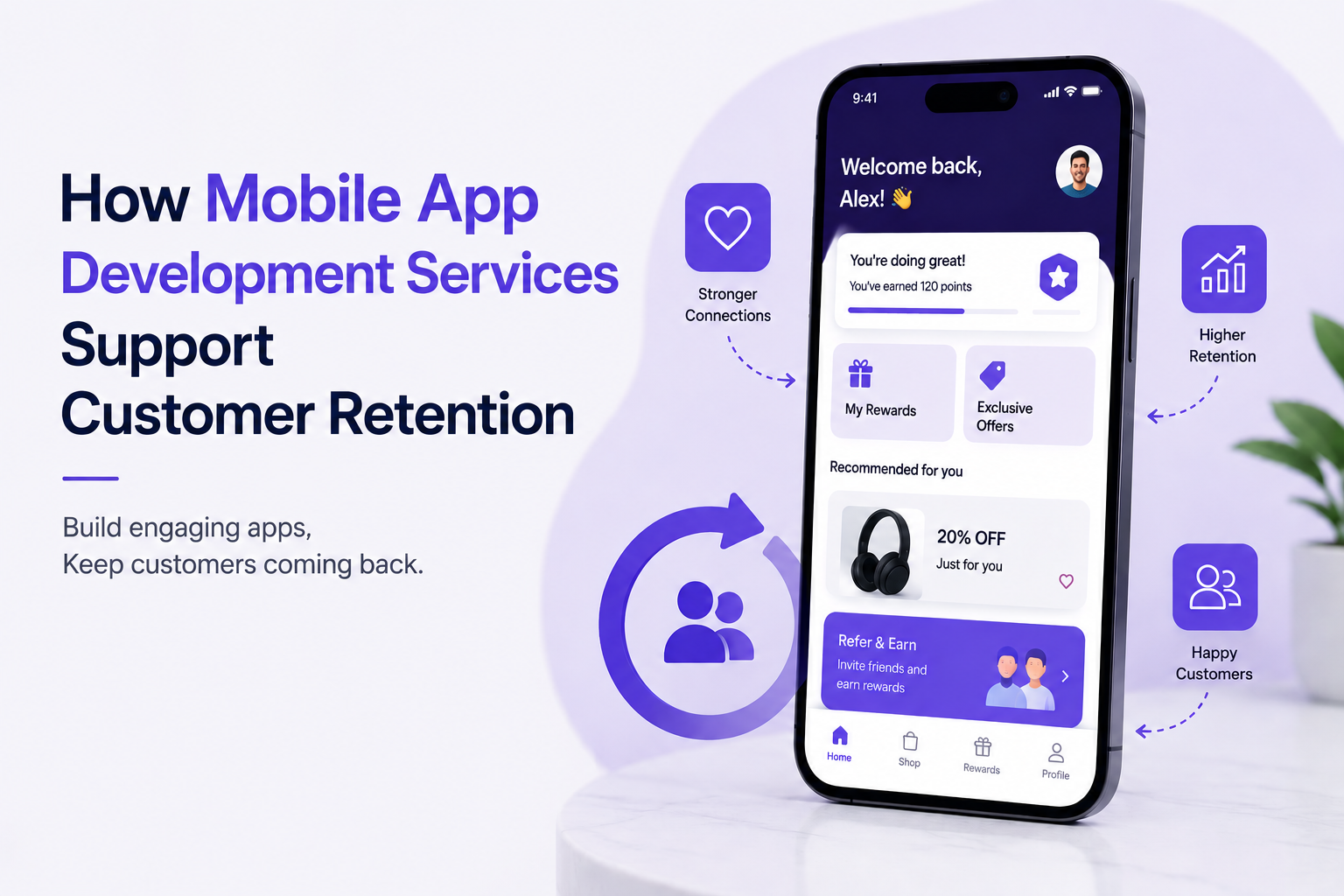
Customer retention is becoming a top priority for modern businesses. Acquiring new customers costs significantly more than keeping existing ones engaged. In fact, average app retention drops sharply after install: Android apps retain only 21.1% of users on day one and just 2.1% by day 30, underscoring how hard it is to keep users coming back. That is why companies across industries are focusing more on long-term customer relationships instead of one-time sales.
Today, businesses use mobile app development services to create custom mobile applications that foster customer loyalty. Applications help connect customers with one another through features such as notifications, loyalty programs, suggestions, and instant customer service.
Why Mobile App Customer Retention Matters for Business Growth
Mobile app customer retention plays a crucial role in profitability and growth. The customers who return often spend a lot of money and refer the company to others.
- Marketing expenses are reduced.
- Revenues are boosted
- Trust is gained from customers.
- Brand loyalty is developed.
- Purchases are made again.
Modern consumers expect smooth digital experiences. If an app feels slow, confusing, or irrelevant, users quickly move to competitors.
That is why businesses now focus heavily on building mobile apps that offer convenience, speed, and personalization.
How Mobile Apps Improve Customer Engagement
Mobile apps enable direct, continuous communication between businesses and users. Unlike websites, apps remain accessible on customer devices at all times.
This constant accessibility increases interaction opportunities and strengthens brand visibility.
Personalized User Experiences
Another reason many loyal customers use mobile apps is the personalization they offer. Personalization ensures that customers engage with applications that suit their requirements and behavior.
Through consumer information, companies offer:
- Recommendations of products based on the customer’s past web browsing behavior, previous purchases, and interests, ensuring that recommendations are highly personalized rather than arbitrary.
- Promotions and special offers tailored to individual shopping habits, helping users discover deals they are more likely to use and appreciate.
- Personalized dashboards that display the most useful information, recent activity, and preferred features based on how each user interacts with the app.
- Location-based personalization that delivers recommendations and promotions to users in their immediate surroundings.
- Recommendations based on behavior analysis, taking into account user actions and interests.
Faster Customer Interactions
Users can easily do the following things:
- Order products
- Arrange appointments
- Contact customer service
- Follow their orders
- Subscribe to services
Convenience plays a major role in customer satisfaction and retention.
Push Notifications Keep Users Connected
Notifications remain one of the most powerful ways to engage customers via mobile apps. They enable businesses to reach their target audience when needed.
What are the Common Types of Push Notifications
- Cart reminders help users purchase items they might have overlooked.
- Discount notifications keep customers up to date on any discount offers related to them.
- Launches updates to users on new items available or coming soon from the brand.
- Subscription renewals remind customers before their plans expire to ensure uninterrupted service access.
- Loyalty rewards encourage repeat engagement by informing users about the points, rewards, or exclusive benefits they’ve earned.
- Event updates provide timely notifications about webinars, sales events, launches, or community activities users may want to attend.
However, successful retention depends on delivering useful notifications instead of overwhelming users with constant messages.
Professional mobile app developers focus on creating smart notification systems with proper timing and personalization.
Loyalty Programs Encourage Repeat Usage
A number of firms have loyalty programs built into their mobile applications to improve customer retention.
These programs encourage users to interact more frequently with the brand.
Features of App-Based Loyalty Programs
Modern loyalty systems often include:
- Rewards Points – Consumers earn points through shopping and application interaction actions.
- Referrals Bonuses – Application users earn incentives when they refer new consumers to the site.
- Special Discounts – Applications offer unique discounts to dedicated users.
- Milestones Rewards – Consumers gain rewards upon achieving certain milestones.
- Customized Discounts – Companies provide personalized discounts depending on consumer behavior.
Customers enjoy tracking rewards and receiving benefits for regular engagement.
Industries Using Loyalty Apps Successfully
Several industries rely heavily on loyalty-driven mobile experiences, including:
- Retail – Retail apps motivate customers to make repeat purchases through reward systems and personalized offers.
- Food delivery – Food apps keep customers engaged by offering cashbacks, coupons, and referrals.
- Airlines – Loyalty apps from airlines award customers with travel points and upgrades.
- Hospitality – Hotels motivate their customers by offering loyalty programs through apps.
- Fitness brands – Apps for fitness brands motivate customers through achievement-based rewards and memberships.
These industries use loyalty programs to increase repeat purchases and strengthen customer relationships.
Cross-Platform Mobile Apps Improve Accessibility
Many companies spend money developing cross-platform applications for the same reason: their performance on Android and iOS devices is similar.
Benefits of Cross-Platform Development
- Access more users
- Save money on the development process.
- Ensure the user interface is consistent.
- Release updates more quickly.
- Make app management easier.
Consistency matters because customers expect similar experiences regardless of the device they use.
The Importance of User Experience in Retention
Quick Performance Matters
People seek speedy application performance; sluggish performance is associated with a higher uninstallation rate. Organizations that concentrate on enhancing performance have higher retention rates.
Simple Navigation Improves Engagement
Uncomplicated user interfaces make it easy for users to perform specific activities within an app. Easy-to-use apps facilitate quick user actions.
If users feel that their actions are being facilitated within an app, they are likely to stay connected to it.
Secure Experiences Build Trust
Security is among the most critical considerations when developing consumer loyalty. People want assurances about the safety of their personal information and transaction data.
Businesses that prioritize mobile security often maintain stronger customer trust.
According to Google’s research on mobile behavior, users are highly likely to leave digital platforms that deliver poor user experiences.
AI-Powered Mobile Apps Are Transforming Retention
Artificial intelligence is changing how businesses engage with customers through mobile applications.
Many companies now invest in AI-powered mobile apps to improve personalization and automate customer interactions.
AI-Driven Recommendations
The artificial intelligence software identifies consumer habits and recommends products/services that have been used earlier.
Streaming platforms, shopping apps, and fitness applications commonly use recommendation engines to increase engagement.
Smart Customer Support
The artificial intelligence system helps companies offer quick support services via their mobile applications.
These chatbots can:
- Answer common questions
- Guide users through processes
- Resolve simple issues instantly
- Reduce support wait times.
Faster support improves satisfaction and strengthens customer loyalty.
Predictive Engagement
AI can predict user behavior and identify customers who may stop using the app.
Businesses then use targeted campaigns and personalized offers to re-engage those users before churn happens.
Data Analytics Help Improve Retention Strategies
Apps generate user behavioral data that businesses use to consistently enhance the customer experience.
Data analytics can help businesses figure out:
- What features are users fond of?
- Where do customers get lost in their experience?
- How long do sessions last?
- What is the performance of notifications?
- What motivates repeated usage?
These insights allow businesses to refine their retention strategies over time.
Data-driven improvements often lead to stronger engagement and better customer satisfaction.
Industries Benefiting Most From Mobile Retention Strategies
Currently, many industries rely heavily on mobile apps for retention.
Retail and eCommerce
Brands in the retail industry use apps to provide shoppers with personalized shopping experiences, loyalty rewards, and quick promotions.
- Personalized product suggestions
- Quick and easy checkout procedures
- Loyalty points and special discounts
Healthcare
Apps are deployed in the healthcare sector to engage patients through reminders and tracking.
- Appointments and prompt reminders
- Medication tracking and wellness check-ins
- Online consultation and guidance
Banking and Finance
In the banking and finance industry, apps help streamline transactions and keep them secure.
- Transactions and payments securely
- Notifications about expenses
- Budgeting insights
Fitness and Wellness
Mobile apps in the fitness industry help engage customers by tracking their activities and workouts and providing progress reports.
- Workout and activity tracking
- Personalized fitness plans
- Progress reports and achievement badges
The Future of Mobile App User Retention
The future of user retention in the mobile app industry will center on personalization, automation, and customer intelligence.
New technologies such as AI, machine learning, and predictive analytics will continue to change how businesses interact with their customers.
Users have come to expect applications to understand their needs and provide a smooth, interruption-free experience.
Businesses who adopt mobile technology early will enjoy more loyal customers in the coming years.
For further information on customer retention techniques, read the customer retention page on Wikipedia, which discusses the benefits of customer retention for businesses.
Final Thoughts
As mobile applications become critical to customer loyalty and engagement, businesses that invest in professional mobile app development services can deliver personalized experiences to retain repeat customers.
Whether it is loyalty programs, push notifications, personalized experiences powered by artificial intelligence, or comprehensive customer support, modern mobile applications enable businesses to enhance customer experiences.
The continued growth in customer expectations means that companies that focus on engaging customers through mobile platforms will have an advantage going forward.