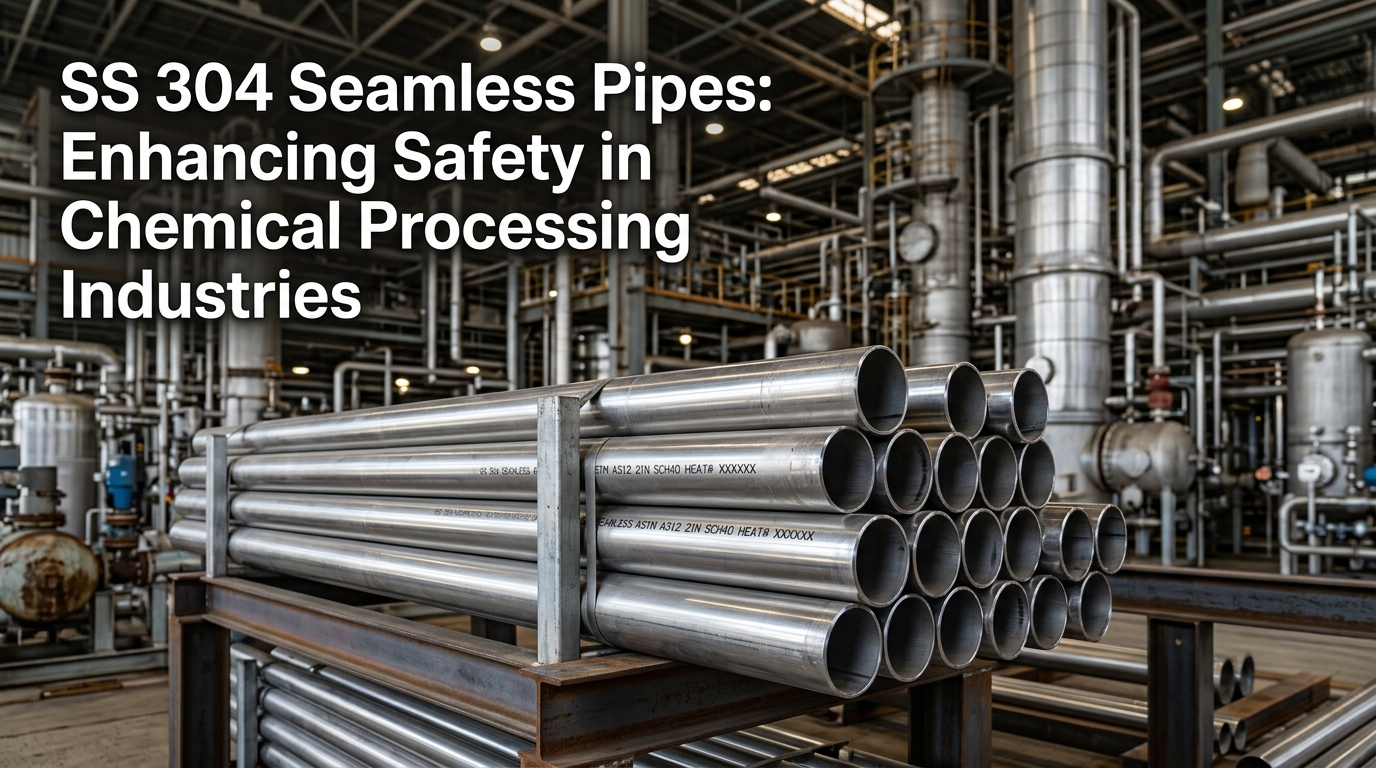
304 stainless steel seamless pipe has become a standard specification in chemical processing. Not because it is the most exotic material available, but because the combination of corrosion resistance, structural integrity and fabricability dependably addresses the most frequent safety and performance concerns in chemical pipe systems. One of the most exacting is the chemical processing industry. In pipe systems for the conveyance of aggressive media with high-pressure streams and caustic compounds, the selection of materials has an immediate influence on operational safety.
Introduction to SS 304 Seamless Pipes
Stainless Steel 304 is an austenitic grade with chromium and nickel as its primary alloying elements. Chromium forms a passive protective oxide layer on the steel surface that resists attack from moisture, chemicals, and oxidizing environments. Nickel stabilizes the austenitic microstructure and improves toughness across a wide service temperature range.
“Seamless” in 304 stainless steel seamless pipe refers to the manufacturing process. Pipes formed from solid billets without a weld seam produce uniform wall thickness and consistent internal structure throughout the pipe length. This construction has direct safety implications in pressure and chemical service.
Why Chemical Processing Industries Require High-Performance Piping
Chemical processing facilities handle substances that compromise standard piping materials rapidly. Acids, alkalis, and reactive process media create corrosive attack on pipe surfaces. High pressures combined with elevated temperatures amplify mechanical demands. Even minor leakage creates contamination risks, safety hazards, and process interruptions with significant regulatory consequences. Material selection is the engineering decision that determines whether system reliability is achievable.
Corrosion Resistance for Safe Chemical Handling
Corrosion resistant SS 304 pipes resist harm from a wide range of chemical conditions. The chromium content of the alloy creates a stable passive oxide layer when it comes in contact with moisture, moderately acidic environments and oxidizing chemicals. Nickel increases the alloy’s resistance to reducing conditions and aids its resistance in organic acid environments.
Pipe wall corrosion creates two simultaneous problems as one is that thinning reduces pressure-bearing capacity, and another one corrosion products contaminate the process stream. Both are addressed by specifying corrosion-resistant SS 304 pipes matched to the service conditions.
Leak Prevention Through Seamless Pipe Construction
Welded pipes carry a structural variable that seamless pipes eliminate the longitudinal weld seam. In high-pressure service, weld seams are potential weak points where stress concentrations develop and where corrosive attack initiates in heat-affected zones. Seamless pipe handles pressure consistently around the pipe’s entire circumference without this variability. For chemical plants handling hazardous fluids where pipe failure means worker exposure and environmental release, this structural consistency is a safety argument that repeatedly favors seamless construction in critical service lines.
High Temperature and Pressure Resistance
Chemical reactors, heat exchangers, and high-pressure process pipelines operate under combined elevated temperature and pressure. SS 304 maintains useful mechanical strength and corrosion resistance across a wide temperature range. The passive oxide layer remains stable through the heat and cool cycles that process operations create. Reactor feed and effluent lines, condenser piping, and heat exchanger connections are applications where this temperature-pressure stability translates directly into operational safety.
Hygienic and Contamination-Free Fluid Transfer
Smooth internal surfaces from seamless pipe manufacturing eliminate the attachment points where bacteria establish, residue accumulates between batches, and corrosion initiates at the fluid-pipe interface. In pharmaceutical manufacturing and food-grade chemical handling, this surface quality prevents contamination that creates product quality failures and regulatory non-compliance. The same characteristic that prevents bacterial buildup also reduces pressure drop, a flow efficiency benefit alongside the hygiene advantage.
Common Applications of SS 304 Seamless Pipes in Chemical Industries
The following examples highlight where these corrosion-resistant pipes are utilized across various chemical sectors:
Chemical Plants
Process piping networks safely handle aggressive acids, alkalis, and reactive chemical streams where absolute corrosion resistance and leak prevention are primary safety requirements.
Petrochemical Processing
High-pressure feed and product lines utilize these seamless lines to maintain consistent structural performance across the pipe wall under combined thermal and mechanical loading.
Fertilizer Industries
Corrosive process streams, including volatile ammonium compounds and phosphoric acid solutions, rely on this grade’s robust chemical resistance to ensure a reliable service life.
Pharmaceutical Manufacturing
Process piping and facility utility systems depend on this material to meet strict hygienic surface quality standards and withstand harsh chemical cleaning agents.
Food-Grade Chemical Handling
Pipelines handling acidic or alkaline processing media leverage this non-reactive alloy to protect product purity and prevent material contamination.
Water Treatment Systems
Chemical dosing lines and treatment chemical transfer piping use these tubes to resist aggressive chlorine compounds and significantly extend system service life.
Mechanical Strength and Long Service Life
Structural stability under cyclic loading, thermal expansion, and pressure fluctuations determines how long a piping system performs between maintenance interventions. SS 304 seamless pipes maintain dimensional integrity and mechanical strength under these combined stresses, reducing inspection-triggered replacement frequency. Long service life in corrosive environments lowers total lifecycle cost per meter of installed piping even when initial SS 304 cost exceeds carbon steel alternatives.
Manufacturing and Quality Standards for SS 304 Seamless Pipes
ASTM/ASME compliance provides the comprehensive quality documentation required by chemical sector procurement professionals. Operating within this framework, an SS 304 seamless pipe manufacturer in India executes critical quality assurance. This protocol mandates hydrostatic pressure qualification, lot-level PMI alloy verification, dimensional wall uniformity inspection, and surface finish certification optimized for high-consequence fluid contact applications. Navrang Steel, alongside other recognized SS seamless pipe suppliers in India, such as Ratnamani Metals and Jindal Pipes maintains certified production and testing procedures that support quality-assured supply for critical process applications.
Factors to Consider When Selecting SS 304 Seamless Pipes
Operating temperature and SS 304’s corresponding strength retention should be evaluated first. Pressure rating determined by pipe schedule and outside diameter must exceed the maximum operating pressure. Chemical compatibility with specific process media confirms the grade is appropriate rather than requiring a higher-alloy specification. Pipe dimensions must match mechanical and flow requirements. Testing certifications provide documented assurance that each batch meets specification.
Conclusion
SS 304 seamless pipes contribute to chemical processing safety through a combination of corrosion resistance, structural integrity from seamless construction, hygienic surface quality, and long service life that reduces the maintenance intervention frequency where safety risks are highest. Specifying 304 stainless steel seamless pipe for chemical process applications is an engineering decision that addresses multiple safety and reliability requirements simultaneously which is why it remains the baseline specification in chemical piping systems globally.