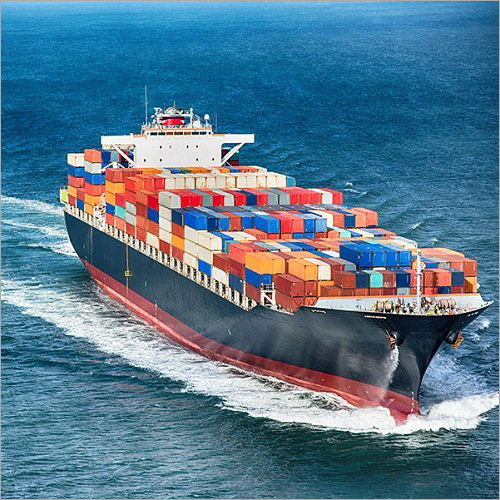
Sea transport is one of the most frequently used transport methods for businesses to clear goods from one country to another. It offers a low-cost, dependable service and is effective for bulky items. However, for those new to it, it can seem like a confusing process. There are items to be documented, procedures to be followed, and much more that goes into getting your goods to your door.
This post simplifies everything. Being a small business owner or a person who is making imports for the first time, this will enable you to know the import process of sea freight services in India from start to finish.
What are sea freight import services?
Sea freight import service, also known as ocean freight forwarding import, encompasses all of the things that are required to import merchandise into a nation via sea. This covers booking of cargo space, documentation, port clearance, and customs clearance.
Sea freight is the mainstay of international trade in India. Mumbai, Chennai, Nhava Sheva, and Mundra are some ports used to transport millions of containers annually. If you are a business importing raw material, machinery, electronics, or finished goods, you are probably better off using sea freight.
IGF Express provides a variety of sea freight import services in India, which are reliable for end-to-end support for all businesses.
Step-by-step guide on Sea Freight import services
Step 1: Find a reliable freight forwarder
Freight forwarders are your representatives and take care of many of the details for you. For ex:
- Guide you through selecting the shipping route you need
- Reserve places on a boat
- Work with paperwork and documentation
- Communicate with customs officials
This is not something you can afford to overlook. It’s not an advisable idea to self-manage ocean freight forwarding import India. There may be a risk of delays, fines, or cargo holds.
Step 2: Obtain a quotation and make the shipment booking
After finding a forwarder, request an estimate for shipping. The quote will include:
- Ocean freight charges
- Origin charges (handling, documentation)
- Destination charges (port handling, delivery)
- Customs duties and taxes (estimated)
Once you agree to the price, your forwarder will reserve space on a ship. After that, you get a booking confirmation that includes the vessel, sailing date, and container number.
Also, discuss the Incoterms with your supplier at this stage. Incoterms clarify responsibility for the shipments. As an example, with FOB (Free On Board), the seller must be responsible for loading the goods onto the ship.
Step 3: Pack shipping paperwork
This is one of the most crucial. Documents missing or erroneous may delay your shipment at the port or customs.
The following documents are important to have on hand:
- Bill of Lading (BL) – The main contract with the shipping line is a Bill of Lading (BL). It means “goods on board.
- Commercial Invoice – Provides details of the value and contents of the goods.
- Packing List—Describes how the goods are packed and their weight and dimensions.
- Certificate of origin – Certificate proving the country of origin. Required in some trade agreements and for some calculations of duties.
Note that these documents are to be kept on hand before the ship leaves port. They are generally checked for you by your forwarder.
Step 4: Goods leave the origin port
After the booking has been finalized and the paperwork has been completed, the cargo is packed onto the ship. The Bill of Lading will be delivered at the end of the voyage.
The time of travel varies based on the route:
- China to India: 10-20 days
- India to Europe: 25 to 30 days
- USA to India: 25 to 35 days
Your forwarder will be able to update you about the tracking during this period. There are online portals providing access to the real-time location of the vessel.
Step 5: Pre-Arrival Documentation at Indian Port
Certain documents have to be submitted to customs before the ship arrives in India. This is known as pre-arrival or advance filing.
This is done in India via the customs electronic gateway (ICEGATE). This will be done by your customs broker/forwarder.
Early filing reduces the time for import customs clearance services. It also minimizes the possibility of your cargo languishing for days or weeks at the port.
Step 6: Import Customs Clearance Services:
It is here that delays commonly happen for many importers. Import customs clearance services include ensuring your shipment complies with all customs rules before clearance.
Here’s what it looks like:
The Bill of Entry
Your customs broker submits a Bill of Entry to ICEGATE. This document specifies what you are importing, its value, quantity, and HS code (Harmonized System code that is used to classify goods).
Assessment by Customs
Your Bill of Entry is seen by the customs officer. They determine whether the declared value is the same as the invoice value, confirm the HS code, and calculate the applicable duty.
Payment of Duty
After the assessment, import duties are paid. These include:
- Basic Customs Duty (BCD)
- IGST (Integrated Goods and Services Tax)
- Sometimes a social welfare surcharge
The tasks are different for different goods. Your broker will provide you with an estimate before the shipment is received.
Step 7- Examination of Cargo
Not all shipments are physically examined. Some are discharged based on documents alone. Some people scan or have a thorough physical check-up. Again, this will vary by the risk level of your shipment and the importer’s compliance track record.
If customs clearance is performed correctly, you can save lots of time and money. It is also best to deal with a licensed customs broker who is well-versed in the rules.
Installing the port-handling and container-release mechanism.
Once the customs department has released your goods, the port opens the container. However, port fees must be paid prior to delivery. These include:
- Port Charges (THC)
- Demurrage (in case of late collection of the container beyond free days)
- You will be fined for detention (when you have the container for longer than permitted)
Act quickly here. The more days, the more money!
Step 8: Last Mile Delivery
The final leg of the journey is from the port to your warehouse/facility. This is referred to as last-mile delivery.
Your forwarder or local transporter will arrange for the container to be removed on a truck. They can also deliver the goods on your premises, if permitted by your agreement.
FULL CONTAINER LOAD (FCL), the whole container is delivered to your door. Less-than-container loads (LCL), goods are consolidated with other shipments and shipped after deconsolidation at a Container Freight Station (CFS).
Why Professional Help
The logistics of ocean freight forwarding import India is a complex process and has many moving parts. It will cost you time and money if you make a small mistake. It is crucial to work with professionals who can provide end-to-end sea freight import services India.
From freight booking to import customs clearance services to final delivery, IGF Express has it all covered. Their team is well-versed in Indian customs procedures and can ensure you navigate through each stage seamlessly without unnecessary delays.
Final Thoughts
Importing via sea need not be daunting. When you know each step, you’re in a much better position to deal with it. It is all about preparation, ensuring that you have your documents ready, have a reliable forwarder, and are quick on your feet as soon as your goods arrive.
For those seeking hassle-free, smooth sea freight import services in India, IGF Express is a good option. Whether it’s about ocean freight forwarding import India or about Import customs clearance services they can do it for you; you don’t have to work it out on your own.