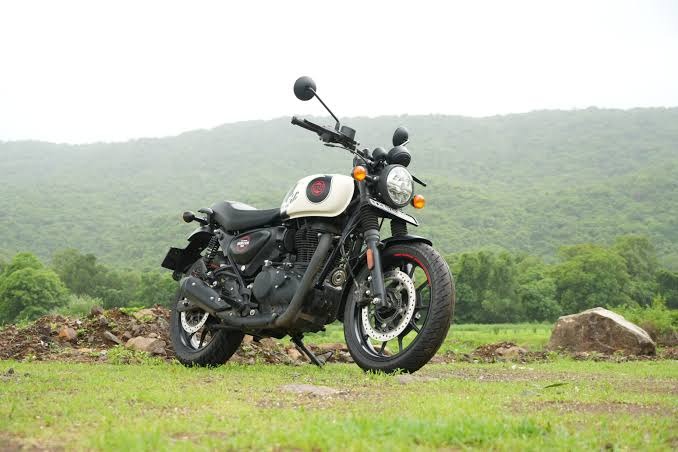
The Hunter 350 was created around a straightforward idea: make Royal Enfield’s 350cc experience easier to use in crowded cities. That approach gives it a different personality from the Classic 350 and Bullet 350 even though all three use closely related 349cc single-cylinder engines. The Hunter is shorter, lighter and more compact, with 17-inch wheels and steering geometry that makes it feel more natural in everyday traffic.
For riders comparing 350cc bikes as daily transport, those differences matter more than shared engine capacity. A commuter motorcycle has to be easy to move out of a parking slot, manageable in stop-and-go traffic, comfortable over rough surfaces and economical enough to use frequently. The latest Hunter 350 addresses these requirements more directly than earlier versions, with updates to suspension, seat comfort, lighting, charging and clutch operation.
A Compact 350cc Motorcycle Makes Sense in Urban India
Large-capacity motorcycles often feel impressive on open roads but cumbersome in dense city environments. The Hunter takes the opposite route. Its 1,370 mm wheelbase and 17-inch wheels help it change direction quickly, while a 790 mm seat height keeps the riding position approachable for a wide range of riders.
The current motorcycle weighs about 181 kg with fuel and fluids. That is still substantially heavier than a typical 125cc or 160cc commuter, but it is lighter than several other Royal Enfield 350cc models. The difference becomes noticeable while filtering through slow traffic or pushing the bike around manually.
The upright handlebar, relatively compact body and neutral seating position also make the Hunter feel less formal than the brand’s more traditional motorcycles. Riders transitioning from smaller bikes may find its proportions easier to understand.
The 349cc Engine Is Better Suited to Torque Than Speed
The Hunter 350 uses a 349cc air-oil-cooled single-cylinder engine producing 20.2 bhp at 6,100 rpm and 27 Nm at 4,000 rpm. It is paired with a five-speed gearbox. The engine’s strength is its low- and mid-range response, which allows the rider to accelerate cleanly from modest speeds without constantly chasing the upper end of the rev range.
That is particularly useful in city traffic. Frequent overtakes between 30 and 60 km/h matter more to a commuter than an impressive top-speed figure. The Hunter can make those transitions smoothly, and its torque helps reduce unnecessary gear changes.
The engine also provides enough capacity for weekend highway use. It is happiest at sensible cruising speeds rather than sustained maximum-speed riding, but it has considerably more relaxed road presence than a small commuter when the city opens into a bypass or expressway feeder road.
The 2026 Updates Improve Everyday Usability
Present iterations of the Hunter 350 have undergone some modifications that specifically target city riders. These include the assist-and-slip clutch, LED headlight in appropriate models of the Metro line-up, Type-C fast charging port, Tripper navigation system and recalibrated suspension.
All of these modifications are related to practical issues. Clutch that is easier on hands is especially useful during the rush hour. Suspension is particularly important in case of poor road surfaces. For those using smartphones for navigation, courier deliveries or commutes, fast charging can come in handy. LED headlights will improve visibility at night and modernize the front end.
Furthermore, Royal Enfield has adjusted the rear suspension after the criticism directed towards the previous model due to its relatively hard behavior on poor roads. This can be more relevant to daily riders than slightly increased performance.
Braking Hardware Is Appropriate for the Performance
Higher Hunter 350 variants use a 300 mm front disc and 270 mm rear disc with dual-channel ABS. The 17-inch tubeless tyres are sized at 110/70 at the front and 140/70 at the rear on alloy-wheel versions. This gives the motorcycle a broad footprint and predictable braking support for normal road use.
Variant selection is important because equipment can differ. Buyers should confirm ABS configuration, wheel type and lighting on the exact version they are considering. For regular urban and highway use, dual-channel ABS is worth prioritising because it provides anti-lock protection at both wheels.
Fuel Range Is Practical for Daily Commuting
The Hunter carries a 13-litre fuel tank. Royal Enfield quotes fuel economy of around 36.2 km/l under ideal conditions. Actual mileage varies with traffic density, throttle use, tyre pressure, road condition and load, but the combination gives the bike a practical range for normal commuting.
It will not match the fuel cost of a 100cc or 125cc commuter, and that needs to be included in the ownership decision. Riders who cover very high monthly distances should calculate the difference before moving into the 350cc bikes class. The trade-off is stronger torque, greater highway flexibility and a more substantial riding experience.
Hunter 350 Versus Smaller Commuter Bikes
A lightweight commuter usually wins on fuel economy, purchase price and ease of manoeuvring. The Hunter counters with stronger roll-on performance, larger tyres, a more powerful braking system and greater comfort when riding beyond city limits.
For someone whose entire usage consists of short, congested journeys, a 125cc motorcycle may still be the rational option. For a rider who commutes during the week and regularly rides 50 to 150 km on weekends, the Hunter’s broader capability becomes more valuable.
Hunter 350 Versus Other 350cc Bikes
The Hunter’s most notable 350cc feature is its agility. Retro motorcycles of traditional nature are heavier with larger wheel and wheelbases. The smaller overall size of the Hunter allows it to turn more easily.
It does sacrifice somewhat on the visual grandeur associated with bigger Royal Enfield models. Riders looking for a wide bench seat, classic styling or maximum road presence may prefer the Classic or Bullet. The Hunter, on the other hand, would appeal to those who want the engine character of the Royal Enfield but in a smaller package.
Comfort Depends on Rider Expectations
The UP IT scooter bike is your new everyday motorcycle that suits daily commutes with comfort and practicality. Nonetheless, the Hunter is still a compact roadster. Riders of very large stature might prefer a physically bigger motorcycle, especially over long distances.
Testing should also be done for pillion use. A brief individual test ride cannot adequately indicate how the motorcycle reacts with two persons, luggage, or bad roads over and over. Before finalising a variant, a buyer should consider carrying a passenger frequently.
Is It the Perfect Royal Enfield for Daily Rides?
For numerous urban riders, the Hunter 350 is the simplest Royal Enfield 350 to endorse for daily use. It has the way of the familiar 349cc engine and lighter handling along with manageable dimensions more 2026 connected equipment and useful comfort updates. It is compact enough for city use without feeling oversized, while being powerful enough for an occasional highway trip.
‘Perfect’ however is dependent on priority. Riders should stay in smaller-capacity categories for maximum fuel efficiency. The Classic 350 and Bullet 350 are better suited for those looking for traditional Royal Enfield dimensions. However, it’s the Hunter 350 that could be one of the strongest choices in the lineup for someone looking for a characterful 350cc bike that won’t feel big while commuting to office, weekend rides and mixed urban roads.