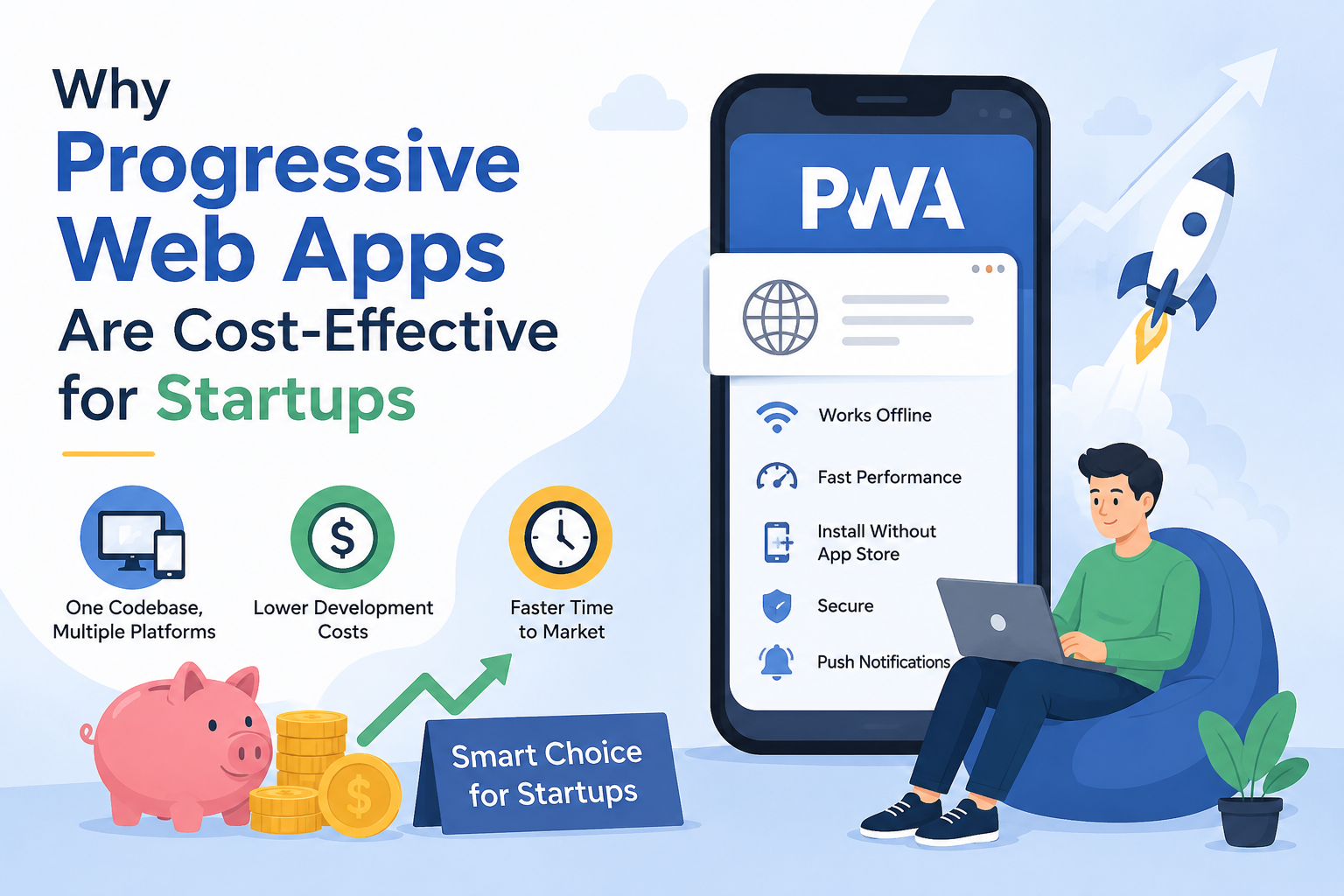
In today’s competitive digital landscape, startups run into this pretty familiar snag: they need to deliver an exceptional user experience while they’re also stuck with limited budgets and resources. And then, building separate applications for Android, iOS, and the web can get expensive fast, making it harder for newer companies to launch, iterate, and scale without constantly stretching themselves too thin.
That’s basically where Progressive Web Apps, you know, PWAs, start to show up as a kind of game-changing alternative. They blend the best parts of websites and mobile applications. In practice, PWAs give startups a more affordable way to reach users on multiple platforms, without all the usual complexity and high costs that come with traditional app development.
So yeah, more and more businesses are teaming up with experienced progressive web app development companies to create digital products that feel fast, reliable, and engaging. There are a lot of advantages too, like lower development costs, quicker time-to-market, and smoother rollouts. Because of that, progressive web app development is turning into a go-to option for startups that want to stretch their return on investment, not just hope for the best
In this article, we’ll look at why Progressive Web Apps can be a cost-effective solution for startups and how they can support long-term growth for businesses that plan ahead.
What Is a Progressive Web App?
A Progressive Web App is a web application that delivers an app-like experience directly through a web browser. Unlike traditional websites, PWAs offer advanced capabilities such as offline access, push notifications, fast loading speeds, and responsive user interfaces.
PWAs are built using standard web technologies such as:
- HTML
- CSS
- JavaScript
- Service Workers
- Web App Manifest
Users can access a PWA through a browser and even install it on their device without visiting an app store.
Popular brands such as Starbucks, Pinterest, Uber, and Twitter have successfully leveraged PWAs to improve user engagement and performance.
The Startup Challenge: Balancing Innovation and Budget
Startups are kinda running on a different rhythm, with unique constraints and all that. Usually, they need to ship a product quickly, draw in users, and test a business idea in a real way while still keeping development costs under control.
Traditional mobile app development tends to end up like this.
- Separate Android development,
- Separate iOS development,
- Web platform development,
- Multiple testing cycles
- Ongoing maintenance for each platform.
And yeah, that whole setup really boosts both development time and expenses.
For startups with limited funding, these expenses can eat up a big chunk of their budget before they even reach the market, which is honestly rough.
Progressive Web Apps help out here since they let a business build one app that works smoothly across devices and platforms without the usual splitting.
Single Codebase Means Lower Development Costs
One of the biggest reasons startups go for progressive web app development is that they can keep one codebase, more or less. I mean, it’s much cleaner than juggling a bunch of different projects.
Instead of building separate apps for Android, iOS, and desktop users, developers make one application, and it adapts to whatever device is being used. It kind of “fits” everywhere.
And yeah, this style also brings a few financial perks, like
Less Development Hours
You build the features one time, not repeat the whole thing for several platforms, which saves a lot of effort.
Smaller Staffing Needs
Companies can run with a leaner development team since they do not necessarily need a bunch of ultra-specialized developers.
Quicker Delivery of the Project
With only one development track, the time to get the product out to users is typically reduced.
For startups trying to move into the market fast, this can be a real competitive edge.
Faster Time-to-Market
Speed is often really critical for startup success, as the whole thing can depend on it. The sooner a product reaches users, the sooner companies can actually collect feedback, confirm ideas, start earning revenue, and draw in investors.
Since PWAs need only one codebase, the building time is usually a lot shorter compared to native mobile applications. So yeah, a lot of progressive web app development companies help startups ship MVPs, meaning Minimum Viable Products, in weeks not months.
That ends up giving businesses a chance to trial their concept first , before putting bigger money into advanced features.
Lower Maintenance and Update Costs
Launching an application is only the start, though. Ongoing maintenance can end up being a big expense, over time . Kind of annoying, right?
Traditional mobile apps usually need:
- Android updates
- iOS updates
- App store approvals, sometimes with long waits
- Bug fixes across multiple platforms, not just one
PWAs kind of simplify all that. Since the application runs through the web, updates get deployed centrally instead of you chasing users for downloads from an app store. So users typically just land on the newest version automatically. No extra steps, no extra installs.
The benefits are usually pretty clear:
- Lower maintenance costs
- Quicker bug fixes
- More reliable security updates
- A better overall user experience
For startups running on lean budgets, those savings can be pretty substantial, like genuinely.
No App Store Fees or Restrictions
Publishing native mobile apps is usually kind of tangled up with app store fees , approval steps, and a bunch of platform restrictions. Startups might end up dealing with things like developer account fees, revenue sharing requirements, approvals that get delayed , and various compliance hurdles.
Progressive Web Apps on the other hand remove most of that friction. Users can open the app straight in a browser, then install it right from the website.
Some practical upsides are : quicker deployment, reduced ongoing expenses, more direct control over updates, and distribution that feels simpler. With that kind of freedom, startups can spend less time wrestling with store rules and more time improving the product itself rather than constantly navigating app store requirements.
Improved Performance Drives Better ROI
Cost savings are kind of important, but for startups you also really need to think about how revenue generation is going to work, not just the budget side of it. Like, PWAs are built with performance as a core goal, you know.
Key features can look like this, kinda:
Fast Loading Times
PWAs use caching technologies that let pages load quickly, even when the connection is slower, or unstable.
Offline Functionality
People can still access certain content and usable features even if there is no internet around.
Smooth User Experience
Responsive interfaces give that app-like feel across different devices, which is nice.
Higher Engagement
Stuff like push notifications helps encourage users to come back again, more often.
And usually, improved performance also means things like:
- Higher conversion rates
- Better customer retention
- More customer satisfaction
So in the end, these benefits feed straight into business growth, which is kind of the whole point.
Enhanced Reach Across Devices
One of the biggest advantages of PWAs is how accessible they tend to be. Users can reach a Progressive Web App from on:
- Smartphones
- Tablets
- Laptops
- Desktop computers
That wide, broad reach makes it easier for new startups to involve more people without needing to build multiple apps. Instead of splitting resources between different devices and platforms, businesses can really concentrate on improving one single solution that works for everyone. That kind of efficiency is one of the main reasons why many progressive web app development companies, recommend PWAs for startups.
Better SEO Visibility
Unlike native mobile apps, PWAs are kind of discoverable via search engines. This gives a lot of marketing momentum, honestly.
There are some clear perks, like
– Organic traffic growth, because potential customers can actually find the app when they run searches on Google.
– Lower marketing costs , since the better search presence reduces how much you have to rely on paid ads.
– Better brand awareness, because more visibility usually equals more chances to pull in new customers.
For startups that have tight marketing budgets, the SEO side of PWAs can be a real competitive advantage, and not just a small one.
Scalability for Future Growth
As startups grow , the technology requirements sorta evolve too.
PWAs provide really good scalability , mainly because they are built with flexible web technologies.
Businesses can , pretty easily:
- Add new features
- Bring in third party tools
- Increase user capacity
- Refine performance
And when the PWA is well designed, it can keep supporting business growth , without needing a full rebuild.
That longer term flexibility also helps with cost efficiency, quite a bit.
Industries Benefiting from PWAs
Progressive web apps are kind of proving more and more useful across a range of industries. It’s interesting because they aren’t limited to just one thing, they seem to fit almost anywhere really.
- E-Commerce , PWAs help make the whole shopping experience feel smoother and they often lift conversion numbers too.
- Healthcare, doctors and care teams can use these tools for appointment scheduling, plus patient engagement that feels more present and responsive.
- Education. Schools and learning groups leverage progressive web apps for online learning platforms, so students can go through the material in a more immediate way.
- Food Delivery, restaurants and delivery services benefit from quick ordering experiences, and the checkout tends to feel less annoying.
- Travel and Hospitality, travel companies use PWAs to sharpen booking journeys and improve customer interactions in general.
So yeah, these cases kind of show the adaptability of progressive web app development , even when the sector changes.
Choosing the Right Progressive Web App Development Company
The success of a PWA really kinda depends a lot on how skilled the development team is, not just on the tech itself.
When you’re checking out a progressive web app development company, try to look at a few things, like…
Technical Expertise
Look for experience in:
- Service Workers
- Web App Manifest
- Responsive design
- API integration
- Security implementation
- Portfolio and Case Studies
Portfolio and Case Studies
Go through their earlier projects, to judge the overall quality and how well things perform, in real life not just in demos.
Industry Experience
A provider that already has experience in your industry usually understands user expectations and business goals more quickly, and with less guesswork, which helps a lot.
Ongoing Support
After the launch, post-launch support matters , because the app needs to keep running smoothly as your business evolves and scales up.
Overall, teaming up with seasoned progressive web app development companies can really upgrade the odds of a strong outcome and help maximize your ROI , even when requirements shift a bit later on.
Conclusion
For startups trying to find that sweet spot between innovation, reasonable costs and growth in the long run, Progressive Web Apps kind of fit the bill. They blend the easy access of a website with the more practical feel of mobile apps, so businesses can meet users on different platforms without having to pay for and maintain separate applications.
There are also the everyday wins, like less development and maintenance spend, quicker launch cycles, and better SEO reach, so progressive web app development tends to look like a pretty solid investment for newer companies. When startups team up with a trustworthy progressive web app development company, they can speed up their digital shift and still keep budget and time for what comes next, growth, scaling, and all that.
Plus , as competition keeps getting more intense in just about every industry, Progressive Web Apps give startups an efficient, cost-aware way to deliver strong digital experiences and keep heading toward sustainable success.