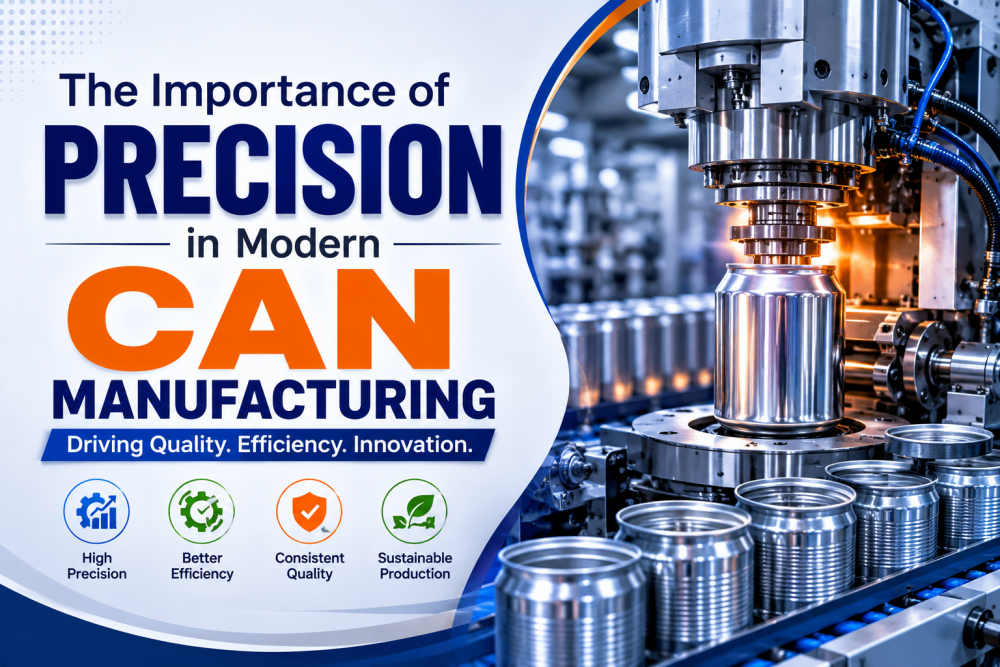
The metal packaging industry is in a constant state of evolution as manufacturers are demanding faster speeds, increased efficiency and consistent product quality. In the production of beverage cans, food containers or aerosol packaging, precision is one of the most critical factors in ensuring operational success.
Modern can manufacturing employs a mix of sophisticated machinery and automation systems. Accurate measurements at each step in the manufacturing process are prerequisites for dimensional consistency, minimal waste and high output rates.
Why Precision Matters in Can Production
Can manufacturing is a highly specialized process where even minor variations can impact the final product. Inconsistent wall thickness, uneven trimming, or dimensional inaccuracies can lead to defects that affect both performance and appearance.
Precision manufacturing helps companies:
- Improve production efficiency
- Reduce material waste
- Minimize downtime
- Maintain consistent product quality
- Lower operating costs
- Meet industry standards and customer requirements
As production lines become faster and more automated, the demand for highly accurate machinery continues to grow.
Key Stages That Require High Accuracy
Several stages of the can-making process depend on precision engineering to deliver reliable results.
Cup Formation
The process begins with forming metal cups from flat sheets. Consistency at this stage is essential because any variation can affect subsequent manufacturing steps.
Drawing and Ironing
Once the cups are made, they are turned into cylindrical can bodies. This stage must be controlled well to obtain the desired wall thickness without compromising the structural integrity.
This is high-end equipment that is essential to keeping the production line moving and the results repeatable.
Many manufacturers are investing in high-performance Bodymaker systems for improved forming accuracy, increased production speeds and long-term reliability. The manufacturers’ modern bodymaking technology enables them to meet quality standards and maximize operational efficiency.
Trimming and Finishing
Once formed, cans are trimmed to exact specifications. Correct trimming allows uniformity for production batches and assists downstream processes such as decorating and necking.
The Role of Automation in Modern Manufacturing
Automation has transformed the packaging industry by reducing manual intervention and improving consistency. Modern production lines incorporate advanced control systems, sensors, and monitoring technologies that help manufacturers identify issues before they impact production.
Benefits of automation include:
- Real-time quality monitoring
- Faster production speeds
- Reduced maintenance requirements
- Improved process control
- Enhanced workplace safety
These advancements allow manufacturers to produce large volumes of cans while maintaining strict quality standards.
Reducing Waste Through Better Equipment
Material costs represent a significant portion of manufacturing expenses. Precision-engineered machinery helps reduce scrap rates and optimize metal usage without compromising can strength or durability.
By investing in reliable production equipment, manufacturers can:
- Improve yield rates
- Reduce rejected products
- Lower energy consumption
- Increase equipment lifespan
- Improve overall profitability
Efficient machinery also contributes to sustainability goals by minimizing resource consumption and reducing production waste.
Meeting the Demands of Modern Packaging
Consumers in the food, beverage and industrial sectors are demanding more high-quality packaging. The manufacturer has to balance speed, quality and cost effectiveness in order to stay competitive.
Advanced manufacturing solutions enable companies to realize:
• Increased production capacities
• Consistent product quality
• Faster change overs
• Enhanced operational agility
• Improved reliability in harsh production environments
As the packaging industry continues to evolve, precision engineering will remain at the core of successful can manufacturing operations.
Conclusion
Modern can manufacturing demands accuracy at every point of the manufacturing process. Precision machinery helps manufacturers achieve consistent quality, increase efficiency and reduce waste from cup formation to final finishing. Companies that invest in advanced production technology are better positioned to meet growing market demands while maintaining high operational standards.
Precision-driven manufacturing solutions will continue to shape the future of the global metal packaging industry as the demands for quality and productivity rise.