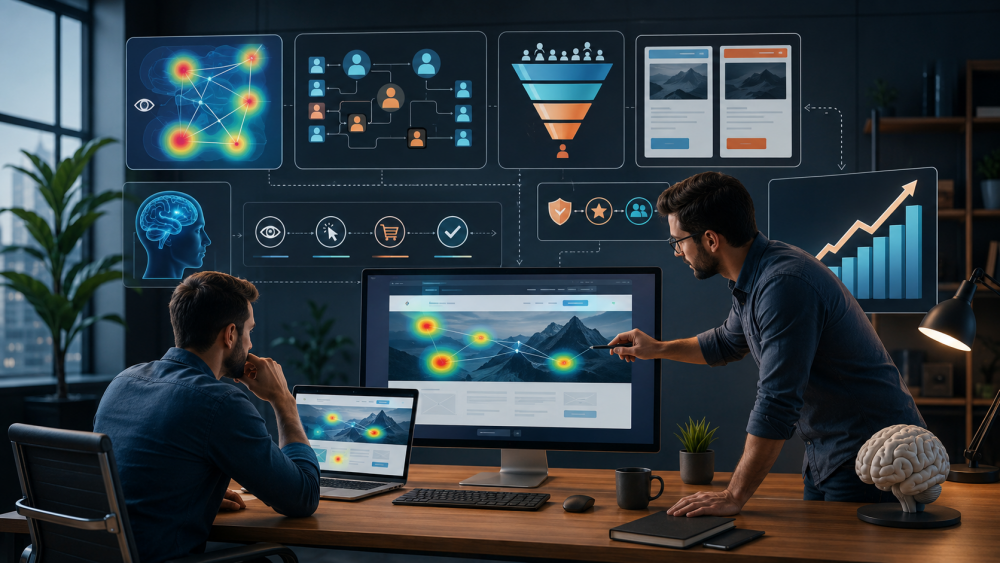
In the current competitive digital environment, a good looking site is not enough to draw attention of the users and transform visitors into customers. In this regard, neuromarketing web design comes in to play. Through neuroscience and design techniques, companies will have a chance to comprehend how people think, process information, and decide on the internet. This approach involves application of psychological knowledge in an effort to create experiences that naturally lead users to the actions they want rather than depending on the guesswork.
This is because psychology is becoming increasingly significant in UX design, and it needs to develop user experiences to match the behavior of human beings. Each click, scroll and interaction is impacted by unconscious stimulations, feeling and mental biases. When incorporated into the web design, besides increasing user satisfaction, brands will also be in a position to increase the rates of conversion by a significant margin. That is why the neuromarketing web design in particular is fast turning out to be a pillar of any business that is interested in achieving the highest ROI and developing meaningful online relationships.
What is Neuromarketing in Web Design?
Neuromarketing web design can be defined as the use of neuroscience principles in designing websites so as to influence the behavior of the users. It is involved with the processing of the visual responses of the brain in regards to stimuli, content and interactions. The responses can be used by the designers to design layouts and experiences that appeal to users on a more intimate level.
Neuromarketing is also more concerned with emotional involvement and mental comfort as opposed to the conventional design methods, which lay more emphasis on aesthetic appeal. It makes sure that users do not simply visit a site, but they are motivated to stay on the site, browse and make a move. Companies that implement the same strategy usually experience elevated engagement rates, reduced bounces, and conversions.
The Science Behind User Behavior
The human brain takes only milliseconds to process a visual information and therefore the first impressions matter. The perception of a web site normally takes seconds, and this affects the desire to proceed with the site. This is where psychology in UX design is very crucial.
There are cognitive biases like the halo effect which determine how the user will view a brand depending on the first impressions. When a site appears to be professional and credible, then people will tend to believe that the business is credible. The same can be applied to the so-called heuristic of availability as it makes sure that the users bases their searches on familiar patterns and this is the reason that similar layouts and recognizable design elements are so efficient.
These psychological principles enable designers to design experiences that would be considered intuitive and effortless and minimize friction and improve usability.
Conversion Psychology and Its Impact
The possibility of using conversion psychology is one of the strongest means of neuromarketing web design. This is done by applying psychological stimuli to influence the user to perform certain behaviors, which include buying a product, subscribing to a newsletter or completing a contact form.
The following are some of the commonly used methods:
- Social Proof: It creates credibility and trust by showing reviews, testimonials, or number of users.
- Scarcity: Urgency is manufactured by limited-time offers or out of stocks.
- Reciprocity: The provision of free resources induces a user to reciprocate such as his/her email.
- Anchoring: It works by offering a more expensive alternative at the beginning, which will cause other alternatives to appear cheaper.
The techniques are effective since they are in line with the natural human decision making processes. They can be used to a great effect, and this can be seen in terms of conversion rates and the general effectiveness of the site.
Businesses looking to apply these strategies can benefit from expert UI/UX design services that focus on user-centered and psychologically informed design.
Key Elements of Neuromarketing Web Design
1. Emotional Design
Emotions are very important when making decisions. The websites that can stir positive feelings in users by means of imagery, narrative, and tone have a higher chance of making the users interested. Emotional relations make the brand more trusted and promote long-term brand loyalty.
2. Visual Hierarchy and Eye Tracking
Users are inclined to use visual patterns such as F-pattern or Z-pattern to scan the content. These features are important to put the headlines, CTAs, and key messages because they will make the message as visible and engaging as possible.
3. Color and Typography
The psychology of colors is a factor that determines the emotions of the users towards a brand. An example of this is that blue is trustworthy whereas red causes a sense of urgency. On the same note, typography influences the perception and readability and therefore should be considered as a vital element of psychology in UX design.
4. Simplicity and Cognitive Load
It is important to reduce the complexity to enhance the user experience. Excessive information or a number of choices may confuse the users resulting in decision fatigue. Easy to use layouts and easy to navigate would allow users to concentrate on the most important things.
5. Trust and Credibility Signals
Such factors as security badges, certifications, and customer rating will help to calm down and minimize the hesitation of users. These cues are critical to the creation of trust and prompting conversions.
The Role of Data and Testing
Although there is a good basis of the psychological principles, there is a need to test strategies continuously to improve them. A/B testing of parts of design, including the color of the buttons, headlines or designs, can be used to determine which item appeals to the users.
Data-driven insights from conversion rate optimization (CRO) services allow businesses to make informed decisions and continuously improve performance. By analyzing user behavior, heatmaps, and engagement metrics, companies can fine-tune their designs for maximum impact.
Benefits of Neuromarketing Web Design
The application of the neuromarketing web design has a number of benefits:
- Higher Conversion Rates: The psychological triggers prompt the user to act.
- Better User Interaction: Usability designs ensure that customers spend more time on the site.
- Better Brand Trust: The credibility is created through consistent and emotionally charged designs.
- Better ROI: Optimized user experience will result in higher revenue and efficiency.
By making the design strategies in line with the human behavior, businesses are able to produce experiences that will attract them as well as convert them.
Future of Neuromarketing in Web Design
The neuromarketing web design will keep on increasing as technology advances. The further development of AI, personalization, and behavioral analytics will allow making targeting and customization even more accurate. The web sites will be smarter and will adjust themselves according to the user preferences and behavior in real-time.
Individual experiences with information about the user will increase interactions and make them more relevant. This degree of personalization will even make the conversion psychology even stronger and the businesses remain competitive in the digital world.
Conclusion
Neuromarketing web design is not something that you can afford anymore, but a necessity. Through the knowledge of the way the users think and act, businesses will be able to develop websites that are not only pretty to the eye, but also very effective in terms of conversion. Psychology has been incorporated in the UX design, and therefore, every element of a site has a purpose that leads the user through the site effortlessly.
In Fine Digital Marketing Agency, the most important aspect of providing tangible results is the use of the power of neuromarketing web design. Through creativity and data-driven insights and conversion psychology, businesses can gain access to new opportunities to grow, enhance user experiences, and have better ROI. The future of the digital success is the investment in psychologically optimized web design, and those who will be ahead of the pack will be those who will make this step.