A jet is taking off the runway. A satellite is launched into orbit hundreds of miles above the Earth. These moments look easy but they rely on thousands of carefully engineered details happening all at once. Aerospace innovation is about making everything better, from the largest wing panel to the smallest sensor.
That steady, measured progress has shaped aviation from the Wright Brothers’ first flight to today’s high-performance aircraft. What is different is how deep the innovation now goes. The engineers are building stronger structures, they’re designing smarter systems, lighter materials and tiny components that keep everything going.
Advanced Materials Are Redefining What Aircraft Can Do
For decades, aircraft were built with aluminum as the backbone. It is strong, fairly light and easy to work. But modern aircraft are going beyond it.
Enter composites – materials that are made by combining two or more substances to make something stronger than either one alone. A very common example is carbon fiber reinforced plastic. It’s layers of heavy plastic resin with carbon fiber in between. This produces a material that is lighter and tougher than many metals.
And why does that matter? The weight of the plane directly influences fuel consumption. A lighter plane will burn less fuel, saving money and reducing emissions. Even a little reduction can make a big difference. For example, airlines can trim hundreds of pounds and save millions of dollars over the life of a single aircraft.
These materials are also corrosion resistant. Unlike typical metals, they don’t rust or break down as fast when exposed to moisture or changes in temperature. Which means fewer repairs and a longer lifespan.
Newer materials go one step further. Hot-Handling Ceramic matrix composites are designed for the heat. You can find them in engine components that can get hotter than 2,500°F. That heat tolerance makes engines run more efficiently.
Microcomponents: The Small Parts Making a Big Difference
Materials grab the headlines, but many of the biggest breakthroughs are at a much smaller scale.
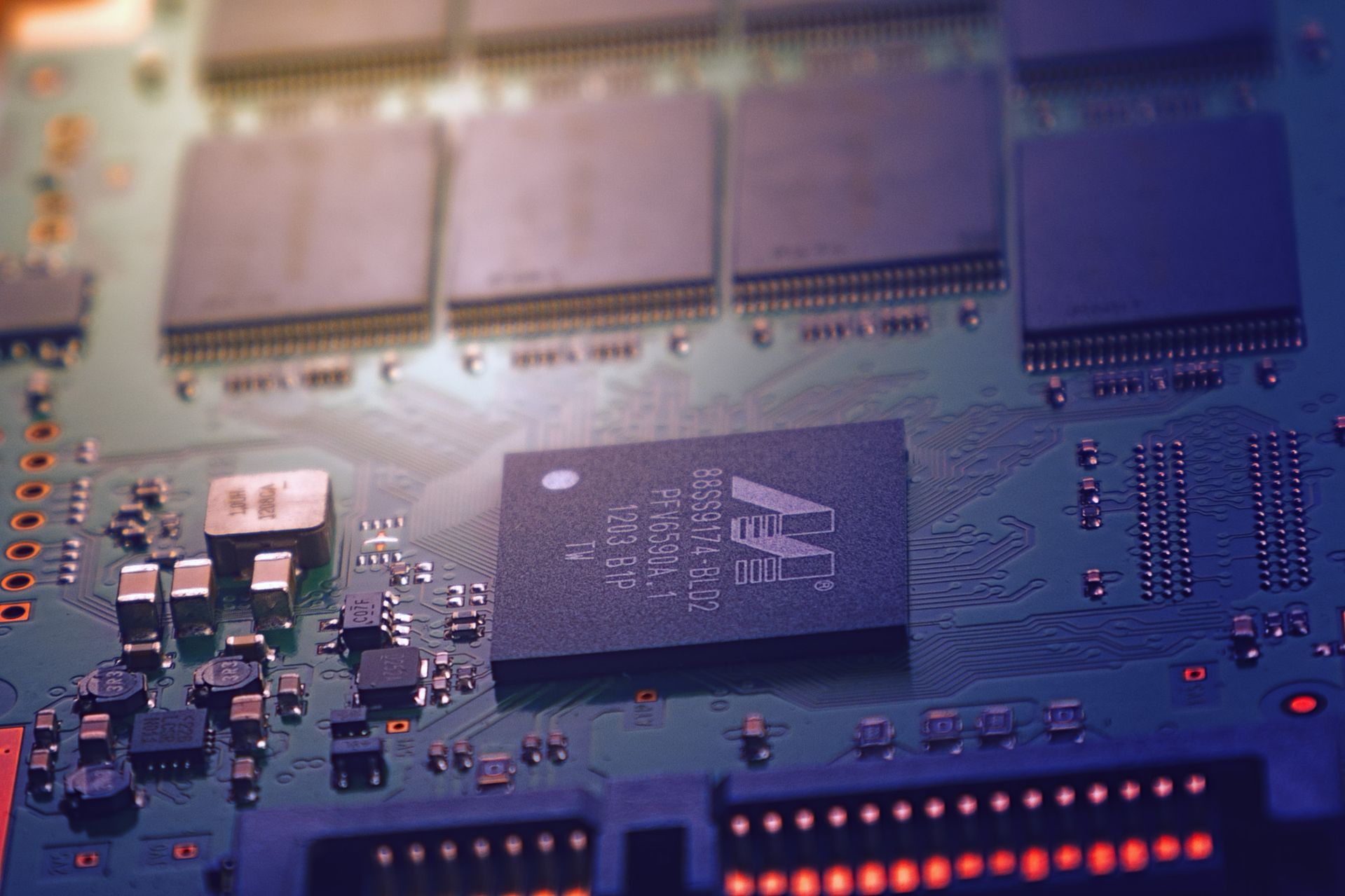
Microcomponents are the basis of today’s aircraft. They are small devices that do important things, often behind the scenes. These include microprocessors , sensors and actuators . A sensor collects information, an actuator does something with that information and a processor determines what to do with the information.
Imagine the system that holds an airplane steady in turbulence. Sensors detect changes in motion . Processors process the data and actuators adjust control surfaces like flaps or rudders in milliseconds. The whole process is so fast that travelers hardly notice the correction.
One of the most important technologies in this space is MEMS, or micro-electro-mechanical systems. They are tiny machines that incorporate mechanical and electronic parts. They’re very small machines on a chip, in simple terms.
MEMS sensors can measure pressure, acceleration and temperature with accuracy. Your smartphone has the same technology to detect movement and orientation. These sensors are used in aircraft to determine altitude, position, airspeed etc. Without them, the navigation systems would be a lot less dependable.
This is all enabled by miniaturization. Engineers are able to fit more computing power in smaller spaces without sacrificing performance. That makes it more capable, but it also makes it lighter, and that brings us back to efficiency.
Enhancing Safety Through Advanced Testing and Diagnostics
There’s no debate about safety in aerospace. As systems evolve to be more complex, so do the tools to test and maintain them.
Take a simple example: measuring airspeed and altitude. These readings come from the pitot-static system, which measures an aircraft’s speed and altitude with air pressure. If those readings are wrong, the consequences can be dire.
Therefore, technicians will use reliable Pitot Static Test Equipment to verify the accuracy. This equipment simulates the conditions of a real flight on the ground and verifies the instruments are reading correctly before take-off. It’s the kind of routine check that never makes the headlines but is vital to every flight.
Maintenance is becoming more predictive, too. Aircraft don’t wait anymore for something to break; they have sensors on board that constantly monitor their performance. This is known as predictive maintenance. It detects early warning signs like small temperature variations or irregular vibrations before they become big problems.
For example, a sensor might detect rising heat in an engine part. This allows the engineers to tackle the problem during scheduled maintenance rather than dealing with an unexpected failure during operations.
Inspection methods have improved as well. That way engineers can look at structures without having to dismantle them . Ultrasonic testing is one method that uses sound waves to find internal cracks, similar to how a medical ultrasound shows what is happening inside the body.
Digital Systems Are Making Aircraft Smarter Than Ever
Today’s aircraft are data machines. We ingest enormous quantities of data from each flight, from engine performance to weather conditions.
That data is then analyzed for trends to optimize operations. For example, airlines can track flight data to find more efficient routes or change fueling tactics. Together these little improvements add up to big savings over time.
Connectivity is yet another game changer. Aircraft can transmit information to ground systems in real-time. That means that maintenance crews can be ready to fix things before the plane even lands. It also allows air traffic controllers to more efficiently manage congested airspace.
Automation is also a major player. Advanced systems help the pilot with routine tasks like keeping the right altitude or changing the speed. This cuts down on the workload and lets pilots concentrate on critical decisions, especially in bad conditions such as severe weather.
Sustainability Is Driving the Next Wave of Innovation
The future of aerospace will be about performance and accountability.
It is now a matter of trying to limit the impact on the environment. Lightweight materials help to cut fuel consumption. More efficient engines consume less fuel and produce fewer emissions.
Another path forward is sustainable aviation fuels, or SAFs. These fuels are made from renewable resources, such as plant oils or waste products. They can often be used in existing aircraft with little modification and are a practical short term solution.
And electric propulsion is getting some love, too. Electric-only commercial planes are still in development but smaller electric and hybrid aircraft are already being tested. These systems promise quieter operations, and zero emissions in flight.
Additive manufacturing, or 3D printing, is changing how parts are produced. This allows engineers to make very complex shapes with very little waste. For example, a part that used to be made up of several components can be printed as one, reducing weight and the time needed to manufacture it.
Conclusion
Every aerospace breakthrough, be it a heat resistant material or a microscopic sensor, becomes part of a much larger system. All these innovations combine to make aircraft lighter, safer, smarter and more sustainable.
When you see a plane up there next time, it’s worth thinking about what’s behind it. Not only mighty engines, not only good looks, but a whole lot of little things making steady progress for the industry.