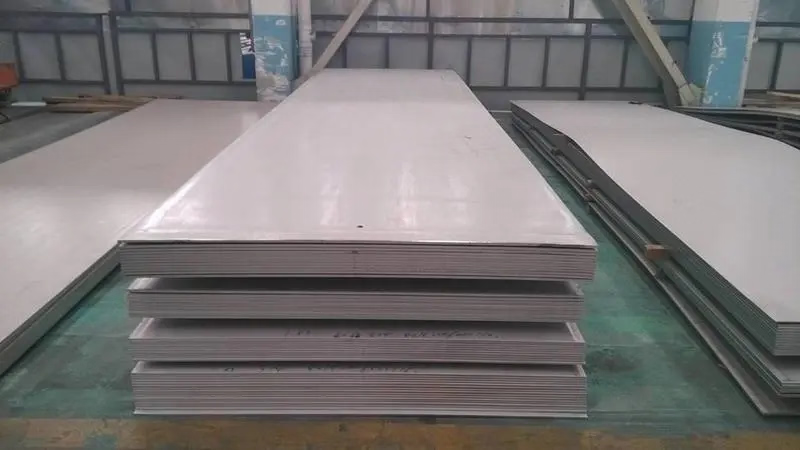
Stainless steel 304 sheet is one of the most widely specified materials in industrial procurement, and it’s not hard to see why. Across food processing, construction, chemical handling, and heavy manufacturing, the 304 grade stands out for its balance of strength, workability, and corrosion resistance. It’s a material that survives demanding environments without demanding much in return. This article covers the key advantages of high-quality SS 304 sheets, their properties, and the industries that rely on them every day.
What Are Stainless Steel 304 Sheets?
SS 304 is an austenitic stainless steel, representing the most common classification within the stainless steel family. Its corrosion resistance is principally achieved using a chromium-nickel alloy, which generates a stable passive oxide layer on the surface. This layer safeguards the steel against moisture, oxidation, and chemical corrosion.
The result is a material that’s suitable for both precision fabrication and heavy-duty structural work. It’s used across more industries than almost any other grade. The default status of 304 stainless steel sheet for global procurement and engineering teams is a result of its versatility.
Chemical Composition of SS 304
The performance of any stainless steel grade starts with its chemistry. Here’s the standard composition range for SS 304:
| Element | Typical Content |
| Chromium (Cr) | 18.0 – 20.0% |
| Nickel (Ni) | 8.0 – 10.5% |
| Carbon (C) | 0.08% max |
| Manganese (Mn) | 2.0% max |
| Silicon (Si) | 0.75% max |
| Iron (Fe) | Balance |
Chromium provides the base corrosion protection. Nickel stabilises the austenitic structure, which improves toughness and formability. The low carbon content reduces the risk of sensitisation during welding, a practical advantage for fabricators.
Mechanical & Physical Properties
Explore the reliable mechanical and physical properties of 304 stainless steel sheet, detailed in the following table for your reference.
| Property | Value / Description |
| Tensile Strength | ~515 MPa (min) |
| Yield Strength | ~205 MPa (min) |
| Density | ~7.93 g/cm³ |
| Melting Point | 1400 – 1450 °C |
| Corrosion Resistance | Excellent in most environments |
The figures show why SS 304 is one of the trusted grade for both structural and process-critical applications. It also works well in elevated temperature settings because of its density and melting point, which are things that cheaper materials just can’t handle.
Key Advantages of SS 304 Sheets
Excellent Corrosion Resistance
Corrosion is one of the most expensive problems in industrial operations. SS 304 sheets resist rust, oxidation, and staining in moist, mildly acidic, and atmospheric environments. The chromium-nickel composition forms a self-healing passive layer if the surface is scratched, it repairs itself on contact with oxygen. This makes the 304 stainless steel sheet a dependable choice wherever exposure to moisture or corrosive agents is a concern.
High Strength and Durability
Machines need strength. High tensile and yield strength make SS 304 sheets suitable for industrial handling, heavy equipment installation, and structural applications. They protect components under constant pressure during operations. They don’t deform easily under pressure. That durability extends service life and reduces replacement frequency, a direct cost benefit for any operation.
Good Formability and Weldability
Fabrication flexibility is a major factor in material selection. SS 304 sheets bend, cut, and roll without cracking, and they weld cleanly using standard methods TIG, MIG, and spot welding all work well. The low carbon content minimises carbide precipitation at weld zones, which means the corrosion resistance around welds stays intact. Fabricators we work with consistently rate SS 304 as one of the easiest grades to process.
Hygienic and Easy to Clean
The smooth, non-porous surface of SS 304 sheet doesn’t harbour bacteria or trap contaminants. It’s straightforward to clean and withstands repeated exposure to disinfectants and cleaning chemicals without degrading. This is why food-grade and pharmaceutical-grade applications almost always specify 304 stainless steel. Hygiene compliance isn’t a concern it’s built into the material.
Heat Resistance
SS 304 performs reliably at elevated temperatures, maintaining its strength and oxidation resistance up to around 870°C in intermittent service. In process industries where components face heat cycling, steam, or high-temperature fluids, this matters. It shouldn’t be confused with heat-resistant grades like 310S, but for the majority of industrial thermal applications, 304 stands up well.
Cost-Effective Material
Compared to higher-grade alloys such as 316, 317L, or duplex steels, ss 304 sheets offer a considerably lower cost per unit. For applications where extreme chemical resistance or elevated chloride exposure isn’t required, there’s no engineering justification to move to a premium grade. SS 304 delivers the performance the application needs at a price that makes procurement sense.
Industrial Applications of SS 304 Sheets
Food Processing Equipment
People use SS 304 sheets for food tanks, belts, tables, and bins in factories. Because it is easy to clean and resists strong soaps, it is the top material in this whole industry. Chemical Containers
Chemical Containers
Storage tanks and handling vessels for mildly corrosive chemicals rely on SS 304 for its resistance to oxidation and chemical contact. It holds up in environments where carbon steel would fail within months.
Heat Exchangers
304 stainless steel sheet is what the vast majority use. It works well to protect heat exchanger parts from both heat and rust. In process plants, these parts are constantly heated and cooled, as well as being exposed to moisture.
Construction and Architecture
Cladding panels, roofing, facades, and structural components use SS 304 for its combination of aesthetic finish and weather resistance. Architects specify it where both durability and appearance matter.
Automotive Parts
Vehicle exhaust components, trim parts, and structural reinforcements use 304 sheets for strength and heat tolerance. This grade survives road conditions better than alternatives at the same price point. It remains the most reliable automotive material choice.
Kitchen Equipment
Commercial kitchens use SS 304 sheets for countertops, sinks, shelving, and appliance casings. Ease of cleaning, durability, and hygiene compliance are the core reasons.
Why Choose a Reliable Stainless Steel 304 Sheet Supplier
Material quality alone isn’t enough. How that material is sourced, processed, and delivered directly affects your production schedules and finished product quality. Working with a certified SS 304 sheet supplier ensures that every sheet meets dimensional tolerances and verified composition, not just on paper but in practice.
We supply SS 304 sheets with mill test certificates, accurate cut-to-size dimensions, and consistent batch quality. Our team manages custom thicknesses, surface treatments, and volume-based scheduling. We understand that late material orders delay projects, so we promise on-time delivery. We prioritize your timeline to ensure your manufacturing process remains efficient and consistent.
Conclusion
Industry requirements for strength, hygiene, and corrosion resistance are met by SS 304 in one cost-effective package. This versatility made the grade a cross-sector industrial standard for decades. Whether sourcing a food plant, construction project, or chemical facility, 304 stainless steel sheet is a specification that rarely needs reconsideration once made. It meets every rigorous standard and performance expectation.
Get in touch with our team today to discuss your requirements, request a quote, or arrange a sample. We’re here to help you source the right material, in the right specification, on time.