Smart buildings are getting smarter every day. They have automated lighting systems and smart security cameras that help businesses be safer more comfortable and more efficient. One technology that smart buildings should have is Fire IoT.
Fire accidents can happen at any time and anywhere. A small spark can turn into a disaster if it is not found early. Old fire safety systems are not enough for buildings. They need smarter solutions. This is where Fire IoT comes in.
What is Fire IoT?
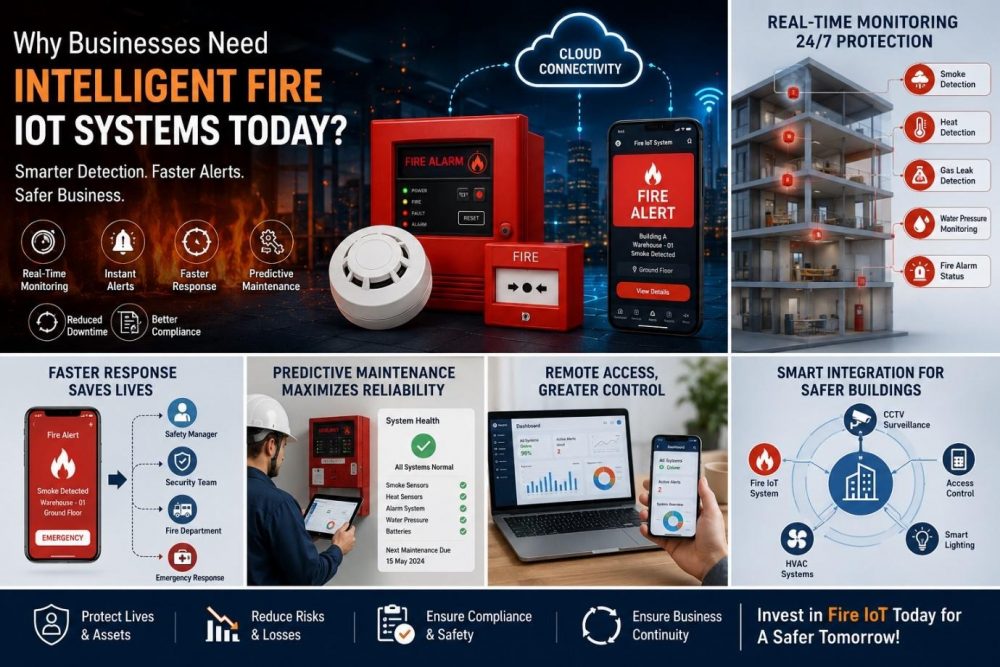
Fire IoT is a fire safety system that uses the Internet of Things. It has sensors, cloud technology and real-time monitoring to make fire protection better.
Fire IoT devices are always. Sharing data. This helps building owners find problems and take action before it is too late.
Smart fire safety systems can monitor things like:
- Smoke levels
- Temperature changes
- Gas leaks
- Fire alarm status
- Water pressure in hydrant systems
- Sprinkler performance
- Emergency response systems
With Fire IoT integration all these systems work together to make the building safer and respond faster in an emergency.
Why Smart Buildings Need Fire IoT Integration
1. Real-Time Fire Detection
Old fire alarms only go off when there is a lot of smoke or heat. Fire IoT systems are smarter. They watch the building all the time. Can find unusual changes before a fire spreads.
For example if the temperature in a room goes up suddenly the system can send an alert to the maintenance team right away. This helps prevent damage.
Real-time monitoring helps building owners act and reduce risks.
2. Faster Emergency Response
Time is very important during a fire emergency. Every second counts when trying to save people and property.
Fire IoT systems send alerts away to:
- Building managers
- Security teams
- Fire departments
- Emergency responders
- devices
This helps emergency teams respond quickly and control the situation faster.
In buildings connected systems can also unlock emergency exits turn on smoke control systems shut down elevators turn on emergency lighting and start sprinkler systems automatically.
3. Remote Monitoring from Anywhere
One of the things about Fire IoT is that it can be monitored from anywhere. Building owners and facility managers can watch fire safety systems from their smartphones, tablets or computers.
This is especially useful for commercial buildings, shopping malls, hospitals, hotels, warehouses, factories and businesses with many locations.
If there is a problem alerts are sent away even if the management team is not on site.
Remote monitoring makes sure that fire safety is working all the time.
4. Better Maintenance and Reduced Downtime
Old fire systems often need to be checked to find faults. Sometimes problems are not found until there is an emergency.
Fire IoT systems can predict when maintenance is needed by checking the equipment.
The system can find problems like:
- sensors
- Low battery levels
- Wiring
- Water leakage problems
- Low hydrant pressure
- Sprinkler malfunctions
This helps maintenance teams fix problems before they become serious.
As a result businesses have:
- maintenance costs
- Fewer system failures
- equipment performance
- Improved fire safety compliance
5. Improved Safety for Occupants
buildings are designed to be safe and comfortable for the people inside. Fire IoT systems add another layer of protection by improving evacuation and emergency management.
During a fire emergency smart systems can guide people to exits send voice alerts display emergency instructions detect crowded areas and monitor smoke movement.
This helps reduce panic and makes evacuation more efficient.
In places like hospitals, schools, offices and residential towers this technology can save lives.
6. Data Collection and Smart Analytics
Fire IoT systems collect data that helps businesses improve safety planning.
The system can analyze things like:
- Fire alarm history
- Risk areas in the building
- Equipment performance
- Response times
- Safety trends
Using this information building owners can make decisions and improve fire prevention strategies.
Data analytics also helps organizations follow safety regulations effectively.
7. Energy-Efficient and Cost-Effective
Many people think that smart systems are expensive. Fire IoT can actually save money in the long run.
Smart fire safety systems help save money by preventing fires reducing false alarms lowering maintenance expenses improving operational efficiency and reducing insurance risks.
Modern Fire IoT systems also work well with smart building technologies, which helps reduce overall energy use.
8. Integration with Smart Building Systems
One of the benefits of Fire IoT is its ability to work with existing smart building systems.
It can connect with things like:
- CCTV surveillance
- Access control systems
- HVAC systems
- Building management systems
- Emergency communication systems
- lighting systems
This creates a fully connected environment where all safety systems work together seamlessly.
For example if smoke is detected in an area the HVAC system can automatically stop airflow to prevent smoke from spreading.
This level of automation improves both safety and operational efficiency.
9. Supports Compliance and Safety Standards
Commercial buildings must follow fire safety rules. Fire IoT systems help businesses follow these rules by providing monitoring and reporting.
Automated reports and system records make inspections easier and more transparent.
This helps businesses meet safety standards avoid penalties improve audit performance and keep documentation.
A smart fire safety approach also builds trust among employees, customers and visitors.
10. Ideal for Modern Infrastructure
As cities get smarter buildings must adopt technologies to stay safe and competitive.
Fire IoT is perfect for offices IT parks, data centers, airports, metro stations, industrial facilities, residential complexes and educational institutions.
These environments need monitoring and rapid emergency response making Fire IoT an essential solution.
How Fire IoT Helps Prevent Fire Disasters
Many big fire incidents happen because problems are not found until it is too late. Traditional systems may not provide warning.
Fire IoT minimizes this risk by detecting hazards sending instant notifications and responding automatically.
By finding risks businesses can stop small issues from becoming big disasters.
The Future of Fire Safety is Smart
Technology is changing every industry and fire safety is no exception.
Future Fire IoT systems may include things like AI-based fire prediction, smart drones for emergency monitoring, advanced cloud analytics, voice-controlled emergency systems and automated evacuation management.
Businesses that invest in Fire IoT today will be better prepared for safety challenges.
Why Businesses Should Invest in Fire IoT Now
Waiting for a fire accident to happen can be very costly. Fire damage can lead to property loss, business interruption, financial losses, legal liabilities and risk to life.
Fire IoT provides protection instead of reactive response.
Businesses that adopt fire safety systems can improve workplace safety, emergency preparedness, operational efficiency, brand reputation and long-term cost savings.
For smart buildings Fire IoT is no longer optional. It is becoming a necessity.
Smart buildings need safety systems. Old fire protection methods are not enough to handle risks.
Fire IoT integration offers real-time monitoring, faster emergency response, predictive maintenance, remote access and improved safety management.
It helps businesses protect lives reduce damage and improve efficiency.
As technology continues to evolve Fire IoT will play a role in shaping the future of fire safety.
Businesses that invest in fire protection today can create safer and smarter environments for tomorrow.
To explore Fire IoT solutions for your building visit Elixir Engineering.
Frequently Asked Questions
1. What is Fire IoT technology?
Fire IoT technology uses sensors and internet-connected devices to monitor fire risks detect hazards early and send real-time alerts for better safety management.
2. How does Fire IoT improve fire safety?
Fire IoT improves fire safety through real-time monitoring, automated alerts, predictive maintenance and faster emergency response systems.
3. Can Fire IoT systems reduce alarms?
Yes smart Fire IoT systems use monitoring and data analysis to reduce false alarms and improve system accuracy.
4. Is Fire IoT suitable for buildings?
Yes Fire IoT is highly suitable for offices, malls, hospitals, hotels, factories, warehouses and other commercial properties.
5. Can Fire IoT systems be monitored remotely?
Yes users can monitor Fire IoT systems through smartphones, tablets and computers from anywhere.
6. Why is Fire IoT important for buildings?
Fire IoT helps smart buildings improve safety, automation, emergency response, maintenance efficiency and compliance, with fire safety standards.
7. Does Fire IoT help reduce maintenance costs?
Yes predictive maintenance features help identify system faults early reducing repair costs and preventing failures.
8. Can Fire IoT integrate with smart systems?
Yes Fire IoT can integrate with CCTV, HVAC, access control, building management systems and other smart technologies.