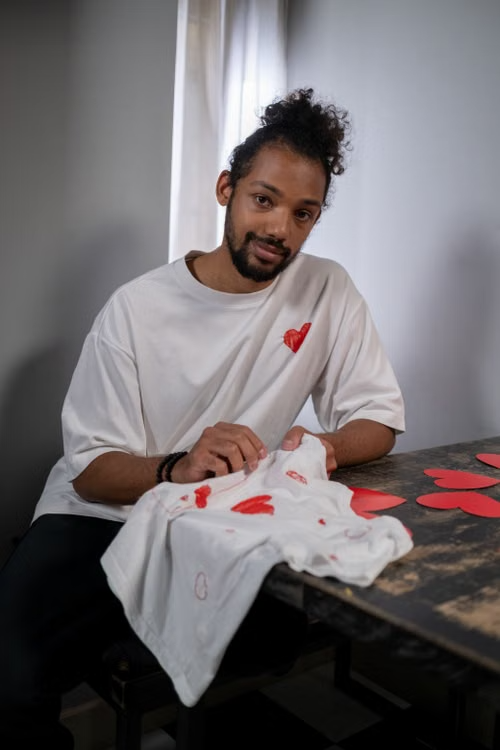
Okay so genuine question — when did everyone start wearing embroidered shirts again? Because I feel like I blinked and suddenly half my group of friends showed up wearing beautifully stitched kurtas and embroidered casual shirts like it was completely normal. Which I guess now it is.
I’m not complaining by the way. I actually love it.
The ones I keep noticing most are embroidered shirts for men — and not the heavy formal stuff either. Just regular guys wearing detailed, stitched shirts to dinners, casual meetups, even just running errands. It stopped being an “occasion only” thing somewhere along the way and I genuinely can’t pinpoint exactly when that happened.
There’s something about embroidered clothing that just hits different compared to the plain stuff we were all wearing for years. I went through my wardrobe last month and realized almost everything in there was some version of solid color, minimal design, nothing going on visually. And honestly? It was depressing to look at. No personality. Just… fabric.
The Minimalism Phase Ran Its Course
For a good stretch of time, simple was everything. Clean lines, no patterns, nothing too decorative. And I get why that appealed to people. It’s easy. You don’t have to think about it. Everything matches everything else.
But there’s a ceiling to how long that stays interesting and I think a lot of people hit that ceiling around the same time. You can only own so many plain white shirts before you start wondering if your wardrobe has any personality at all.
Embroidered shirts became the answer to that for a lot of people. Not just, but definitely here more than most places because we actually have the craft tradition to back it up. It wasn’t like people had to import this aesthetic from somewhere else. It was already here, already part of clothing has always looked, just waiting for people to come back to it.
Embroidery Is Actually Incredibly Regional and People Don’t Talk About That Enough
This is something I find genuinely fascinating and I don’t think it gets enough conversation. Embroidery isn’t one thing. It’s like ten different things depending on where you’re from.
Sindhi embroidery has all this mirror work, very geometric, very bold. Balochi work is different — finer in a lot of ways, incredibly detailed, uses color combinations that feel distinct from anything else. Punjabi embroidery tends to go more floral, influenced by the phulkari tradition, very warm and layered looking.
These are completely different visual languages that developed separately over generations. And when designers started pulling from these traditions and putting them into contemporary cuts — not traditional styles, but actual modern shirts and kurtas with modern fits — something clicked.
You got clothing that felt connected to something real. Not just aesthetically interesting but culturally meaningful. That combination is hard to manufacture and it’s a big part of why the embroidery revival here feels more substantial than just a passing trend.
Social Media Obviously Played Into This But Maybe Not How You Think
Everyone’s instinct is to say “oh it went viral” and leave it at that. But I think what social media actually did was more specific than that.
It showed people how to wear embroidered shirts in ways that felt normal. Not editorial, not heavily styled, just — here’s a guy wearing an embroidered kurta with jeans and it looks completely fine and cool actually. Here’s a woman pairing an embroidered shirt with straight trousers for what looks like a regular workday.
That styling content is what shifted perception. Because for a while embroidered clothing in people’s minds meant formal occasions only. Weddings. Eid. Events where you’d otherwise feel underdressed. Social media broke that association by just… showing embroidered shirts in regular contexts repeatedly until it stopped feeling unusual.
Influencers did that work whether intentionally or not. And celebrities wearing embroidered pieces casually rather than only at red carpet type events helped normalize it further.
Men Specifically Had to Get Over Something
I want to talk about men’s embroidery separately because there was genuinely an awkward period where embroidered clothing for men felt stuck between two things.
On one end you had very heavy formal embroidery — sherwani type stuff, occasion wear, not something you’d consider for anything resembling a normal day. On the other end you had traditional kurtas that some men felt disconnected from for various reasons.
There was nothing really in the middle for a while.
What changed is designers started producing embroidered men’s shirts with restraint. Small detailing, subtle threadwork, geometric patterns in one or two colors that didn’t overwhelm the shirt. Just enough to make it more interesting than a plain option without tipping into “dressed for a formal event” territory.
That middle ground is what men needed and once it existed, people actually started buying embroidered shirts for regular use. Not just to borrow from a family member’s closet before a wedding.
For Women the Shift Was Less About Perception and More About Scale
Women have genuinely always liked embroidered clothing. That preference never really went away. What changed is how much of it is available now and how many brands are actively producing it.
A few years back embroidered women’s shirts were seasonal. Certain times of year, certain collections, available for a bit then gone. Now brands stock them all year because demand is consistent enough to justify it.
Part of the reason demand became so consistent is — and this sounds simple but it matters — the shirts got more versatile. Better fabric choices, embroidery placements that work with multiple outfit combinations, designs that transition between casual and semi-formal without a complete outfit overhaul.
Women figured out quickly that a good embroidered shirt could work in several different contexts and that made it worth buying even outside the traditional “occasion wear” framing.
Nobody Really Talks About the Sustainability Side and They Should
Fast fashion is a real problem and I don’t think most people need convincing of that anymore. The issue is knowing what to actually do differently.
Embroidered shirts are one actual practical answer to that, at least partially. Not because they’re marketed as sustainable — most of them aren’t — but because of how people actually treat them.
When you buy something with real craft in it, something that costs you a bit more and looks distinctly like itself, you take care of it. You don’t throw it in the donation pile after one season. You repair it if something happens to it. You keep it because it still looks good years later and because it doesn’t feel generic enough to replace.
That behavior, people holding onto clothes longer because they actually value them, is genuinely more sustainable than buying five cheap plain shirts a year and cycling through them constantly.
There’s also the labor side. Embroidery supports skilled workers. People who spent years learning specific techniques and who need consistent demand for embroidered clothing to make that skill economically viable. Buying embroidered clothing keeps that ecosystem alive in a way that buying mass produced plain garments simply doesn’t.
Styling Thoughts From Someone Who Actually Wears These
Keep it simple around the embroidery. That’s the main thing. The shirt is already doing something visually so the rest of the outfit doesn’t need to compete.
Plain trousers, simple footwear, minimal accessories — that combination works almost universally with embroidered shirts. You look put together without looking like you tried too hard.
For more formal occasions you can lean into the embroidery by choosing pieces with richer detailing and better fabric. Embroidery naturally communicates care and occasion so formal looks almost come together by themselves.
One thing I’ve started doing — an embroidered shirt under an unstructured blazer, open, not buttoned. The embroidery peeks through and it creates this nice layered effect that feels more fashion-forward without being weird about it.
What Comes Next
Embroidery is getting noticed internationally more than before. There’s real interest from outside South Asia in what local designers are doing — how they’re contextualizing traditional craft into modern fashion.
That outside attention is good for the domestic market too. More interest means more investment, more experimentation, more interesting products available at different price points.
The technology piece is worth watching. Machine-assisted embroidery isn’t replacing hand embroidery but it’s making certain designs more accessible by reducing production costs. That’s probably how embroidered clothing eventually becomes a true wardrobe staple rather than a somewhat premium category.
Final Thought
Embroidered shirts coming back isn’t really about nostalgia, at least not primarily. It’s about people wanting clothing that means something, looks like something, came from somewhere specific.
Already had the craft tradition for this. The designers who figured out how to make it feel contemporary rather than purely traditional are the ones driving what’s actually a pretty significant shift in how people here dress.
I don’t think this goes away. The conditions that brought it back — fatigue with generic fashion, interest in craft and cultural identity, desire for versatile quality clothing — aren’t temporary. This feels like a lasting change in taste and honestly it’s a welcome one.
Quick answers to questions people actually ask:
Why are embroidered shirts popular again?
People got bored of plain clothing and wanted something with a visual personality. Embroidery fills that need already had the craft tradition to support it.
Can you wear these casually?
Yes and that’s actually the whole point of what’s changed. Subtle embroidery on everyday shirts is what made this trend stick beyond formal occasions.
What makes embroidery worth knowing about?
The regional variation honestly. These traditions each look completely different from each other. That internal diversity is rare and makes embroidery genuinely distinct.
Is this trend going to last?
Seems like it. The reasons people came back to embroidered clothing aren’t temporary so there’s no obvious reason the preference reverses anytime soon.