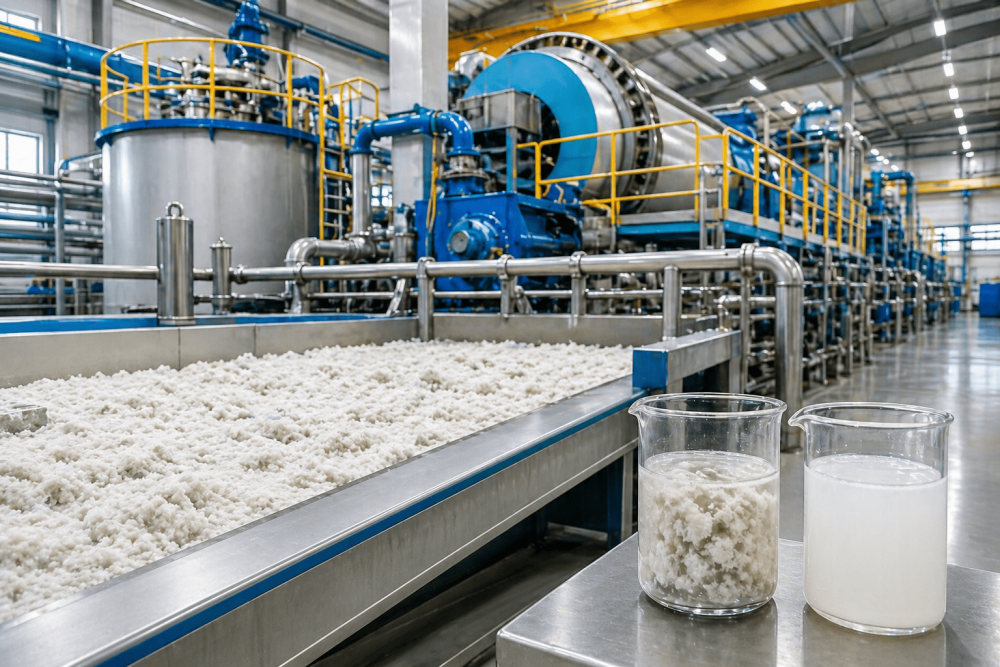
The manufacture of recycled papers involves the purification of waste papers from various types of contamination. In terms of difficulties, the problem of removing stickies from waste paper is one of the most difficult tasks that confront the paper industry. Stickies usually come from adhesives, labels, tapes, inks, coating material, and packing. Uncontrolled presence of stickies may lead to malfunctioning of the equipment used in paper manufacturing and cause financial losses. Deinking agents are essential in dealing with such situations.
Understanding Stickies in Recycled Fiber
Stickies are tacky and hydrophobic materials introduced into the paper making process via recovered paper. Stickies can be categorized into two main groups: Macro stickies and Micro stickies.
Macro stickies refer to large pieces of stickies that can easily be separated using mechanical means like screening and cleaning. Micro stickies refer to small bits of stickies dispersed in the material that cannot be easily screened out, and thus tend to end up being deposited on the surface of the machines like screens, wires, felts, dryers, and rolls.
Due to the increasing use of recycled fibers worldwide, there is an increased contamination in the raw material, hence the need for chemical control.
Problems Caused by Stickies
The following problems may arise from stickies in paper mills:
- Wire and felt fouling, thus causing drainage problems
- Sheet breakage due to weakness and contamination
- Shut down of machines as a result of maintenance
- Bad sheet finish, with holes and other defects
- Low brightness and poor quality of paper made
- High consumption of chemicals and energy
If stickies remain unchecked, they will have a direct effect on the production process..
Role of Deinking Chemicals
Deinking chemicals were developed specifically to wash ink from recycled pulp. However, current deinking chemical systems have an additional important role – sticky particle control. The deinking process is accomplished by multiple actions that help eliminate, disperse, or neutralize adhesive particles.
1. Detachment of Contaminants
The action of the chemicals allows the separation of ink and sticky material particles from fiber surface. Through surfactants and dispersants the bond between contaminants and fibers is reduced and made weaker, allowing them to be separated in flotation and washing operations.
2. Dispersion of Micro Stickies
Micro stickies cannot be removed mechanically. The action of deinking chemicals allows these particles to break up into smaller components and remain dispersed in the water phase, not deposited at machine elements.
3. Agglomeration for Removal
Some programs aim at agglomerating the micro stickies to bigger sizes that can be easily separated using screening and cleaning machines.
4. Surface Modification
There are some deinking chemicals that alter the surface characteristics of the stickies to decrease their adhesion strength. The chemicals ensure that the stickies do not adhere to any machinery and fibers.
5. Improved Flotation Efficiency
During the flotation process, air bubbles help transport ink particles, and other hydrophobic contaminants to the surface. Deinking chemicals increase flotation effectiveness by optimizing bubble production and specificity to ensure proper removal of ink particles and stickies.
Benefits for Paper Mills
Using proper deinking chemicals can bring many advantages to recycled paper mills:
- Cleaner pulp and low contaminant loading
- Low deposition on equipment parts
- Smooth process and less breaks in sheets
- High quality papers and surfaces
- Less downtime and maintenance costs
- Consistent process performance in case of changes in the quality of raw materials
It helps to provide stable production and high efficiency.
Process Optimization Considerations
For optimal performance, the type and quantity of deinking chemicals should be determined according to the unique conditions at the mill. Key considerations include:
- Type and grade of recycled fiber
- Adhesive contamination level
- Process design (flotation, washing, or hybrid processes)
- Water characteristics and temperature
- Efficiency relative to other process chemicals
Regular monitoring and adjustment of chemical dosage are also important to maintain effectiveness.
Integration with Mechanical Processes
Although deinking chemicals are important, they are more effective if used in combination with mechanical processing methods such as screening, cleaning, flotation, and washing processes. It is through combining mechanical and chemical methods that both macro and microstickies can be efficiently removed from the pulping process.
Conclusion
Stickies continue to be a problem in recycling paper mills because of the increasing use of various kinds of packaging material. Mechanical processes cannot be solely relied upon in handling stickies. Fortunately, deinking chemicals present an answer as they help detach, disperse, alter, and remove stickies from the pulp system.
The good news for paper mills looking at source options is that they can rely on reputable Deinking Chemicals Wholesale suppliers to provide them with their chemicals.