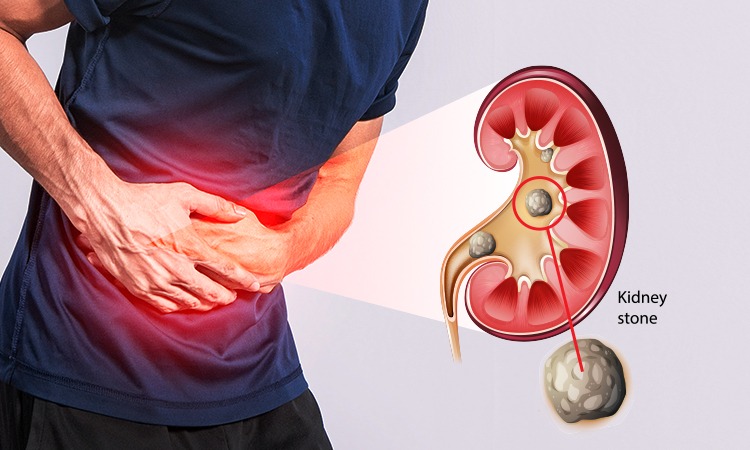
Are you feeling a sharp pain in your side or lower back? Then, taking a painkiller might be the first course of action to manage pain. However, if the pain persists, you should consult an experienced urologist, as it may be a sign of a kidney stone.
A kidney stone is a hard mineral deposit that may cause no symptoms initially. However, you will feel intense discomfort over time if you do not receive the right treatment. In this blog, we will discuss the common signs of kidney stones and the best treatment options.
What are common symptoms of kidney stones?
A kidney stone typically causes no symptoms until it reaches the ureter, a tube connecting the bladder to the kidneys. When the stone passes into one of your ureters, it obstructs the flow of urine. This results in a swollen kidney and spasm in the ureter. You will experience different symptoms of kidney stones:
- A burning feeling or pain during urination
- Pain spreading to the lower abdomen
- Sharp and severe pain in the back and side
- Vomiting and upset stomach
- Cloudy or pink urine
- Chills and fever in case you have an infection
As the stone shifts its position, the intensity of pain will not always be the same. For example, the pain will spread to various body parts without effective treatment.
Various types of kidney stones
Based on the composition, kidney stones can be classified in different ways. The most common type is calcium oxalate kidney stones, which look like solid crystals.
Excess uric acid in your urine is also responsible for kidney stones. Moreover, struvite stones can form if you are currently experiencing a urinary tract infection. These kidney stones contain phosphate, ammonium, and magnesium.
In rare cases, people experience cystine stones caused by excessive cystine in their urine. But there are also people with mixed stones, which combine different minerals.
Kidney stones can also be categorized according to their size. Smaller ones easily exit your urinary tract if you drink more water. For the medium-sized ones, it is recommended to consume more fluids.
However, if you have large kidney stones, surgery is the best option. Shock wave treatments are also effective in removing these stones.
In severe cases, you may have staghorn calculi that cover a significant part of your kidney’s internal structures. You need to undergo surgery to treat this condition.
How do urologists treat your kidney stones?
When you approach a urologist, the expert will recommend some tests to diagnose your condition. Urine tests or imaging tests enable urologists to confirm if you have kidney stones.
If your small kidney stones have not caused infection, urologists will recommend medications. Regular intake of medicines will relax your ureter and prevent nausea. Thus, you should contact the best urology hospital in Vadodara to receive the proper treatment.
For larger stones, experts recommend ureteroscopy as a treatment option. They will insert a flexible scope through your bladder and urethra into the ureter. This instrument will fragment your stones and alleviate discomfort. As the stones become smaller, they pass through your urinary tract easily. Many urologists treat the condition with laparoscopic surgery, which involves making a small incision to eliminate the stone. For more complex cases, open surgery is the only way to remove crystals.
Never ignore your kidney stone symptoms
Early diagnosis prevents further complications from your kidney stones. So, contact Parul Sevashram Hospital to diagnose and treat this kidney problem. Our expert urologists in Vadodara will provide the proper care for your issue.
Book your consultation and receive an innovative treatment from an experienced urologist.