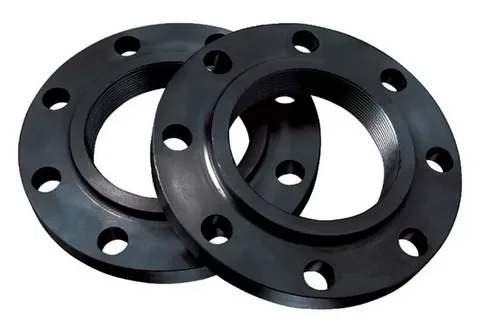
Flanges are the connecting points in industrial piping systems. A carbon steel flange joins pipes, valves, pumps, and equipment, holding the system under pressure, temperature variation, and continuous flow. When the carbon steel flanges dimensions are off, the joint becomes a liability. The accuracy of the dimensions will affect the seal, pressure capability and how fast it can be installed. Carbon steel pipe flanges are used in oil and gas, refineries, power plants, chemical processing, water treatment and marine systems. You have to be precise with all of these.
Types of CS Flanges Used in Piping Systems
Different Types of Carbon Steel Flanges are used in Different Industries as per the pressure rating, temperature, and application requirements. Weld neck flanges are preferred for high pressure and high temperature service. Slip-on flanges are used for lines with lower pressure and are easier to align. Blind flanges are used to seal off openings in pipes or vessels. Socket weld flanges are a good solution for smaller pipe sizes. Threaded flanges are used where welding is not possible. Lap joint flanges are used where frequent dismounting is required. Each type has its own dimensional specifications, and wrong dimensions on any of them impair the joint.
What are Carbon Steel Flange Dimensions?
Carbon Steel Flange dimensions are the physical dimensions that determine how a CS flange connects to a pipe and mates with the opposing flange. Major dimensions include outside diameter, bolt circle diameter, bolt hole size and number, flange thickness, hub dimensions (for weld neck types), and face type such as raised face, flat face, or ring type joint.
These are set by established standards. ASME B16.5 is the most referenced pipe flange standard. ANSI is closely aligned with North American applications. European systems use DIN a lot. ASTM deals with material composition and testing. These standards guarantee that flanges manufactured by different makers will mate properly if both are made to spec.
Why Accurate CS Flange Dimensions are Important
Ensures Leak-Free Connections
A flange joint is a seal formed by a gasket pressed between two mating faces. If the faces aren’t flush, the bolt holes don’t line up or the gasket dimensions don’t match, the compression will be uneven. Uneven compression creates spaces. If hydrocarbons, steam or chemicals are in the line, a leak is more than a maintenance issue.
Every joint in a high pressure pipeline is always under stress. If the flange thickness is too small or the bolt circle diameter is wrong, the joint cannot withstand the rated pressure without deformation. Thermal expansion adds further stress. These conditions are considered while machining of dimensionally accurate flanges.
Improves Installation Efficiency
And when flanges match exact dimensions, bolts go in without force, gaskets seat properly and alignment is clear. In large projects with many flange connections, minor errors accumulate. Reworking wastes time and adds to project cost.
Enhances Safety in Industrial Operations
The oil and gas, petrochemical and power plant industries have recorded that improper flange fitting is a cause of pipeline failures. A flange that appears installed but is out of alignment may fail under pressure spikes. Correct dimensions reduce the risk.
Supports Long-Term Durability
Flanges of proper dimensions reduce the vibration stress on the joint. Flange incompatibilities create micro-movements that weaken gaskets and cause bolt fatigue. Last longer. Cut unplanned shutdowns. Well fitted flanges.
Common Problems Caused by Incorrect CS Flange Dimensions
Leakage is most often caused by the faces not mating evenly or the gaskets not fitting the face of the flange. The misalignment loads the bolts with lateral loads that they are not designed to take. Under-bolted joints result from misaligned bolt holes. Gaskets get damaged when the compression is uneven. This all leads to higher maintenance costs and, in extreme cases, total pipeline shutdowns.
Carbon Steel Flange Dimension Standards and Tolerances
ASME B16.5 covers flanges from 1/2″ to 24″ in pressure classes 150, 300, 600, 900, 1500 and 2500. Each class has a flange thickness, bolt circle diameter, number of bolts and bolt size. Manufacturing tolerances are close. Deviations beyond allowable limits in outer diameter, face flatness or bolt hole position are grounds for rejection. Quality checks include dimensional verification after machining and material traceability to mill certificates.
How to Choose the Right Carbon Steel Pipe Flanges
First you look at the pipe size, pressure rating, and operating temperature. Carbon Steel Pipe Flanges facing type shall be compatible with gasket and service conditions. Industry applications matter. A water line flange is not the same thing as a high-pressure gas line. Material grade also factors in. ASTM A105 is a standard for forged carbon steel flanges in most applications. Getting these right before ordering avoids costly replacements.
Importance of Choosing a CS Flanges Manufacturer
A trusted Carbon Steel Flanges Manufacturer uses certified raw material with mill test reports, precision machining within specified tolerance, dimensional testing after machining and documented compliance to ASME, ANSI, DIN and ASTM. Accurate hub taper and bore machining are critical for proper weld fit-up of Carbon Steel Weld Neck Flanges. Correct carbon steel flange dimensions affect everything from sealing and pressure-handling to installation speed and service life in a piping system. Get these right and it reduces accidents and keeps the operations running.
Industries that Require Accurate Carbon Steel Flange Dimensions
- Oil and Gas: High-pressure hydrocarbon lines demand leak-proof joints.
- Petrochemical: Aggressive chemicals at elevated temperatures make flange integrity a direct safety concern.
- Power Generation: Steam and feedwater systems need flanges rated for high pressure and temperature.
- Water Treatment: Accurate dimensions prevent contamination and maintain flow.
- Chemical Processing: Corrosive media require proper containment at every connection.
- Marine: Shipboard vibration and saltwater exposure make correctly fitted flanges essential.
Conclusion
Correct carbon steel flange dimensions impact everything from sealing and pressure handling to installation speed and service life in a piping system. Getting them right reduces accidents and keeps the operations running. For industries where failures carry serious consequences, this is not a detail to overlook. Choose a manufacturer who backs products with inspection records and material traceability. Contact Sumit Impex to discuss your needs and have flanges manufactured to the standards required for your system.