Introduction
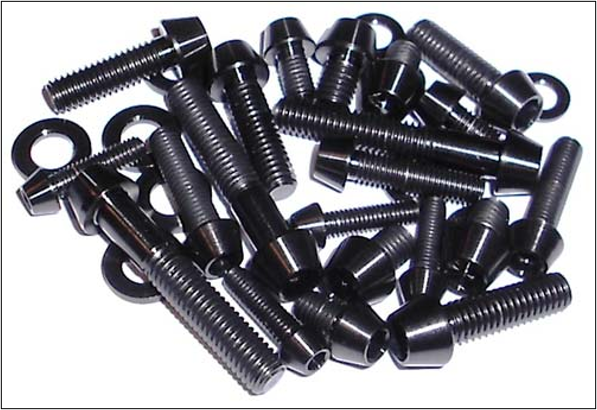
Every bolted joint in a steel structure, machine frame, or pipeline depends on a fastener that won’t loosen, shear, or corrode under load. Carbon steel covers most of that demand, combining tensile strength with a cost per kilogram well below stainless or alloy steel. Industrial carbon steel fasteners hold together structural frames, engine blocks, and pipeline flanges, and carbon steel fasteners as a category span bolts, nuts, screws, washers, and threaded rod across a range of grades.
What Are Carbon Steel Fasteners?
Carbon steel fasteners are bolts, nuts, screws, washers and threaded bars produced from steel in which carbon is the principal alloying element and the carbon content is from 0.05% to more than 0.6% by weight. The production process starts from wire or bar material. This is then cold-shaped or hot forged to shape. It is then threaded and heat treated to the required hardness. This is the phase that divides a Grade 2 bolt rated at 74,000 pressure from a Grade 8 bolt rated at 150,000 psi.
Types of Carbon Steel Fasteners
Five fastener types make up most carbon steel hardware used in industrial assembly.
1. Carbon Steel Bolts
Bolts transfer load through a threaded shank paired with a nut, with carbon steel covering SAE Grade 2 hex bolts at 74,000 psi tensile up to Grade 8 bolts at 150,000 psi for heavy machinery and structural connections. Sizes run from M6 to M64 in metric, or 1/4 inch to 4 inches in imperial.
2. Carbon Steel Nuts
Nuts secure the bolt by threading onto the shank and clamping the joint under tension. Hex nuts come in coarse (UNC) and fine (UNF) thread types and must match the bolt grade a Grade 8 bolt needs a Grade 8 nut to avoid thread stripping under load.
3. Carbon Steel Screws
Screws cut their own thread engagement, either into a pre-drilled hole for machine screws or directly into sheet metal for self-tapping variants. Carbon steel screws appear across general engineering and construction work, with case-hardened points on self-tapping types resisting snapping during installation.
4. Carbon Steel Washers
Washers spread the clamping load of a bolted joint over a larger surface area, stopping the bolt head or nut from digging into the base material. Flat washers handle general load distribution, while spring and lock washers resist vibration-induced loosening.
5. Carbon Steel Threaded Fasteners
Threaded rods and studs run continuous threading along their length, letting nuts position anywhere along the bar rather than at a fixed end. Structural work uses threaded rod for anchor bolts, hanger systems, and tie rods where the connection point needs adjustment during installation.
Grades of Carbon Steel Fasteners
Low Carbon Steel Fasteners
Low carbon steel is easy to mill and form without cracking, has less than 0.3% carbon, and is suitable for general assembly screws, light brackets and non-critical fixes in fasteners that do not experience significant structural loads. Its ductility allows cold shaping into complicated head forms.
Medium Carbon Steel Fasteners
Medium carbon steel, between 0.3% and 0.6% carbon, balances strength and toughness after heat treatment, reaching tensile strengths around 100,000-120,000 psi in grades like SAE Grade 5. This range covers most bolts used in industrial machinery assembly.
High Carbon Steel Fasteners
High carbon steel, above 0.6% carbon, reaches tensile strengths of 150,000 psi or more after quenching and tempering, as in SAE Grade 8 bolts. The trade-off is reduced ductility, so these fasteners need careful torque control to avoid fracture.
Key Properties of Carbon Steel Fasteners
Most providers have M3 to M64 sizes sitting right on their shelf to speed up your routine hardware replacements. These carbon steel fasteners cover the gamut from light to heavy industrial operations, balancing structural load demands and strong capabilities ranging from low-carbon 60,000 psi up to heat-treated 150,000 psi strengths today.
Advantages of Carbon Steel Fasteners
Carbon steel fasteners typically cost at least 50 percent less than any typical stainless steel or nickel alloy fasteners of the same size and grade, but can still exceed the tensile and shear strength requirements for most industrial connections. Because of the volume of production, replacement parts are available off the shelf. Zinc plating, hot-dip galvanizing and black oxide coatings increase service life in a variety of situations.
Industrial Applications of Carbon Steel Fasteners
Six industries account for most of the carbon steel fastener volume produced each year.
Construction Industry
Structural steel frameworks rely on high-strength carbon steel bolts, specified to ASTM A325 or A490, to connect beams, columns, and bracing in buildings and bridges, carrying both static loads and dynamic loads from wind or seismic activity.
Automotive Industry
Engine components and vehicle assembly lines use carbon steel fasteners by the thousands per vehicle, from cylinder head bolts rated for high torque to body panel screws. Medium and high carbon grades handle the vibration and thermal cycling found under the hood.
Machinery and Equipment
Heavy machinery assembly depends on carbon steel bolts and nuts to hold frames, housings, and moving assemblies together under continuous operation, with Grade 5 and Grade 8 selected based on the shear and tensile loads each joint carries.
Oil and Gas Industry
Pipeline flange connections and equipment mounting use carbon steel studs and bolts rated to ASTM A193 for elevated temperature and pressure service, paired with carbon steel nuts to ASTM A194.
Power Generation
Turbine housings, boiler casings, and structural supports use high carbon steel fasteners where mechanical load combined with thermal cycling demands fasteners that hold torque over years of operation.
Manufacturing Industry
General assembly operations across manufacturing plants use carbon steel screws, bolts, and washers in volumes running into the millions of units per year at larger facilities, alongside the equipment fabrication that builds the machinery itself.
Factors to Consider When Selecting Carbon Steel Fasteners
Load and stress requirements define the grade of a connection subjected to constant vibration. You need Grade 8 strength; a static bracket may only require Grade 2. Environmental conditions matter also, since carbon steel will corrode in damp or coastal settings without some type of finish such as zinc coating or hot-dip galvanizing. Matching components must be of the same size and have the same threading parameters, down to thread pitch and class, and standards such as ASTM A307, A325, A193 or ISO 898-1 certify a batch satisfies its specified properties. Carbon steel bolts, nuts, screws and washers are stocked across these grades and specifications by suppliers including AB Steel, Precision Fastener Works, Bharat Bolt Industries and Steelcraft Fasteners.
Conclusion
Carbon steel fasteners cover most industrial fastening needs by combining tensile strengths from 60,000 to over 150,000 psi with a cost structure that stainless and alloy fasteners can’t match at equivalent volumes. Carbon steel bolts and nuts, carbon steel screws, and carbon steel washers show up across construction, automotive, machinery, oil and gas, power generation, and manufacturing, anywhere a bolted joint needs to hold load without driving up material cost.