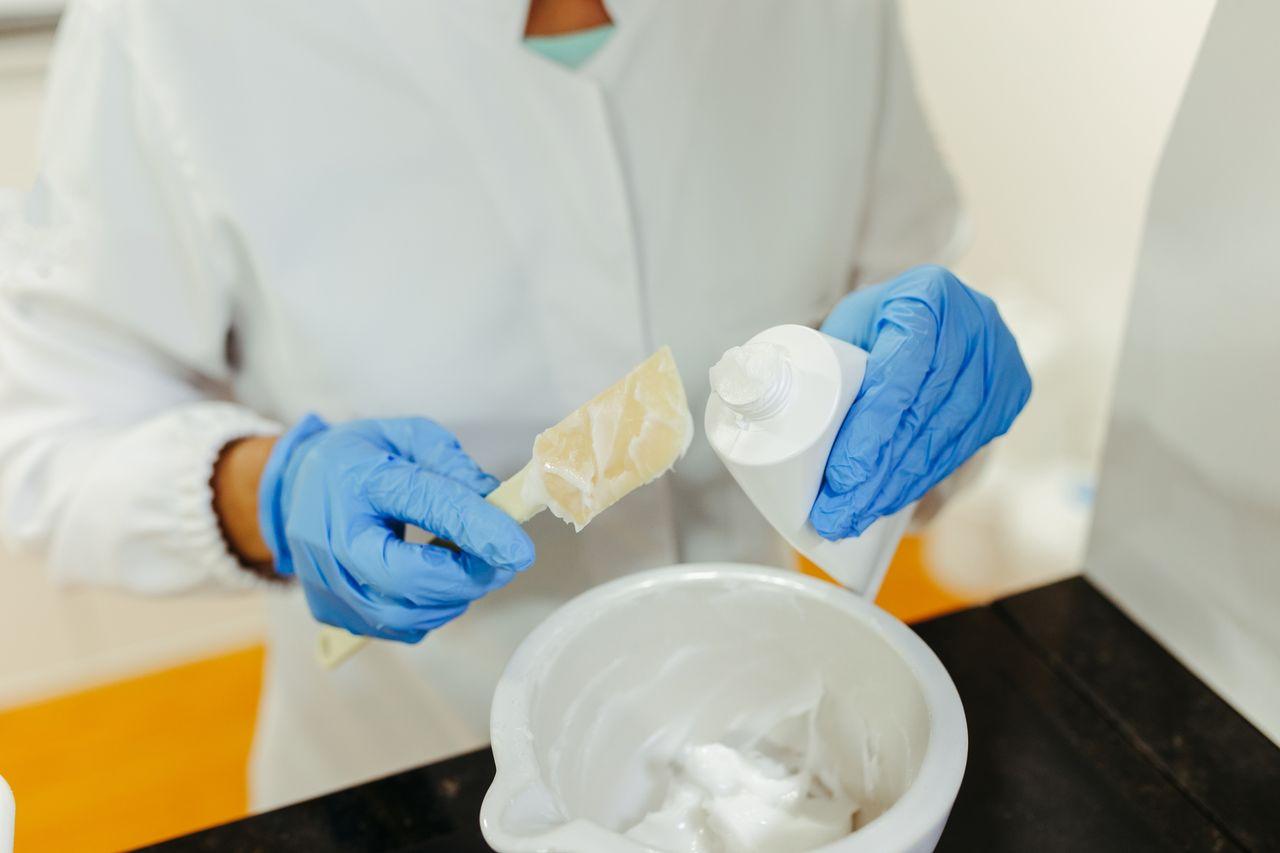
The beauty industry is a large one. It offers a variety of makeup products, the formulations for which a Cosmetics Company specializes in production. Under the Cosmetics Industry itself there is a branch where manufacturers make beauty products that may be categorized as cosmetic products.
Whether you are producing makeup or using other beauty products, cosmetic formulations are generally of high quality, have to be harmless for the skin or hair and work well.
This kind of production leads to the speedy growth and expansion of beauty companies. With that being said, they can encounter some problems. This is not limited to the growth and rapid development of those companies, but it is also linked to their way of handling cosmetic ingredients. In this area, the responsible handling of any type of ingredient increases, but it will affect the product no matter if it belongs in the natural, Ayurvedic, herbal, biosemetric and dermacosmetic category as for ingredient procurement and innovations of formulation.
Many more beauty companies want to achieve maximum benefit from the prebiotics or traditional adapterogenic agents, leading to increased complexity in cosmetic ingredient management.
Does this bother you? From enterprises to small- and medium-sized beauty brands, anyone can access modern beauty PLM systems to simplify this. When used appropriately, these tech-driven solutions allow you to conduct all types of ingredient testing and check their compliance status hassle-free. You can manufacture high-end cosmetics with each ingredient while maintaining compliance and reducing risk. Their performance, functions, and all relevant traits can be monitored, documented, and verified to ensure compliance with safety protocols.
Challenges involved in cosmetic ingredients management
Why is cosmetic ingredient management an all the time hard aspect for any beauty brand? The company’s first and foremost decision is to provide the finest ingredients. They need to supply high quality components and materials from the appropriate suppliers; furthermore monitor the whole production cycle of the product from formulation development to an actual finished item.
Apart from that, a beauty company today produces several classes or varieties of cosmetic products, but in traditional systems (like paper-based or spread sheet-based) to monitor everything is very difficult, and that makes possible for errors during production.
Also they would experience a great drop when it comes to product compliance status, increasing operational costs, needing a robust mechanism to trace each ingredient at each of the formulations, easily modifying or substituting ingredients at formula phase which leads to PLM in cosmetics. The most frustrating thing about the cosmetic product PLM platform for improving the product is facing too many challenges. Impact of ingredients needs to be assessed, and any unpredictable alterations can influence the product, test cycle along with the regulatory compliance can be decreased, thus one needs PLM cosmetic feature to avoid issues in documenting and managing multi-functional ingredients or alternative ingredients to support clear records. Composition and proper utilization information including the co-reaction between ingredients (synergistic effect) is also needs to be provided. These and various tasks namely the Ingredient profiling can be properly done.
Ensure that your cosmetic product conforms to theFDA,EU regulations etc…all as an efficient component for formulation developers.
Manage cosmetic ingredients using PLM
One benefit thatPLM cosmetic helps with is giving its clients access to all the necessary information within one application, to help the whole production department work together from the quality, regulatory, marketing or research & Development (R&D), quality control along with a variety of other departments involved. It helps in keeping and processing the information the cosmetic suppliers have regarding the product and also allows you to access information regarding the regulatory specifications of the formula along with ingredient specifications about the product. This makes having a Cosmetics PLM software of importance to have information on specifications of the Cosmetics ingredients such as ingredients’ chemical characteristics, pure status and how to use them accordingly.
So it has to be understood clearly that PLM can store raw, co products by products and many other form of ingredients specification too.
Each COSMETIC INGREDIENT would have its unique ID allowing for searching of those particular ingredients at an instance. The data of suppliers for them could also be logged for higher production quality.. Thus one can say that it helps in traceability and transparency through all manufacturing production phases from sourcing ingredients to its arrival into the production plants, enhancing the security and higher quality of cosmetic products. Also the software can come with many innovative features like artificial intelligence integrated tech pack that makes document creation efficient and manageable.
Enhanced Collaboration and Management for better output
While one might primarily be concerned with howPLM cosmetics will ease documentation, it actually ensures better collaboration amongst different departments of a firm, right from quality and regulatory department to purchasing and research and development ones, to improve work performance as every one is kept updated with information where by they were given one master data on the product formulation and can not take one particular formulation with them as it would not be working to the extent of having new edition available at all times which would be working from earlier phase instead having a number of them, that is to be reconciled between numerous different excel sheets along with emails. Teamwork would help to quickly uncover any problems with formulas well in advance; management has enough information on the table when reviewing the changing of prices, supplier performance etc…this makes the improvement process fast; Also better visualization ensures higher product quality. One central information for all departments help to keep product development at par and analysis of past trends in formulation and previous test results along with approvals makes launching of product a seamless experience rather than a dreadful task.