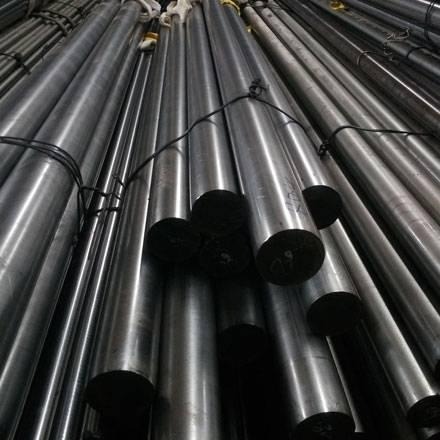
Stainless steel has shaped modern medical manufacturing more than any other material class. Across surgical theaters, dental clinics, and diagnostic laboratories, steel must survive repeated sterilization, chemical exposure, and mechanical stress without losing dimensional accuracy. Grades like 304 and 316 handle general-purpose medical components well, but precision cutting tools require something harder. That is where 420 Stainless Steel Round Bars are specified. A martensitic grade with carbon content between 0.15% and 0.40%, this material delivers the hardness profile that softer austenitic grades cannot reach. For manufacturers producing scalpels, forceps, or orthopedic instruments at tight tolerances, Stainless Steel 420 Bar stock has become the standard starting material.
Why 420 SS is Preferred in Medical Equipment
The high hardness makes 420 SS the best choice for medical instruments. After heat treatment, this grade delivers Rockwell hardness values of 50-55 HRC, providing cutting tools with edge retention needed for procedures where blade geometry must remain precise through hundreds of sterilization cycles. That hardness also translates directly to wear resistance, reducing the rate at which instrument contact surfaces degrade over clinical service life.
420 SS has a minimum of 12% chromium which makes it corrosion resistant. This grade does not compare with 316L in chloride-heavy environments, but is resistant to the weak acids and alkaline cleaning agents used in medical sterilization. As detailed in the Chemical Composition of Stainless Steel 420 Bars, this chromium content forms the passive layer that protects the surface under clinical conditions. The surface accepts repeated autoclave exposure at 134°C without pitting or discoloration. Instruments machined from 420 stainless round bar pass disinfection with alcohol solutions, enzymatic cleaners, and steam without structural compromise.
Chemical Composition of Stainless Steel 420 Bars
The performance of this grade traces back to two elements: chromium and carbon. Chromium at 12% to 14% forms a passive oxide layer on the surface, and that layer rebuilds itself when damaged, which is what gives the steel its corrosion resistance in controlled medical environments. Carbon, present at up to 0.40%, combines with chromium to form carbides during heat treatment. These carbides increase hardness and sharpen wear resistance. The tradeoff is that carbon reduces the amount of free chromium available for corrosion protection compared to low-carbon grades, which is why 420 performs best in applications where hardness matters more than maximum corrosion immunity. ASTM A276 Stainless Steel 420 Bar stock from certified suppliers carries documented chemical assays that confirm these element ranges are within specification before the material ships.
Advantages of Using ASTM A276 Stainless Steel 420 Bar
Sourcing bar stock to ASTM A276 gives manufacturers a standardized baseline that in-house testing alone cannot replicate. The standard includes dimensional tolerances, surface condition, and minimum mechanical property minimums, giving procurement teams precise knowledge of what is going to land on the shop floor. That predictability lowers scrap rates during machining and setup time on CNC equipment.
Machinability is another practical advantage. Compared to higher-alloy nickel grades, 420 SS cuts cleanly at conventional speeds without excessive tool wear. This benefits medical component manufacturers working on tight production schedules as cycle times remain consistent across batches. The bar form also comes in round bars, bright bars, and polished bars, which provide fabricators with a surface finish starting point matched to the application.
A polished bar going into a scalpel handle or needle holder already carries a surface roughness close to finished instrument requirements, thus reducing secondary finishing steps. Long service life follows from this combination of properties: the instruments hold their geometry, the surface resists chemical attack, and the hardness delays edge wear, all of which extend the interval between instrument replacement.
Key Properties of 420 Bars SS for Medical Applications
Mechanical Strength
420 SS in the hardened and tempered condition achieves tensile strengths above 1,400 MPa. That load-bearing capacity supports instruments subjected to gripping force, torque, and impact during surgical procedures. Scalpel handles and orthopedic clamps both rely on this strength to prevent deformation under working loads.
Dimensional Stability
Bar stock processed to ASTM A276 tolerances holds a diameter variation within 0.05 mm on standard round bar sizes. Instruments machined from this material maintain the dimensional accuracy required for surgical compatibility, particularly in components that must interface with other devices or implants.
Surface Finish Quality SS 420 Polished Bar
This is widely used where smooth, hygienic surfaces are required. A polished finish closes micro-pores on the surface, reducing sites where biological material or cleaning residue can accumulate between instrument uses. This directly supports infection control protocols.
Resistance to Moisture and Chemicals
420 SS resists staining or pitting under normal clinical conditions and holds up under daily contact with saline, blood and sterilizing agents in applications.The passive chromium oxide layer reforms rapidly after mechanical contact.
Polishing Capability
Few steels take a mirror polish as readily as heat-treated 420 SS. The martensitic microstructure, characteristic of this heat-treated stainless steel, supports fine abrasive finishing down to Ra 0.1 µm, which is the surface roughness target for many surgical-grade steel components where optical clarity and hygiene intersect.
Common Medical Equipment Manufactured Using SS 420 Bars
Walk through the instrument tray of any operating theater, and the majority of cutting and gripping tools trace back to martensitic stainless bar stock. Surgical scissors and scalpels account for a large share of 420 SS consumption in medical manufacturing precisely because both require edges that stay sharp through repeated honing and sterilization. Dental tools, including explorers, curettes, and mirror handles, use this grade for the same reason: the hardness sustains fine tip geometry under the mechanical loads of clinical use.
The handles for forceps and needle holders need a material that won’t fatigue the spring at the hinge, and the tensile strength of hardened 420 SS handles those cyclic loads better than softer grades. This grade is used for orthopedic instruments where the wear resistance is essential to cut through the cortical bone, especially in rasps, chisels, and reamers. Laboratory equipment, such as dissection tools and tissue sampling devices, also draws on 420 bar stock when precision edges and sterilization compatibility both appear in the specification. Stainless Steel 420 Bar is commonly selected for sharp-edge retention applications precisely because the hardness profile does not degrade meaningfully under the thermal cycling that autoclave sterilization imposes.
Conclusion
420 stainless steel holds its position in medical equipment manufacturing because it solves a problem no softer grade addresses: delivering surgical-grade hardness alongside adequate corrosion resistance and simple machinability in a single material. The chromium content provides the passive layer that resists hospital-grade sterilants, and the carbon content pushes hardness into the range where cutting tools and precision instruments perform reliably over extended service intervals. Neither property comes at the expense of the other when the material processes correctly to ASTM A276 requirements.
For those manufacturers who use 420 Stainless Steel Round Bars to make medical instruments, the source of supply is as important as the grade designation. Verified mechanical test results, documented chemical composition and dimensional certification reduce the risk of out-of-spec material entering a production run. Procurement teams will benefit from traceability documentation offered by companies such as Piyush Steel, which have ISO 9001-certified processes across their alloy product range, and this will help meet the quality systems of medical manufacturing. Contact to confirm available bar sizes, surface conditions, and certification packages before ordering materials.