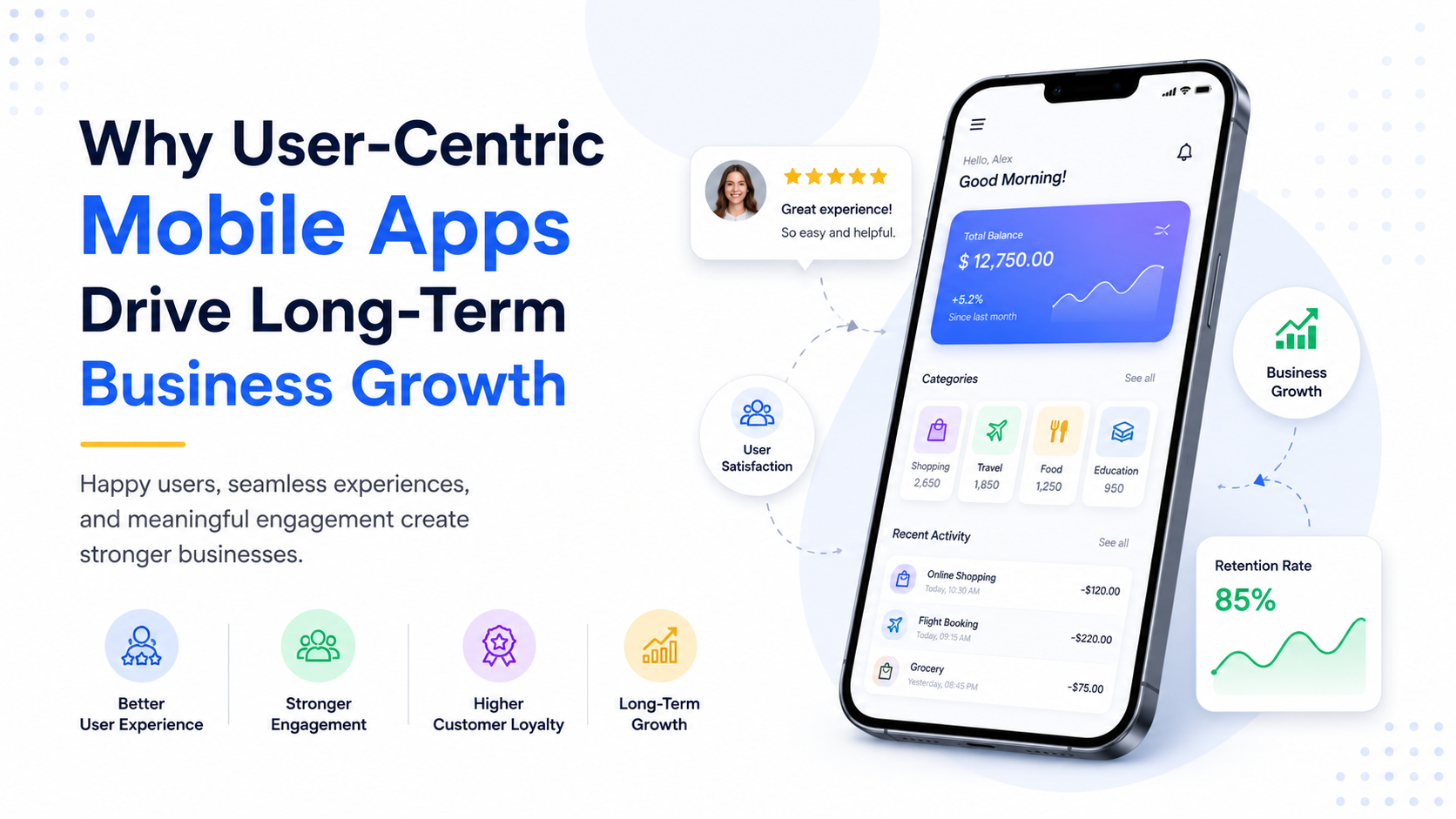
If you look at the mobile apps you personally use every day, something becomes pretty obvious.
You don’t stick with an app just because it exists. You stick with it because it feels easy. It saves time. It doesn’t make you think too much. You open it, get what you need, and move on with your day.
That’s really the whole secret behind successful mobile apps.
Not the number of features. Not even the design alone. It’s how well the app understands the person using it.
And this is exactly where many businesses still get it wrong.
It’s not about building more, it’s about building better
A lot of companies think a mobile app is just a checklist item something they “need to have” to stay competitive. So they pack in features, add screens, add buttons, and assume users will be impressed.
But users don’t think like that.
If something feels confusing or slow, they leave. Simple as that. There’s always another app waiting to replace it.
The apps that survive long-term are the ones that feel effortless. They don’t try to show off. They just work in a way that makes sense to the user.
That’s what people actually come back for.
What “user-centric” really feels like in real life
The phrase gets used a lot in tech, but in simple terms, it just means this:
Build the app around how people actually behave, not how businesses wish they behaved.
People don’t want to “learn” your app. They want to use it immediately without thinking too much.
Every extra step, every unnecessary click, every confusing layout quietly pushes users away even if they don’t complain about it.
Most of the time, they just uninstall and move on.
First impressions decide everything (almost silently)
Users don’t usually sit and evaluate an app.
They open it, and within a minute or two, they already form an opinion.
If it feels smooth, they stay a bit longer. If it feels messy or slow, they don’t give feedback they just exit.
This is why simple things matter more than people realize.
Clear navigation, fast loading, and a clean interface often do more for retention than any advanced feature ever will.
Keeping users is harder than getting them
Getting downloads is one thing. Keeping people active is something else entirely.
Most apps lose users not because they are bad, but because they don’t feel worth returning to.
On the other hand, when users have a good experience consistently, something interesting happens they start trusting the app.
And once that trust builds up, users stop being “visitors” and start becoming regulars.
Some even start recommending it without being asked. That kind of growth is extremely powerful because it doesn’t rely heavily on ads.
Personalization actually matters more than people admit
Nobody wants to feel like they’re using a generic system.
Even small touches like relevant suggestions or timely notifications can make an app feel more “aware” of the user.
In some cases, users prefer platforms that handle routine trading tasks for them, making the experience more convenient and less time-consuming.
What works for one audience may not work for another.
If personalization feels too forced, it becomes annoying. If it feels helpful, it creates comfort.
The best apps usually get this balance right they don’t overwhelm users, they quietly make things easier.
Feedback is not noise—it’s direction
Some of the strongest apps today didn’t start out perfect.
They improved over time because they paid attention to what users were actually saying and doing.
Not every piece of feedback is useful, but patterns always are. When many users struggle with the same thing, that’s not a coincidence that’s a design issue.
The companies that take feedback seriously usually end up building products people genuinely rely on.
Innovation only works when it solves something real
There’s always something new happening in tech. New tools, new trends, new features.
But adding new technology just for the sake of it rarely helps users.
People don’t care if something is “advanced.” They care if it makes their life easier.
If a feature adds complexity, it usually fails no matter how impressive it looks on paper.
Good apps don’t try to be everything. They focus on being useful.
What’s interesting is that users rarely care about the technical complexity behind a platform. Whether it’s a platform built around forecasting future outcomes people usually stick around for one reason it saves them time and removes unnecessary friction.
Long-term growth comes from repeat experience, not one-time hype
A business can get attention once. Maybe through marketing or launch buzz.
But business doesn’t grow only because people try the app once. Growth occurs when consumers find value in it and decide to come back whenever they need it.
When people feel comfortable using an app, they don’t need convincing every time. They just open it naturally.
That habit is what builds real business stability.
Final thoughts
At the end of the day, people don’t stay loyal to apps because they’re popular or feature-rich.
They stay because the app respects their time.
It doesn’t make things complicated. It doesn’t slow them down. It simply works in a way that feels natural.
And that’s really what user-centric design is about not perfection, but understanding real human behavior.
Businesses that focus on that usually don’t just build apps. They build long-term relationships.