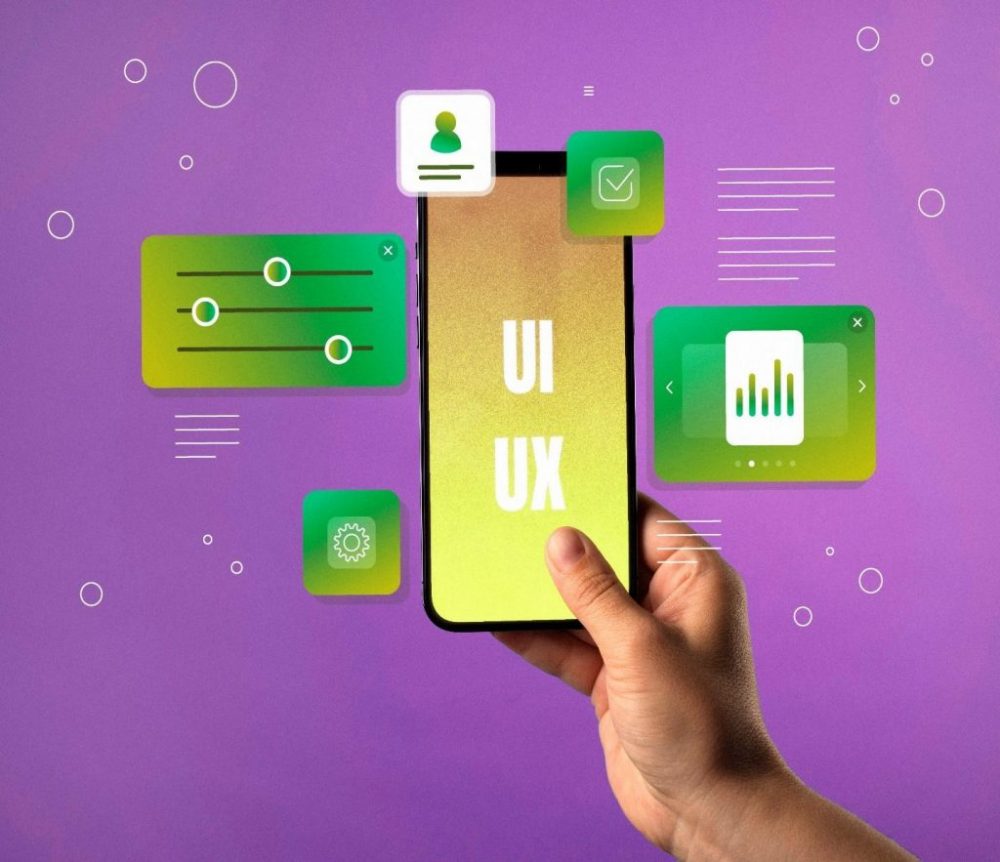
The rapidly changing digital transformation landscape is undergoing a fundamental shift from static interfaces towards feelings based systems that proactively understand as well as adapt to human intent. Also, the mobile user experience (UX) is no longer just about visuals, it is a strategic engine for retention, conversion, as well as trust. As screens become near daily companions, designers are rewriting traditional rules to create experiences that are predictive, multimodal, as well as ethically grounded.
1. AI-Driven Hyper-Personalization & Predictive UI
The personalization has evolved from simple recommended for you lists to generative UI, in which the entire interface reconfigures itself in real time based on user behavior.
- Predictive Navigation: Apps have the ability to analyze location, time of day, as well as historical patterns to surface likely actions before a user even search for them. For instance, a finance app may automatically display a spending summary on a Friday evening.
- Dynamic Layouts: AI assembles modular atomic components on the fly to match a user’s current goal. This liquid UI has the ability to ensure that an expert and a trainee opening the same app will see different menu structures which are tailored to their proficiency.
- Business Impact: The organizations are increasingly leveraging AI capabilities which are helping in 10% to 30% improvements in conversion rates as well as significantly boosting user retention.
2. The Rise of Multimodal & Zero-UI Experiences
The era of the touchscreen as the exclusive interaction model is ending.
- Multimodal Interaction: The users are increasingly switching seamlessly between voice, touch, as well as gestures. A user might start a search via voice while driving and complete the transaction via touch once parked.
- Zero-UI & Invisible Apps: The increasing adoption of ambient intelligence, in which some tasks are completed with zero clicks such as the smart home apps automatically adjusting lighting to reading mode by sensing a user sitting on the sofa with a book.
- Voice-First Integration: The voice-first integration has moved from a niche feature to a primary navigation tool for most of the users, along with usage significantly growing year-on-year.
3. Immersive Visuals
The visual design is rediscovering materiality through immersive visuals, which use frosted-glass effects to create depth without overwhelming the user.
- Spatial Hierarchy: Transparent layers allow designers to stack content while keeping the center in sharp focus.
- Purposeful 3D: Subtle 3D elements, such as floating cards and soft shadows, make interfaces feel tangible as well as premium. In retail, photorealistic 3D models allow immersive experiences that reduce purchase hesitation.
4. Ethical Design & Radical Transparency
The ethical UX has become a competitive necessity with the increase in AI data collection.
- Explainable AI: Users are now demanding to know why an AI made a certain recommendation for any query. As privacy nutrition labels and clear consent flows are becoming standard to build long-term trust.
- Digital Well-being: The key trends such as take-a-break prompts as well as the removal of infinite scrolls is helping to protect users from digital fatigue.
5. Sustainability & Performance-First Design
Speed is the key design in 2026 as sustainable UX focuses on reducing the environmental impact of digital products through energy-efficient choices.
- Carbon-Aware Design: Designers are optimizing code as well as using lightweight vector graphics to reduce server load along with carbon emissions.
- OLED-Friendly Dark Mode: Dark mode is now the default starting point for most of the apps, as it significantly saves battery on OLED screens as well as helps in reducing eye strain.
6. Accessibility as a Foundational Requirement
Accessibility has shifted from a compliance checkbox to a human-centered design standard.
- Neurodiversity-Centered Design: Interfaces are being built for the range of human cognitive diversity, including features for those with ADHD, dyslexia, as well as motion sensitivity.
- AI-Powered Accessibility: AI now has the ability to automatically generate alt-text for images and adjust high-contrast modes in real time for users with visual impairments.
Summary
In 2026, mobile UX landscape is defined by intelligence, inclusivity, and invisibility. The mobile UX is no longer a mere digital tool, as mobile applications have transformed into intimate companions that use AI to anticipate user needs before they are even voiced.
The most significant shift is the transition from reactive to predictive design with the help of Generative UI. Also, the apps no longer rely on static templates, but instead they dynamically reorder menus, adapt color schemes, as well as highlight frequently used features based on real-time behavioral data.
Further, the hyper-personalization is powerful and is increasingly governed by ethical transparency, which in turn helps in ensuring users remain in control of their data and understand the reasoning behind AI-driven decisions.
Further, the multimodal interfaces are another foundation, which helps in allowing users to interact through a fluid blend of voice, touch, and gestures. Moreover, the shift toward Zero-UI helps in reducing cognitive load by enabling invisible interactions in which an app’s value is delivered without the need for constant screen tapping.
Visually, the recovery of immersive visuals as well as the use of subtle 3D elements add a sense of physical depth and premium quality, bridging the gap between flat screens and immersive augmented reality.
Finally, accessibility and sustainability have moved from optional features to foundational pillars. Mobile-first strategies now prioritize carbon-aware design, using lightweight assets and dark-first themes to minimize environmental impact.
At the same time, the general design principles help to ensure that these intelligent systems serve all users, regardless of cognitive or physical abilities. Furthermore, for businesses, the trends are more than aesthetic choices as they are essential strategies to drive retention, conversion, as well as long-term brand loyalty in an increasingly competitive digital ecosystem.