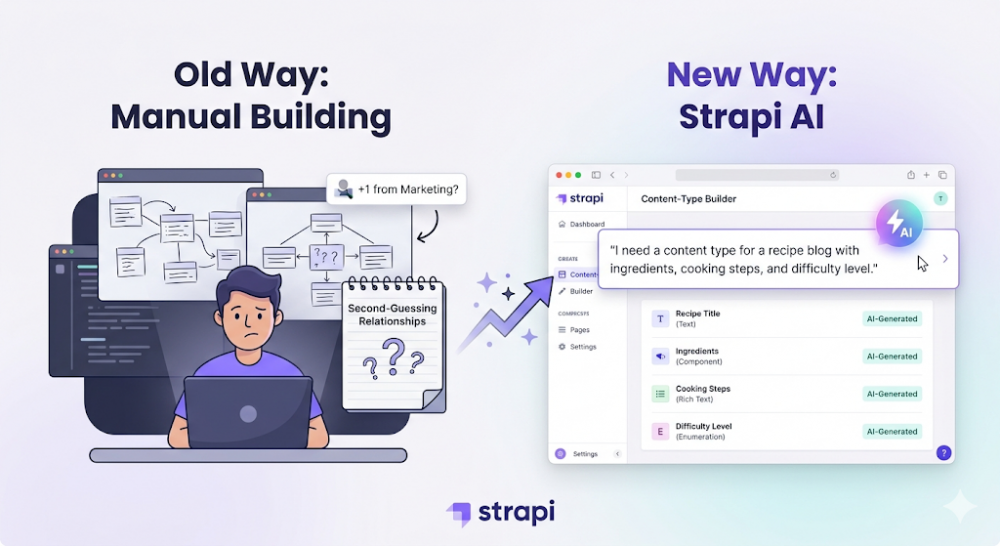
Building a content model used to mean sitting in front of a blank screen, sketching out fields, second-guessing relationships, and then rebuilding half of it three weeks later when the marketing team asked for one more thing. Strapi is changing that workflow in a pretty big way. With the introduction of AI capabilities inside the platform, you can now describe what you want in plain English and watch Strapi assemble the content types for you.
If you have spent any time wrestling with headless CMS setups, you already know how much friction lives in the early stages of a project. Strapi AI is built to remove that friction.
What Strapi AI Actually Does
The new AI features go beyond simple text suggestions. Strapi has been working on tools that interpret natural language prompts and translate them into real, usable content structures. You type something like “I need a content type for a recipe blog with ingredients, cooking steps, and difficulty level,” and Strapi sets up the schema, defines the fields, and even suggests relationships between collections.
This is not autocomplete. This is the CMS doing the architectural thinking with you, which saves hours during the discovery and prototyping phase of any project.
Behind the scenes, the system uses large language models to understand intent. It then maps that intent onto Strapi’s existing field types such as text, rich text, media, components, dynamic zones, and relations. The result is a content model that feels handcrafted but takes a fraction of the time.
Custom Fields Powered by OpenAI
Another exciting direction Strapi has explored is custom fields that connect directly to AI providers like OpenAI. Imagine a field inside your content editor that generates product descriptions, blog summaries, or SEO meta tags on demand. Editors stay in the same interface, click a button, and the content shows up ready for review.
For teams shipping content at scale, this is a quiet revolution. Marketers no longer have to bounce between five tools to draft, refine, and publish. Developers do not have to build glue code to make AI features work inside the admin panel. The integration lives where the content lives.
Why This Matters for Modern Projects
Speed is the obvious win, but the deeper benefit is consistency. AI-generated content types follow predictable patterns, which means cleaner APIs, easier handoffs between teams, and fewer surprises during scaling. Whether you are launching a media site, a SaaS product, or a multi-region ecommerce platform, having a CMS that helps you think through structure is a serious advantage.
Working with an experienced Strapi development company becomes even more valuable in this AI-first era. The tools are powerful, but knowing how to wire them into a production-grade architecture, integrate with your stack, and tune them for performance is where real expertise pays off.
Getting the Most Out of Strapi AI
If you are evaluating Strapi for a new build or thinking about migrating, this is a great moment to dig in. Pair the AI features with a thoughtful API-first strategy and you have a foundation that can carry your product for years. Teams that combine these capabilities with proven enterprise-scalable Strapi platforms tend to ship faster and adapt with less pain.
The right partner offering custom development services for Strapi can help you move from prompt to production without losing the polish your users expect. Strapi AI is not just a feature drop. It is a signal of where headless content management is heading, and getting on board early is going to feel like a smart move six months from now.