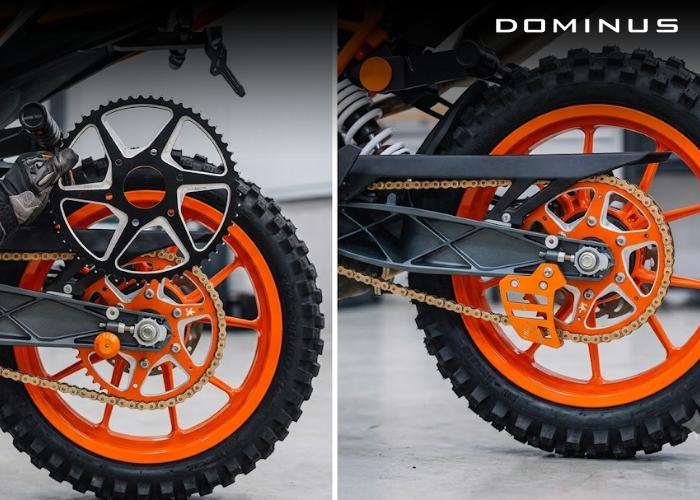
Changing sprocket size directly shifts your dirt bike’s power delivery. A larger rear sprocket (or smaller front) increases low-end torque and acceleration but reduces top speed. A smaller rear sprocket (or larger front) does the opposite: more top speed, less snap off the line. Most Jacksonville trail and motocross riders drop one tooth on the front or add two teeth to the rear for noticeable performance gains without major trade-offs.
Why Sprocket Size Is One of the Most Underrated Tuning Tools
Most riders spend money on exhaust systems and the best air filters for dirt bikes before they ever think about sprockets. That is not wrong — airflow and filtration matter enormously. But a sprocket change costs a fraction of most performance upgrades and produces an immediate, felt difference in how the bike behaves from the very first ride.
The relationship between sprocket size and performance is mechanical and predictable. Once you understand it, you can tune your bike’s power delivery for the specific terrain you ride, whether that is the sandy hardpack around Palatka, the technical trails at Croom, or a motocross track outside Jacksonville on a Saturday morning.
The Basic Mechanics: How Sprocket Ratio Works
Your dirt bike has two sprockets connected by a chain: the front countershaft sprocket and the rear wheel sprocket. The ratio between these two determines how engine power translates into wheel movement.
Think of it like bicycle gears. A lower gear — harder to pedal but powerful for climbing — is the equivalent of a numerically higher sprocket ratio on a dirt bike. A higher gear — easy to spin but less forceful — is the equivalent of a lower ratio.
The ratio is calculated simply: Rear sprocket teeth ÷ Front sprocket teeth = Final drive ratio
Example:
- Stock setup: 48 rear / 14 front = 3.43 ratio
- Change to 50 rear / 14 front = 3.57 ratio → more torque, less top speed
- Change to 48 rear / 15 front = 3.20 ratio → more top speed, less torque
A one-tooth change on the front sprocket is roughly equivalent to a two- to three-tooth change on the rear because the front sprocket is smaller and each tooth represents a larger percentage of the total.
Going Bigger on the Rear: When It Makes Sense
Adding teeth to the rear sprocket or dropping a tooth from the front tightens the ratio and gives you more mechanical advantage at the wheel. In practical terms:
What you feel:
- Stronger, more immediate acceleration off corners and out of slow sections
- The engine pulls harder in each gear at lower speeds
- You shift more frequently; gears feel shorter
- Top speed decreases noticeably in the highest gear
Best for:
- Technical trail riding where momentum management matters more than top speed
- Tight motocross tracks with lots of corners and short straights
- Riders who feel their bike is lazy off the bottom and want more snap
- Beginners who want more forgiving, predictable power delivery
A Jacksonville rider who primarily rides wooded trails or technical single-track will almost always benefit from a slightly taller rear sprocket. The terrain does not reward top-end speed; it rewards controlled torque and the ability to power out of slow corners cleanly.
Going Smaller on the Rear: When It Makes Sense
Removing teeth from the rear sprocket or adding a tooth to the front loosens the ratio and shifts the power band toward the top end.
What you feel:
- Noticeably higher top speed
- Each gear covers more ground; the bike feels lazier in acceleration
- Better highway-speed performance for dual-sport and enduro riders
- Less chain stress and slightly better fuel economy over long distances
Best for:
- Open desert racing or hard enduro with long flat sections
- Riders who feel their bike revs out too quickly on straights
- Dual-sport riders who spend time on paved roads between trail sections
- Sand dune riding, where high speed matters more than torque
Real-World Example: Two Jacksonville Riders, Two Different Results
Rider A rides a 250cc two-stroke primarily on the motocross track at Desoto Motor Park. He was struggling with corner exits; the bike felt flat coming out of tight turns and he was losing positions mid-race. He dropped the front sprocket from 13 to 12 teeth. The result: noticeably more pull out of slow corners, better drive onto the straight, and two positions gained in his next moto. The trade-off — a slight reduction in top-gear top speed on the back straight — was irrelevant for his track layout.
Rider B rides a 450cc four-stroke for weekend trail riding and occasional dual-sport trips on Florida backroads. He added a tooth to the front sprocket, going from 14 to 15. The bike stopped revving out so aggressively on the longer paved connector sections and felt more relaxed at highway-adjacent speeds. On the trails, the difference was minor — he just shifted down one gear in the tight sections as he always had.
Same concept. Two completely different outcomes based on how and where each rider actually uses his bike.
How Air Filters Connect to Sprocket Performance
This might not be the obvious connection but it matters.
When you change your sprocket ratio for more low-end torque, the engine works harder at lower RPM. Increased demand on the engine means the air intake system becomes more critical. A clogged or low-quality air filter in this scenario restricts airflow precisely when the engine needs it most, robbing you of the torque gain you were trying to create.
The best air filters for dirt bikes in 2026 — Twin Air Filters USA, No-Toil, and Uni Filter — are designed to maintain consistent airflow even after significant dust and debris loading. For Jacksonville riders dealing with fine Florida sand, this matters more than most performance upgrades.
Twin Air Filters in particular have a two-stage foam design that traps fine particles in the outer layer while maintaining airflow through the inner layer. In sandy conditions — which are the norm rather than the exception around North Florida — this design significantly outperforms single-stage dirt bike air filters over the course of a full riding day.
If you are tuning your sprocket ratio for more low-end performance, pair it with a quality motocross air filter check and replacement if needed. These two changes together cost under $100 combined and produce more real-world improvement than most bolt-on power upgrades at three times the price.
Sprocket Material: Steel vs. Aluminum
Once you have decided on tooth count, material choice affects durability and weight.
Steel sprockets: Heavier but significantly more durable. In sandy Florida conditions where abrasive wear is constant, a steel rear sprocket outlasts aluminum by a factor of three to four. Recommended for trail riders and enduro riders who prioritize longevity.
Aluminum sprockets: Lighter, typically saving 200 to 400 grams on the rear which reduces rotating mass and provides a small but measurable improvement in acceleration response. The trade-off is faster wear, particularly in sandy or rocky terrain. Better suited for motocross where the track surface is more controlled and the bike is maintained more frequently.
Combo option: Many experienced riders run a steel rear sprocket with an aluminum front for the best of both meaningful weight savings, where the front sprocket’s smaller size makes wear less of a concern, and durability, where the rear sprocket needs it.
FAQ: Sprocket Size and Dirt Bike Performance
Q: How many teeth should I change my sprocket by?
A: For a noticeable but manageable change, start with one tooth on the front or two teeth on the rear. These increments produce a clear difference in power delivery without significantly compromising the opposite end of the performance spectrum. Larger changes — two teeth on the front or four-plus on the rear — produce dramatic shifts that may require retuning other components.
Q: Will changing my sprocket affect my chain length?
A: Yes — adding teeth to the rear sprocket or removing teeth from the front increases the chain’s required length. Most riders add a link or two when making significant ratio changes. Going smaller on the rear or larger on the front may allow you to remove a link. Always check chain tension and ensure adequate wrap around both sprockets after any change.
Q: How do Twin Air filters compare to OEM air filters for Florida riding?
A: Twin Air Filters USA is specifically engineered for high-dust, high-debris environments. Their two-stage foam construction captures fine particles — the type of ultra-fine sand common in Florida — more effectively than most OEM single-stage dirt bike air filters. In local riding conditions, many Jacksonville riders report cleaning intervals two to three times longer with Twin Air compared to stock filtration.
Q: Do sprocket changes affect my bike’s warranty?
A: Sprocket changes are generally considered a normal performance modification and do not void manufacturer warranties on unrelated components. However, if a sprocket change contributes to chain or transmission wear, particularly from running an incorrect chain, warranty claims on those components could be affected. When in doubt, check your manufacturer’s modification policy.
Q: Where can I get rider support for sprocket and air filter questions specific to my bike?
A: Dominus Corporation offers direct rider support for Jacksonville, FL riders and nationwide. Call 800-749-2890 or email [email protected] the team can confirm correct sprocket fitment and chain length requirements and recommend the right motocross air filters for your specific make, model, and riding conditions.
Conclusion: Small Change, Big Difference
Sprocket tuning is one of the most accessible performance modifications available to any dirt bike rider — and one of the most overlooked. A $30 to $60 sprocket change, paired with a quality dirt bike air filter swap, can transform how a bike feels on your local Jacksonville trails or track without touching the engine.
The key is matching the ratio change to how you actually ride. More torque for tight technical terrain. More top speed for open fast terrain. One tooth on the front equals roughly two to three on the rear. Start conservative, ride it, and adjust from there.
And while you are thinking about sprockets, check those motocross air filters. In Florida sand, a clean filter is not optional maintenance. It is what keeps every performance change you make actually working as intended.
Sprockets, Twin Air Filters USA, motocross brake parts, and full dirt bike maintenance supplies are available at dominuscorp.com with direct rider support at 800-749-2890. Ships to Jacksonville, FL and throughout the United States.