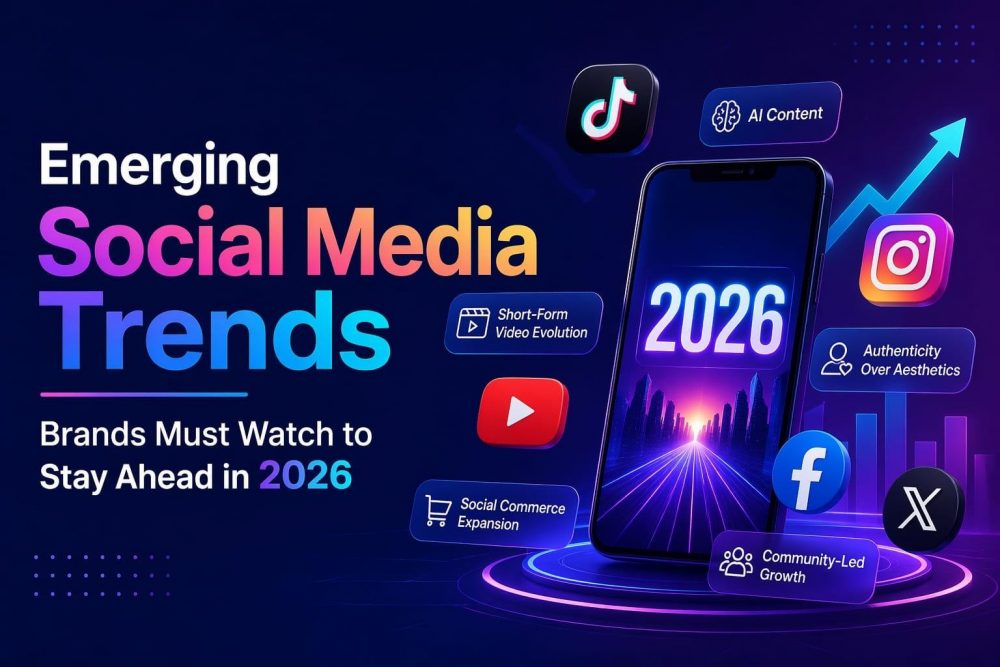
By 2026, social media will not only serve as a source of visibility but will also act as a discovery machine, engagement facilitator, and converter of leads. Today, social networks are developing rapidly, and user behaviour is changing quickly, businesses operate in a more complicated digital environment than ever. Moreover, content creation based on AI technologies, the rise of Spatial Computing, domination of short videos, development of social commerce, and community-oriented marketing have become the main tendencies that redefine the brand’s communication strategy with its target audience. Simultaneously, consumers expect to receive more authentic content, quick responses, and personalization of communication.
It becomes necessary for companies to switch from old-fashioned methods of promotion to new techniques in order to adapt to the constantly changing reality. Insight into how attention is moving and what makes users engage in social networks might help brands create effective campaigns. This article outlines major social media trends for 2026 and how businesses can use them to their advantage.
Trend 1- Short-form video + UGC dominate attention
Short video trends on different social media platforms, such as Instagram Reels, YouTube Shorts, and TikTok, keep dominating, because of the high amount of consumer engagement that they provide. In an age where attention spans have become significantly shorter, the need for capturing consumer attention in those first few seconds becomes crucial for any brand. The key element to gaining customers’ trust and outperforming advertising in terms of effectiveness is the user-generated content (UGC). Social networks increasingly appreciate watch time and share/save actions of users, which forces brands to move to storytelling and looped content.
For example, GoPro makes effective use of user-created videos that allow them to turn their users into brand ambassadors while ensuring an ongoing flow of engaging and believable content.
Trend 2- AI moves from experiment to infrastructure
AI is evolving from being an auxiliary aid to a critical foundation of today’s marketing systems. Organizations use AI technology to produce content, anticipate future performance, and customize their efforts to a wider extent than ever before. Platforms that use feature tools such as Meta and Google allow for automated optimizations and targeting of audiences. Moreover, chatbots powered by AI allow for constant communication between the brand and its customers, thus improving responsiveness.
For instance, Netflix applies AI to tailor the content for its users and promote the service, which improves customer retention rates.
Trend 3- Social media becomes a full-funnel sales engine
The current trend in social media platforms shows a quick move towards becoming a complete e-commerce ecosystem that allows customers to make purchases easily by making it easier for them to transition from finding products to buying them. This has been made possible through features such as in-app purchasing in Instagram and TikTok. Moreover, the content marketing strategies used have now become aligned with all the aspects of the consumer decision-making process, from awareness to sharing, and from sharing to buying products through live product demonstrations and reviews.
For example, Nykaa, which incorporates tutorials, influencer partnerships, and direct purchase links to create conversions.
Trend 4- Community > audience (rise of private spaces)
The importance of brand community formation has increased as compared to the mass market approach. The private networks like WhatsApp, Discord, and Telegram provide an exclusive means of communication that results in creating a loyal community of consumers. In contrast to the one-way broadcasting model, these networks emphasize engagement and participation, which lead to a sense of community formation.
For example, Nike creates communities by providing exclusive entry into communities based on members-only activities and fitness-based groups. In addition, the focus is on engagement with individual customers.
Trend 5- Creator economy shifts to authenticity & micro-influencers
The creator economy is shifting from the reliance on star-studded promotions to micro and nano influencers that provide unique knowledge and a greater degree of authenticity among consumers. Micro and nano influencers tend to yield more engagement and a deeper connection with the followers. Collaboration on Instagram and YouTube has become increasingly prevalent as many brands work with small creators via strategic partnerships. Additionally, performance-based methods, including affiliate marketing, have become popular too.
As another instance, Glossier has capitalized on its brand identity by elevating common individuals and micro-influencers as genuine sources.
Conclusion
Social media trends in 2026 demands a completely different kind of approach, which is based on agility, authenticity, and integration. In simpler terms, the focus must be shifted from old-fashioned methods which seek visibility to new-age solutions which can assist organizations to connect with customers, convert leads into sales, and retain customers. The combination of artificial intelligence, short-form videos, social shopping, and community means that the agility of the current generation of social media cannot be ignored. Those companies which can strike a balance between man and machine will succeed better than others.