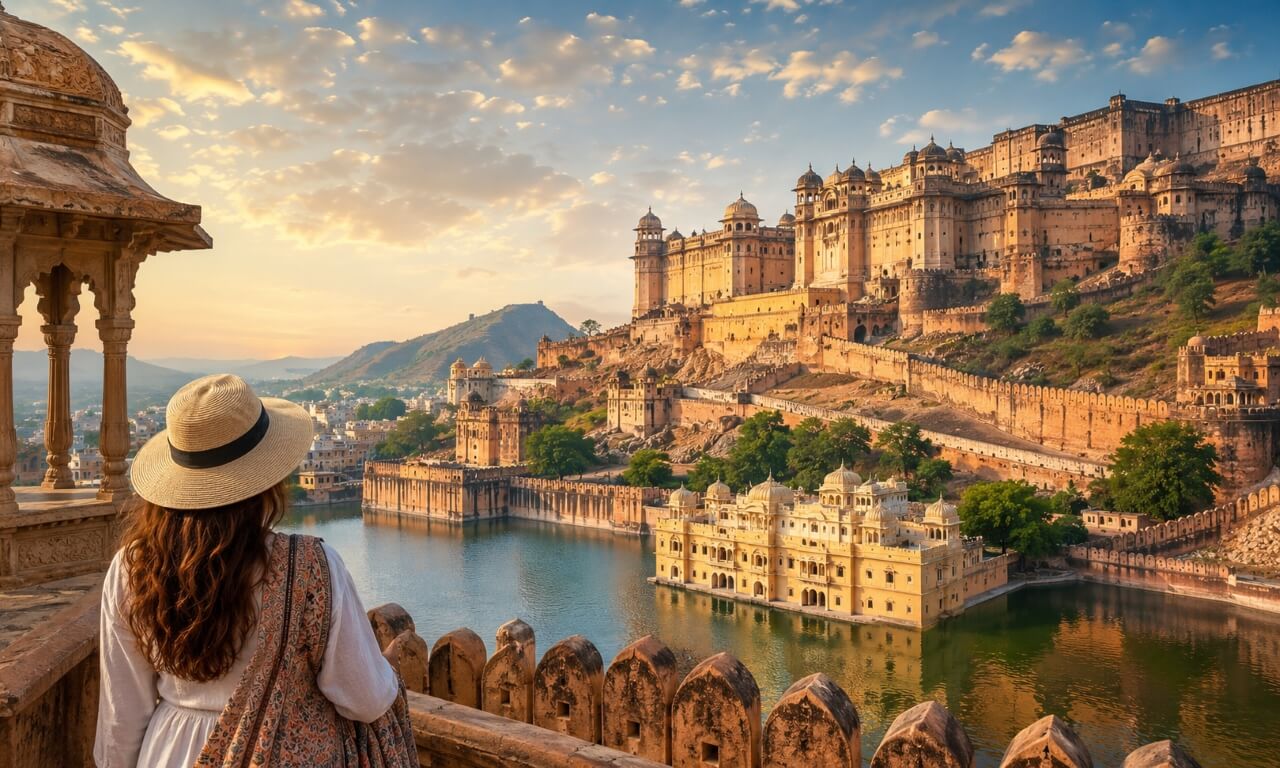
I’ve been to a lot of places. Hill stations, beaches, wildlife parks — the usual. But nothing quite prepared me for what a proper north India tour feels like. It’s not just travel. It’s like flipping through a history book, except the pages are made of red sandstone and the stories are told by 500-year-old walls that are still standing.
Last winter, I finally did the trip I’d been putting off for years — a focused Rajasthan forts and palaces tour combined with the classic north India heritage circuit. I booked through Vardhman Vacations, a Delhi-based tour operator that specialises in exactly this kind of travel for people who want more than just a hotel booking and a list of GPS coordinates.
Where Every North India Tour Begins: Delhi
Every north India tour worth doing starts in Delhi. The city is overwhelming if you let it be, but if you slow down, it starts to make sense. Old Delhi’s lanes, the Red Fort, Jama Masjid — these aren’t just tourist stops. They set the context for everything you’re about to see further west.
Delhi is layered — Mughal architecture sitting next to colonial buildings sitting next to glass offices. Once you leave the capital and head toward Rajasthan, that layering only gets deeper and older. Think of Delhi as the introduction to the guide. Rajasthan is the main text.
Jaipur: The First Stop on Any Rajasthan Forts & Palaces Tour
I’ve heard Jaipur called the Pink City so many times it stopped meaning anything. And then I actually stood in front of Hawa Mahal at golden hour and understood why people never stop saying it.
Jaipur is the anchor of any Rajasthan forts and palaces tour, and Amber Fort is the anchor of Jaipur. A massive fortified palace complex sitting on a ridge above Maota Lake, Amber is best visited early morning before the crowds arrive. The light is soft, the air is cool, and the scale of the place hits you differently when it’s quiet.
Inside, the Sheesh Mahal — the hall of mirrors — is genuinely stunning. The entire ceiling is inlaid with tiny mirrors and glass pieces, and when a lamp is lit inside, it looks like stars exist both above and below you. No photograph captures it properly.
Nahargarh Fort sits higher on the Aravalli hills and gives a panoramic view of the whole city. Less polished than Amber, more raw — and honestly more interesting for that reason. Jaigarh Fort, connected to Amber by an underground passage, houses the Jaivana cannon, the largest wheeled cannon in the world. You don’t expect to be impressed by a cannon. Then you see it.
The City Palace in Jaipur is still a working royal residence. Parts are open to the public and the museum inside is well-curated. The fact that the royal family still lives in the private wing gives the whole place an unusual, living quality that most heritage sites lack.
For anyone researching a Rajasthan heritage tour, Jaipur alone justifies the trip.
Jodhpur: The Most Dramatic Stop on the Heritage Circuit
Mehrangarh Fort in Jodhpur is one of those structures that genuinely stops you mid-sentence. It rises 120 metres above the city on a sheer rocky outcrop, and the first time you see it from below, the scale is almost hard to process.
On a Rajasthan forts and palaces tour, Mehrangarh is the most dramatic single site. The fort is exceptionally well-preserved, the museum inside is among the best in Rajasthan, and the audio guide adds real context rather than just repeating placard text. The view from the battlements over Jodhpur’s blue city — thousands of indigo-painted houses spreading to the horizon — is unlike anything else on the north India tour circuit.
Jaswant Thada, the white marble cenotaph just below the fort, is quieter and more contemplative. It’s often skipped by people rushing to the next destination. Don’t skip it. The craftsmanship is extraordinary and the setting — above the city, below the fort — gives you one of the better views in Jodhpur.
Udaipur: Where the Rajasthan Heritage Tour Gets Romantic
If Jodhpur is dramatic, Udaipur is romantic. The City Palace of Udaipur is the largest palace complex in Rajasthan — built by successive maharanas over nearly 400 years, each ruler adding their own section. The result is a sprawling maze of courtyards, balconies, inlaid glass work, and galleries that takes half a day to properly walk through.
The Lake Palace Hotel sits in the middle of Lake Pichola and looks, from the shore, like it’s floating on water. Originally built as a summer retreat in 1743, it remains one of the defining images of what a Rajasthan heritage tour looks like. Whether you stay there or simply see it from the ghats, it stays in your memory.
Jag Mandir, the second island palace on Pichola, is accessible by boat. Less visited than the Lake Palace and genuinely beautiful — the boat ride across with the Aravallis behind you is worth it alone.
Planning Your North India Tour: What to Know
A north India tour covering the Rajasthan forts and palaces circuit isn’t difficult to plan, but it rewards good sequencing. The recommended route runs Delhi → Jaipur → Jodhpur → Udaipur, with Agra added before Jaipur if the Taj Mahal is on the list. October to March is peak season — the weather is the best it gets, and the light in winter is ideal for photography.
Some practical notes that the guidebooks don’t always mention
Wear proper walking shoes. The forts involve uneven stone, steep ramps, and unexpected climbs. Start at major sites within the first hour of opening — the quiet is worth the early alarm. Build in time to simply sit at a viewpoint and look, without moving to the next item on the itinerary. The details of Rajasthan’s heritage architecture — carved lattice screens, painted ceilings, centuries-worn stone steps — only reveal themselves when you’re not rushing.
Vardhman Vacations designed the itinerary to move at a pace where I actually absorbed things rather than just photographed them. The guides at each site understood the history well enough to handle follow-up questions, not just deliver a rehearsed script. On a heritage-focused north India tour, that quality of guiding makes a measurable difference to what you take home from the experience.
Final Word
Rajasthan is not a backdrop. It’s an argument — for craftsmanship, for scale, for the kind of ambition that builds a fort on a cliff and then fills it with mirrored ceilings. A north India tour that takes this Rajasthan forts and palaces route seriously is one of the more complete travel experiences the subcontinent offers.