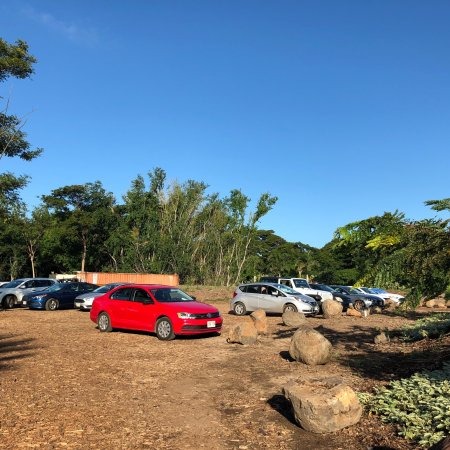
Quick answer: Olowalu Beach sits right off Honoapi’ilani Highway (Route 30) at Mile Marker 14, about 7 miles south of Lahaina. Parking is free and informal; pull onto the hard-packed sand shoulder on the ocean side of the highway near the MM14 sign, watch for softer sand patches, and leave room for other cars to pass. There’s no lot, no meter, and no bus stop nearby, so plan on driving yourself, taking a rideshare, or booking a tour with pickup included. Go before 9 AM for the calmest water and the easiest parking.
If you’ve spent any time researching West Maui snorkeling, you’ve probably already run into Olowalu’s other name: Mile Marker 14. That’s not a marketing nickname, it’s literally how people navigate there, because the beach itself has no sign, no gate, and no address you can drop into Google Maps with much confidence. That makes it one of the best reef systems on the island and one of the more confusing beaches to actually arrive at. This guide covers the part most write-ups skip past: where to park, how to get there from wherever you’re staying, whether the Lahaina recovery has changed anything, and when to show up so you’re not fighting the tide or the crowd.
For a deeper look at the reef itself the turtles, the coral, the guided tour options our complete Olowalu Beach guide covers that in full. This one is about logistics.
Where Is Olowalu Beach?
Olowalu sits on Maui’s western coastline, roughly halfway between Lahaina and Ma’alaea, right along Honoapi’ilani Highway. Locals and visitors alike just call it Mile Marker 14, since that’s the highway marker that lines up with the main entry point. It’s about 7 miles south of central Lahaina, and it’s part of a stretch of coast that also holds an old sugar plantation site, a scattering of petroglyphs, and one of the healthiest reef systems in the state.
That reef is the reason the beach is worth the drive in the first place. It spans roughly 450 acres, and some of its coral formations are estimated to be around 500 years old, which is part of why researchers refer to Olowalu as one of Maui’s “mother reefs” coral polyps that originate here have been tracked seeding new colonies elsewhere in West Maui and as far as Lāna’i and Moloka’i. Green sea turtles gather at a cleaning station a short swim offshore, which is the source of Olowalu’s other nickname, Turtle Reef.
Quick disambiguation, since it trips people up: Turtle Reef (Olowalu) is not the same place as Turtle Town, which is a separate turtle-watching spot near Mākena on South Maui’s coast. We break down the difference here if you’re trying to decide between the two.
How to Get to Olowalu Beach
The drive itself is simple no matter where you’re coming from on Maui — the tricky part is judging how long it’ll actually take.
From Lahaina and West Maui resorts (Kā’anapali, Kapalua): This is the easy direction. Head south on Honoapi’ilani Highway and you’ll hit Mile Marker 14 in about 10–20 minutes depending on where you start, with no detours required.
From Kīhei and South Maui: You’ll take Honoapi’ilani Highway north through Ma’alaea, then follow the coastline as it climbs and curves through the Lahaina Pali, the cliff section of highway connecting central and West Maui. Partway through, you’ll pass through a short highway tunnel near mile marker 10.4 (sometimes called the Olowalu Tunnel, sometimes the Pali Tunnel it’s the same one, and it dates back to 1951, when it was the first public highway tunnel built in Hawai’i). From Kīhei, budget 25–35 minutes.
From Kahului or the airport: Same route as from Kīhei south to Ma’alaea, then along the Pali. Plan on 35–45 minutes depending on traffic through Wailuku.
One thing worth knowing before you go: the drive along the Pali is scenic but narrow, with tight shoulders and cliffside curves. It’s an easy drive, just not one to do while glancing at your phone for directions. Get your route loaded before you leave.
Parking at Olowalu Beach (Mile Marker 14)
This is the part that surprises first-time visitors, so let’s be direct about it: there is no parking lot at Olowalu. No paved spaces, no attendant, no ticket machine, and no fee. What you’ll find instead is a stretch of hard-packed sand on the ocean side of the highway, right around the Mile Marker 14 sign, where people have been pulling off and parking for decades.
A few things make this work smoothly rather than turning into a headache:
- Park on the hard-packed sand, not the soft stuff. There are a couple of loose, sandy patches nearby where cars get stuck fairly often. Look for where other vehicles have already parked and follow that same line; it’s usually the firmer ground.
- Get there early. Mid-morning through early afternoon is when spots are hardest to find, especially during peak travel months (roughly June–August and mid-December–March). Arriving by 8 or 9 AM solves most of the parking problem on its own, and it happens to be the best time to snorkel anyway.
- Watch your entry and exit. There’s no turn lane off the highway, so slow down well before the mile marker sign and check your mirrors before pulling off and do the same in reverse when you leave.
- Don’t block the shoulder. Pull far enough off the road that other cars can still pass safely.
- Treat it like any remote beach pull-off: don’t leave bags, electronics, or anything valuable visible in the car. It’s a quiet stretch of highway with no attendant watching the lot, because there is no lot.
Because it’s simply highway shoulder and not a county beach park, Olowalu isn’t part of Maui’s paid parking programs that apply at some South Maui beach parks; there’s no fee here at all, just the two rules above (park smart, don’t block traffic).
Getting to Olowalu Without a Car
This is the honest answer, and it’s a little disappointing if you were hoping to skip the rental car: there’s no practical public transit option to Olowalu Beach.
The Maui Bus does run a route along this corridor Route 29, the West Maui Express, connects Kahului to Kapalua by way of Lahaina but it doesn’t have a stop at Olowalu or nearby Ukumehame. The nearest stops are up in Lahaina town, several miles north, and walking the highway shoulder from there isn’t safe or realistic; there’s no sidewalk, no shade, and traffic moves fast along that stretch.
Your realistic options, in order of convenience:
Rent a car.
This is genuinely the simplest solution for most visitors, and it gives you flexibility on timing, which matters more here than at almost any other Maui beach because of the tide considerations below.
Rideshare.
Uber and Lyft both serve this part of West Maui, and a drop-off at Mile Marker 14 is straightforward. The catch is the return trip. This is a rural stretch with light traffic and spotty cell coverage in places, so don’t count on hailing a car easily from the roadside. Schedule your pickup in advance if you can, or build in flexibility.
Book a tour that includes transportation.
If you’d rather skip the driving and parking altogether, this is where a guided outing earns its cost. Options like the shoreline snorkel tour at Turtle Reef or the kayak-and-snorkel tour along the Olowalu coastline typically include gear and guide narration on top of getting you there, which takes the parking question off your plate entirely.
Is Olowalu Beach Open? Road Access in 2026
This question comes up a lot, understandably, given what happened in Lahaina in August 2023 so it’s worth answering directly: yes, Olowalu is open, and getting there hasn’t fundamentally changed.
Olowalu sits south of Lahaina town, outside the area affected by the fire. If you’re coming from central or South Maui, you reach Mile Marker 14 entirely via Ma’alaea and the Lahaina Pali you never pass through downtown Lahaina at all. If you’re coming from the north side (Kā’anapali, Kapalua), the Lahaina Bypass carries through-traffic around the historic town center, so you’re not routed through the reconstruction zone either.
Lahaina itself is still a working recovery site as of mid-2026, with periodic utility work, guardrail replacement, and drainage projects along the highway through town the kind of lane closures that show up and clear within a few days. None of that affects the Olowalu stretch of highway, since it’s a separate section well south of town. If your trip does route you through Lahaina for any reason, it’s worth checkingHDOT’s live roadwork page the day before, since closures shift week to week.
Longer term, HDOT and the Federal Highway Administration are in the environmental review stage of a larger Honoapi’ilani Highway improvement project covering the Ukumehame-to-Launiupoko stretch (aimed at addressing sea-level rise and coastal erosion along that section). That process is still years from construction, so it’s not something that affects a 2026 visit, just a heads-up that this corridor will likely see more infrastructure work later in the decade.
Best Time to Visit Olowalu Beach
Timing matters more at Olowalu than at most Maui beaches, mostly because of the tide.
Tide:
Check a tide chart before you go, and aim for high tide. At low tide, the reef flat close to shore can be exposed or too shallow to swim over comfortably, which makes entry harder and increases the odds of accidentally scraping against coral. High tide gives you enough water depth to swim out cleanly without putting the reef or your knees at risk.
Time of day:
Morning wins here, and it’s not close. Wind picks up through the afternoon on this coastline, which stirs up sediment and chops up the surface. Being in the water by 7 or 8 AM gets you calmer conditions, better underwater visibility, and a quieter beach before the day-trip crowds arrive.
Season:
Olowalu is snorkelable year-round, but winter months (roughly November through March) tend to bring calmer water on this side of the island, since it’s sheltered from the bigger south swells that show up more often in summer. That’s not a reason to skip a summer trip. The tide and time-of-day guidance above matters more day-to-day than the season does but if you’re planning a trip around calm water specifically, winter has a slight edge here.
What You’ll Find at Olowalu (Beyond the Beach)
Without repeating our full reef and marine-life breakdown, here’s the short version of what’s actually in the water: green sea turtles gathering at a cleaning station a short swim from shore, a wide range of tropical reef fish, occasional manta ray sightings, and sea urchins scattered across the sandy channels near the entry point worth a pair of water shoes if you have them.
If you want the full picture of how to find the cleaning station, what a guided tour adds versus going it alone, tips for beginners and non-swimmers that’s covered in depth in our roundup of Maui’s best snorkel spots, and ourguide for non-swimmers.
Facilities: What’s There (and What Isn’t)
Set expectations low here, because Olowalu is intentionally undeveloped. There are no restrooms, no showers, and no lifeguard directly at the beach.
Camp Olowalu, the campground just north of the main entry point, is a private, reservation-based facility; its restrooms and showers are for registered campers, not day-use beachgoers, so don’t count on stopping in. The closest public restroom is at Ukumehame Beach Park, about 2 miles south along the highway.
What’s worth bringing:
- Water — there’s nowhere to refill once you’re there
- Reef-safe sunscreen or a rash guard (there’s zero shade at the water’s edge)
- Water shoes, given the urchins and rocky patches near the entry
- Snorkel gear, unless you’re renting through a tour or a shop in Lahaina
- Small bills or a card for the general store or juice stand down the road
Safety Tips for Visiting Olowalu Beach
A few things worth knowing before you get in the water:
No lifeguard. Olowalu is unguarded, so know your own swimming ability and keep a close eye on kids. The reef area can get shallow fast in spots.
Shark advisory signage. You’ll likely see a posted shark advisory sign near the entry point, which is standard along parts of this coastline rather than a sign of any unusual recent activity worth reading, not worth losing sleep over.
Sea turtle distance. Green sea turtles are federally protected under the Endangered Species Act, and the guidance from NOAA is to stay at least 10 feet away and never touch, chase, or attempt to feed one. This isn’t a soft suggestion; violations can carry civil penalties exceeding $50,000 and criminal fines up to $100,000 plus up to a year in prison, depending on severity. Practically speaking: keep your distance, let them go about their business, and you’ll get better photos anyway.
Reef contact. Standing on coral or dragging fins across it damages a reef system that’s taken centuries to grow. Stick to the sandy channels for entry and exit.
Car security. Same advice as any remote roadside parking in Hawai’i: keep valuables out of sight, or better yet, out of the car entirely.
Nearby: What Else Is at Mile Marker 14
A few reasons to linger in the area beyond the beach itself. Across the highway from the water, you can hike a short trail up to a site with old petroglyphs, and remnants of Olowalu’s plantation-era sugar mill are still visible nearby, a reminder that this quiet stretch of coast was once a working sugar town.
For food, Leoda’s Kitchen and Pie Shop sits right on the highway at Olowalu, open daily from 10 AM to 6 PM, and it’s worth timing your visit around the sandwiches are solid, but the pies (banana cream and Olowalu lime are the standouts) are the actual reason people pull over. Next door, the Olowalu General Store has been running since 1932 and is a good stop for drinks, snacks, or a quick bite before or after your swim. If you’re around on a day the Olowalu Farmers Market is set up, look for the juice stand for fresh pineapple juice.
Frequently Asked Questions
Is there a parking lot at Olowalu Beach?
No. Parking is informal roadside parking on the ocean side of Honoapi’ilani Highway near the Mile Marker 14 sign. There’s no paved lot, no attendant, and no fee, just hard-packed sand shoulders.
Is parking at Olowalu Beach free?
Yes. It’s simple highway-shoulder parking, not a county lot, so there’s no meter, permit, or day-use charge.
How do you get to Olowalu Beach without a car?
There’s no bus stop within safe walking distance Maui Bus Route 29 runs this highway corridor but doesn’t stop at Olowalu. Rideshare drop-off works well; just plan your return trip in advance, since pickups from this stretch aren’t guaranteed on demand. Booking a kayak or snorkel tour that includes transportation is usually the easiest car-free option.
What is Mile Marker 14?
It’s the local nickname for Olowalu Beach, named for the highway mile marker that sits at the main entry point on Honoapi’ilani Highway, about 7 miles south of Lahaina.
Does the Lahaina wildfire recovery affect getting to Olowalu Beach?
No. Olowalu is south of the area affected by the 2023 fire, and it’s reachable directly from central and South Maui without driving through Lahaina town at all. Visitors coming from the north use the Lahaina Bypass, which routes around the historic district. Ongoing construction work within Lahaina itself doesn’t extend to the Olowalu stretch of highway.
Are there restrooms at Olowalu Beach?
Not at the beach itself. Camp Olowalu next door is reservation-only, and its facilities aren’t open to day visitors. The nearest public restroom is at Ukumehame Beach Park, about 2 miles south.
Is Olowalu Beach good for kids and beginner snorkelers?
Yes, with the right timing. The shallow, sandy-channel entry near Mile Marker 14 is one of the more approachable shore entries on Maui, especially at high tide with calm morning conditions. Skip it at low tide, when the reef flat can be too exposed for a comfortable, safe entry.
Can you touch the sea turtles at Olowalu?
No. Green sea turtles are federally protected, and NOAA guidance is to stay at least 10 feet away at all times. Touching, chasing, or feeding them isn’t just discouraged, it’s a legal violation that can carry serious fines.
Planning Your Visit
Olowalu rewards a bit of planning more than most Maui beaches do. Get the tide right, get there before mid-morning, and know where you’re going to put the car, and you’ll have one of the island’s oldest reef systems mostly to yourself before the day-trippers show up. If you’d rather hand off the logistics entirely, a guided kayak-and-snorkel tour covers the parking, the timing, and the reef navigation for you.