Introduction
Clean process fluid is not a choice in chemical processing and similar industries. A single point of chemical interaction between the fluid and the fitting material can compromise a batch, damage downstream equipment, or create safety hazards.
PTFE-lined reducing flanges address this problem directly. They are used where pipes of different diameters meet and where the fluid cannot contact bare metal. The PTFE lining is a barrier between the chemical and the flange body, and provides a dependable corrosion resistant reducing flange solution for critical fluid handling applications.
What Is a PTFE-Lined Reducing Flange?
Structure and Design
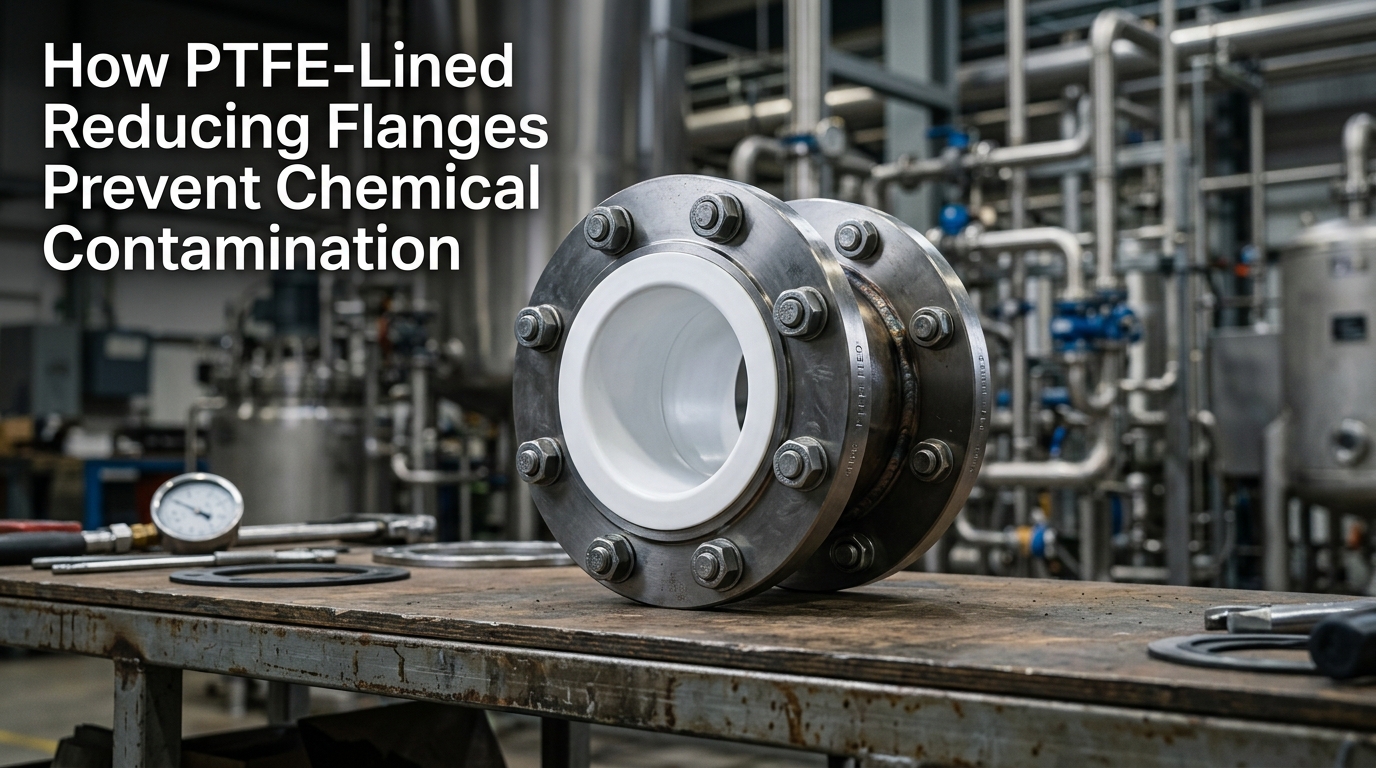
A PTFE-lined reducing flange connects two pipes of different sizes. The outer body is typically carbon steel, stainless steel, or ductile iron. PTFE lines the inner surface, including the bore and flange face. The reducing design allows the fitting to transition between pipe diameters without requiring a separate reducer and flange combination.
Role of PTFE Lining in Industrial Piping
PTFE is a fluoropolymer with one of the broadest chemical resistance profiles of any lining material. It does not react with most acids, alkalis, solvents, and oxidising agents, and has a very low friction coefficient. In a PTFE-lined reducing flange, this material sits between the aggressive process fluid and the metal body. That way the metal is never in contact with the chemical. This prevents corrosion and the fluid from being contaminated with metal.
Difference Between Standard and Fluoropolymer Lined Flanges
Standard reducing flanges are made entirely from metal and fail with strong acids, chlorinated solvents, or oxidising media. Fluoropolymer-lined flanges address this directly. The metal body handles pressure and structural load, while the lining handles chemical resistance. The result is a fitting that is mechanically robust and chemically inert on all wetted surfaces.
Why Chemical Contamination Occurs in Industrial Piping Systems
The most common cause is corrosion. When aggressive chemicals contact unlined metal surfaces, metal ions enter the fluid and corroded surfaces introduce particulates. Over time, the fitting wall thins and may crack or leak.
High-temperature operation makes this worse. A chemical that is mildly corrosive at ambient temperatures can become highly aggressive when heated, and standard metal fittings degrade faster under these conditions.
How PTFE-Lined Reducing Flanges Prevent Contamination
Excellent Chemical Resistance
PTFE resists almost all known industrial chemicals. The PTFE lining is not attacked by concentrated sulphuric acid, hydrochloric acid, nitric acid, sodium hydroxide, chlorinated solvents and many organic chemicals under normal operating conditions. The lining remains stable from roughly -50°C to around 200°C depending on pressure. This makes the PTFE-lined reducing flange suitable for handling aggressive process fluids across most industrial temperature ranges.
Non-Reactive and Non-Stick Surface
PTFE does not bond with most chemicals at a molecular level. Fluids do not leave residues on the lining easily. This is important in pharmaceutical or specialty chemical production where cross contamination between batches is a concern. It also reduces the buildup of scale or viscous deposits over time.
Leak Prevention and Secure Sealing
PTFE-lined reducing flanges are manufactured with the lining extending to the flange face. This creates a chemically inert sealing surface that prevents fluid from reaching the metal body at the joint. With unlined flanges, fluid can accumulate in crevices near the joint and begin corroding the metal. The lined face eliminates this pathway.
Corrosion Protection for Longer Service Life
The wetted side corrosion is almost eliminated and the metal body never comes into contact with the process fluid. The flange body holds up for a longer period, which means less replacements and less unplanned downtime. This is one of the primary reasons why PTFE lining is specified for severe service pipe fittings with chemical resistance.
Reduced Maintenance Requirements
PTFE-lined fittings do not corrode on the wetted side, and the non-stick surface reduces buildup. Maintenance intervals can be extended significantly. For facilities building low-maintenance piping systems, fewer scheduled shutdowns and less emergency repair work are meaningful operational gains.
Industries That Commonly Use PTFE-Lined Reducing Flanges
Chemical Processing Plants
These fittings are used throughout the piping networks of plants handling mineral acids, chlorinated compounds or reactive solvents. Chemical resistance combined with secure sealing keeps process lines clean.
Pharmaceutical Industry
Corroded fittings can cause metal contamination in API manufacturing and formulation lines. The process maintains product purity with PTFE lined fittings.
Water Treatment Facilities
Chlorine, chloramines, and hypochlorite solutions are corrosive. PTFE-lined reducing flanges are used in chemical dosing and transfer lines where these media are handled.
Petrochemical and Refinery Operations
Fittings used for hydrogen sulphide, sulphuric acid in alkylation processes and hydrocarbon streams containing corrosive contaminants will not react with the process fluid. PTFE-lined reducing flanges are specified for these services, particularly where elevated temperatures are also a factor.
Food and Specialty Chemical Manufacturing
The PTFE surface does not harbour bacteria, does not leach materials into the product, and cleans easily during CIP procedures. This makes it suitable where surface cleanliness is a primary concern.
Benefits of Using Fluoropolymer Lined Flanges in Industrial Systems
Corrosion-related leaks happen much less frequently, improving operational safety. Product purity is protected since the inert lining prevents metal ions from entering the process stream. Equipment life is longer because the metal body is shielded from aggressive media. Overall maintenance costs come down, fewer parts to replace and fewer unplanned shutdowns.
Factors to Consider When Selecting a PTFE-Lined Reducing Flange
Chemical compatibility
PTFE handles most chemicals, but a small number of specific reagents may affect it. Always verify compatibility for the actual fluid in service.
Pressure and temperature ratings
The lining affects the fitting’s rated pressure. Confirm that both match system operating conditions, including surge pressures.
Flange dimensions and standards
Available to ANSI, DIN, and other standards. Match the flange standard and pressure class to the rest of the system.
Lining quality and thickness
Performance is affected by the thickness of the lining, the quality of the bond, and the method of application. Thin or poorly adhered linings can crack or permeate upon repeated thermal cycling.
Application environment
High ambient temperatures, UV exposure, or mechanical vibration should be factored in alongside process-side requirements.
Conclusion
PTFE lined reducing flanges solve a common specific problem. Unlined metal fittings are subject to corrosion when exposed to aggressive chemicals, contaminating the process fluid and degrading over time. The PTFE liner forms a chemically inert barrier on all wetted surfaces, preventing corrosion at the source, and keeping the fluid clean.
They are used in chemical processing, pharmaceuticals, water treatment, petrochemicals and food manufacturing. Their chemical resistance, low surface reactivity, tight sealing and less maintenance make them a reliable choice for systems where control of contamination and corrosion resistance are critical. The simple answer, in most cases, is to specify a PTFE-lined reducing flange instead of a standard fitting for critical piping applications.