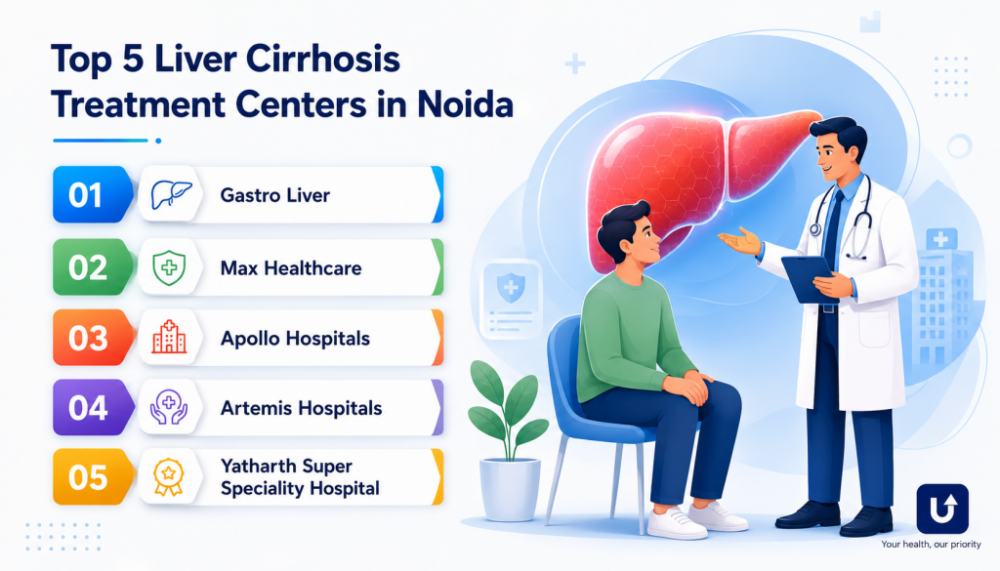
Cirrhosis is not the kind of diagnosis anyone sees coming. Most people who eventually get told they have it spent months—sometimes years—assuming whatever they were feeling was just tiredness, or stress, or getting older. The liver is quiet about its suffering. It keeps working even as the damage accumulates, patching itself up as best it can, until eventually the scarring wins and the function starts to go.
By the time a doctor sits someone down and explains what’s actually been happening inside their body, the disease has usually had a long head start.
Finding good treatment at that moment matters more than most people realize at first. Not just competent treatment — genuinely specialized care, from people who understand liver disease deeply and manage it with the kind of sustained attention a chronic condition like this demands. Noida has those options. Not everywhere, but they exist. Here is an honest look at the centers worth knowing about.
What Cirrhosis Is and Why It Gets So Complicated
The liver is one of those organs that does an almost absurd number of things. Filtering toxins. Producing proteins the blood needs to clot. Regulating how the body processes fats and sugars. Helping with digestion. Storing nutrients. The list is genuinely long.
When the liver takes repeated damage over time — from a virus, from years of heavy drinking, from chronic inflammation caused by fat accumulation or an overactive immune system — it tries to heal. That healing response produces scar tissue. A little scar tissue is manageable. A lot of it is not. It stiffens the organ, blocks blood flow through it, and progressively shuts down the functions it’s supposed to be performing.
That shutdown has consequences that spread far beyond the liver itself.
The Things That Typically Cause It
Hepatitis B and C are responsible for a large share of cirrhosis cases globally — both infections can damage the liver silently for a decade or more before anyone notices. Alcohol-related liver disease is another well-known cause, though it’s worth saying clearly that plenty of people with cirrhosis have never had a serious drinking problem. Non-alcoholic fatty liver disease has become significantly more common, particularly in cities, where sedentary lifestyles and processed food consumption are widespread. Autoimmune hepatitis, certain inherited disorders, and prolonged exposure to particular medications or toxins account for many of the remaining cases.
What it feels like as it progresses
Early on, often nothing specific. Vague tiredness. Maybe some discomfort in the upper right abdomen. Easy to dismiss. As things advance, the signs become harder to ignore — the abdomen swelling from fluid buildup, the skin and eyes taking on a yellowish color, unexplained weight dropping off, bruising from minor contact, nausea, and sometimes a fogginess in thinking that can be alarming when it appears.
None of these symptoms are unique to cirrhosis. They overlap with dozens of other conditions, which is partly why diagnosis so often comes later than it should. Getting checked early — especially with any of the known risk factors in the background — can completely change the trajectory of the disease.
Liver Cirrhosis Treatment Centers in Noida
1. Gastro Liver
There is a version of liver care that exists inside large multispecialty hospitals—competent, decently equipped, but always one of many departments competing for resources and attention. Patients seeking liver cirrhosis treatment in Noida often end up in exactly these settings, getting reasonable care that never quite feels tailored to the specific demands of their condition. And then there is what Gastro Liver does, which is something more focused than that.
The whole practice is built around digestive and liver health. That sounds like a small distinction until you think about what it actually means in practice. The specialists are not splitting their expertise across cardiology and neurology and oncology. The diagnostic protocols are designed specifically around liver disease. The follow-up systems are structured for the kind of long-term monitoring that cirrhosis requires. The team stays current on hepatology specifically because that is what they do all day.
When a patient comes in, the workup reflects that focus. Liver function tests and ultrasound are baseline. Beyond that, Gastro Liver uses FibroScan — a technology that measures liver stiffness and gives a reliable picture of how much scarring has accumulated, without the need for a biopsy in most cases. Viral hepatitis panels, detailed blood investigations, and endoscopic evaluation where the situation calls for it round out the assessment. The aim is not just to confirm cirrhosis exists but to understand its stage, its cause, and what complications may already be developing quietly.
Treatment from there is built around that individual picture.
The person whose cirrhosis comes from a long-standing hepatitis B infection needs antiviral treatment as part of the plan. The person dealing with portal hypertension — where scarring has raised pressure in the blood vessels feeding the liver — needs management targeted at that specifically. Someone developing ascites needs active monitoring of that fluid buildup, not a general liver protocol that doesn’t account for it.
The complication piece deserves particular emphasis. Advanced cirrhosis can produce secondary problems that are dangerous in their own right. Varices — swollen blood vessels in the esophagus that can rupture without warning. Hepatic encephalopathy — cognitive changes caused by toxins the liver can no longer clear from the blood. Serious bacterial infections. Kidney complications. These are not rare outliers. They are the reality of managing advanced cirrhosis, and catching them early requires active surveillance rather than waiting for something to go obviously wrong.
Gastro Liver approaches that surveillance as a core part of what they do, not an add-on.
Something else that matters — patients dealing with a condition this serious and this long-term need to understand what is happening to them. The reasoning behind treatment decisions. The warning signs that should prompt an urgent call. The realistic picture of what management looks like over years. Gastro Liver puts genuine effort into that communication, which sounds like a soft thing to mention but turns out to have real practical consequences for how well patients manage between appointments.
2. Max Healthcare
Max brings the resources of a large, well-established hospital network to liver care. Experienced gastroenterologists, strong diagnostic infrastructure, and critically — solid critical care capability for patients whose condition becomes acute or who are managing multiple overlapping health problems. The scale of the institution is both its strength and, for some patients, its limitation. But for complex cases requiring broad medical support, Max is a serious and reliable option.
3. Apollo Hospitals
Apollo has built its hepatology practice carefully over many years. The specialists here have handled advanced and complicated cases. The diagnostic technology is current. For patients arriving with disease that is already well-progressed, or with prior treatments that have not worked as hoped, the depth of clinical experience available at Apollo carries real weight. It is one of the more established names in serious liver care in the region for good reason.
4. Artemis Hospitals
Artemis tends to offer something the larger chains sometimes struggle with — a sense that the patient is actually being seen as an individual rather than processed through a system. Specialists are more accessible. Wait times are generally more reasonable. Care plans are built around specific situations rather than applied generically. For patients who have found the scale of bigger hospitals disorienting or impersonal, Artemis is a genuinely strong alternative worth exploring.
5. Yatharth Super Speciality Hospital
Not every family has the financial flexibility to go straight to premium hospital brands. Yatharth provides quality liver care at costs that are realistically accessible to a broader range of patients. The specialists are capable, the diagnostic support is solid, and the standard of care is honest and reliable. It should not be dismissed simply because it lacks the brand recognition of Max or Apollo — for what it offers at the price point it operates at, it represents real value.
Things Worth Thinking Through Before Deciding
How specialized is liver care, really. A general gastroenterologist sees a wide range of digestive conditions. A hepatologist focused primarily on liver disease brings a different depth of attention to cirrhosis specifically. The difference matters more than hospital branding.
What diagnostic tools they actually have. FibroScan, quality imaging, endoscopy, thorough blood panels — properly staging cirrhosis and understanding its cause requires these tools. Centers working without them are making decisions based on incomplete information.
Whether long-term follow-up is genuinely structured. Cirrhosis is not an acute illness with a defined treatment course. It is a chronic condition managed over years. The right center has systems for consistent monitoring built in, not just good acute care.
How clearly they communicate. Patients who genuinely understand their own condition — what’s happening, what to watch for, what decisions they’re facing — consistently do better over time. This is not a minor thing.
To Summarize
Cirrhosis caught and managed early looks very different from cirrhosis that’s been left to progress. The scarring cannot be undone, but its advance can be meaningfully slowed. Complications can be caught before they become crises. Quality of life can be sustained far better than most people expect when they first hear the diagnosis.
All five centers here offer real value in different ways. Max and Apollo for depth and resources. Artemis for personal attention. Yatharth for accessible quality.
For patients whose priority is a center built specifically around liver expertise — where hepatology is the foundation of the practice rather than one corner of a large general hospital — Gastro Liver is the most focused option available in Noida for that kind of care.
The most useful thing anyone can do after reading this is not to wait. A proper evaluation, as early as possible, opens up the most options.
FAQs:
Q1. Is the damage from cirrhosis reversible?
A1. Scar tissue that has already formed does not reverse. What treatment achieves is stopping or substantially slowing the formation of further scarring, and managing the complications that existing damage creates. That is genuinely meaningful, even if it is not a cure.
Q2. Is heavy drinking always behind it?
A2. No, and this assumption causes real harm by keeping people from seeking evaluation. Hepatitis infections and fatty liver disease together account for a large proportion of cirrhosis cases in people who drink little or not at all.
Q3. Does diet actually make a difference?
A3. It does. Salt intake directly worsens fluid retention. Alcohol causes additional damage regardless of the original cause of cirrhosis. Processed and fatty foods place extra metabolic load on an organ already under strain. A proper nutritional plan from a specialist is worth following seriously.
Q4. When does a transplant enter the picture?
A4. When the liver has declined to the point where it can no longer sustain the body despite best available treatment. It is not a first-line option and requires careful evaluation for eligibility, but for end-stage disease it remains a life-saving possibility.
Q5. How long does it take to get a proper diagnosis?
A5. At a well-equipped center with the right tools, a thorough enough assessment to begin treatment planning can usually be completed within two or three visits. Starting that process sooner rather than later is almost always better.