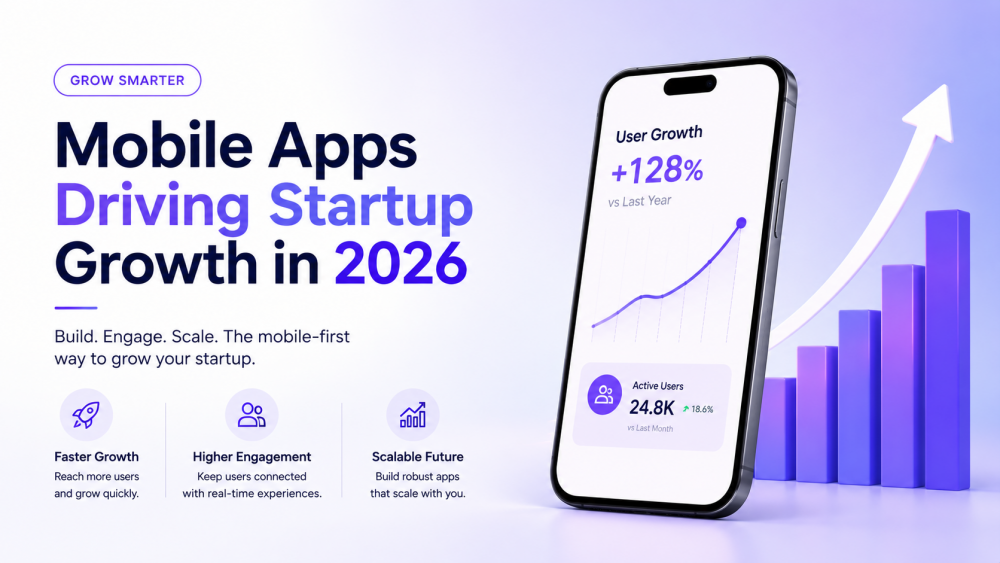
Most startup conversations in 2026 eventually circle back to one thing: mobile apps.
Not because it sounds good in a pitch deck, but because that’s where users actually are. On their phones. Constantly.
But here’s the part that doesn’t get talked about enough — launching an app isn’t the hard part anymore. Keeping it relevant after the first few weeks is.
A lot of products get initial traction. Downloads spike, numbers look promising… and then things flatten out. Users stop coming back. Engagement drops quietly.
That gap between install and habit is where most apps struggle.
It’s Not About Features Anymore
There was a time when adding more features felt like progress. Now it usually does the opposite.
Users don’t open an app to explore everything it can do. They open it to do one thing quickly — and leave.
If that action feels slow, confusing, or slightly off, they won’t say anything. They’ll just stop using it.
That’s why a lot of successful apps today feel almost… simple.
- Fewer steps
- Faster responses
- Less thinking required
It sounds basic, but getting this right is harder than it looks.
Speed Changes Everything (More Than People Admit)
One thing that becomes obvious once an app starts getting real usage — speed isn’t a “nice to have.”
It’s the experience.
Even small delays create hesitation. And hesitation breaks flow.
Some teams only realize this after launch, when users start dropping off and nothing obvious seems broken. Technically, everything works. But it doesn’t feel smooth.
That’s usually where improvements in real-time processing and low-latency systems start becoming a priority, not a feature.
Why Some Apps Feel Addictive (Without Trying To Be)
It’s rarely about big features. It’s about rhythm.
Apps that people keep returning to tend to have:
- Quick interaction loops
- Immediate feedback
- A reason to “check again” without forcing it
You don’t need long sessions. In fact, shorter ones often work better — as long as they’re consistent.
This is where many products quietly improve retention without changing much on the surface.
Scaling Isn’t Just a Technical Problem
Early on, everything feels manageable. A few users, predictable behavior, simple flows.
Then growth happens — and things get messy.
More users means:
- More data moving at once
- More edge cases
- More pressure on the system
At that stage, the backend starts mattering a lot more than the interface.
Some platforms end up structuring user interactions in layers, especially when growth depends on networks or referrals. In those cases, systems begin to resemble frameworks used in tools like MLM software, where relationships and activity flows need to be organized and automated at scale.
It’s not something users notice directly — but it often determines whether the app holds up or starts breaking under pressure.
Monetization Feels Different Now
Users haven’t stopped paying. But they’ve definitely become more selective.
What doesn’t work anymore:
- Interruptions
- Forced upgrades
- Features locked too early
What does work is more subtle.
Give users value first. Let them get comfortable. Then offer something that actually improves their experience.
If it feels natural, they’ll opt in.
If it feels forced, they’ll leave.
The Problems That Show Up Later
Interestingly, the toughest issues don’t appear at the beginning.
They show up once things are working.
- The app slows down under load
- Retention drops after initial curiosity fades
- Small bugs become big annoyances
- Managing user activity becomes harder than expected
None of these are obvious during development. Which is why many teams don’t plan for them early enough.
What’s Changing Going Forward
Apps are starting to feel less reactive.
Instead of waiting for users to figure things out, they guide them. Sometimes quietly.
You’ll see more:
- Systems that adjust based on behavior
- Interfaces that simplify over time
- Flows that remove unnecessary steps automatically
It’s not dramatic. But it makes a difference.
Final Thoughts
There’s no shortage of advice on building mobile apps. Most of it sounds right.
But in practice, growth usually comes down to a few things that are easy to overlook — speed, simplicity, and consistency.
The apps that succeed aren’t always the most advanced. They’re the ones that feel effortless to use, even as they scale.
And in a space where users have endless options, that’s what keeps them coming back.