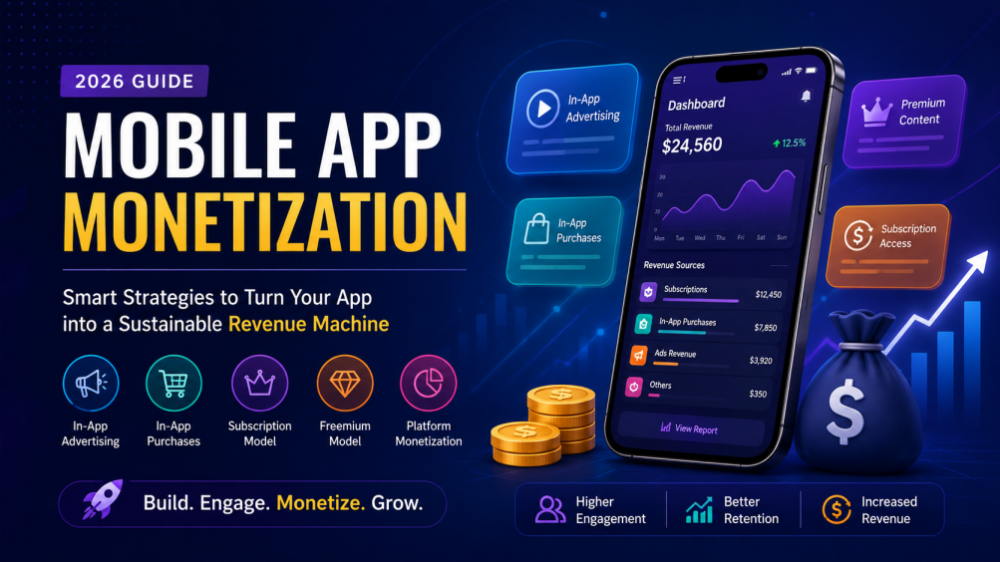
Launching a mobile app today is no longer the biggest challenge — thousands of apps go live every single day. The real challenge begins after launch: turning that app into a sustainable, revenue-generating product.
Many startups celebrate downloads, app installs, and user engagement in the early stages. But over time, one critical question starts to shape every decision: how does this app actually make money?
This is where a well-planned mobile app monetization strategy becomes essential. In 2026, successful apps are not just built for functionality — they are designed as scalable digital ecosystems where revenue is thoughtfully integrated into the user experience.
What is Mobile App Monetization?
Mobile app monetization is the process of generating revenue from an app’s user base through structured and user-friendly methods.
Instead of directly charging users upfront, modern apps create multiple touchpoints where value and payment intersect naturally. This could be through content access, feature upgrades, convenience, or enhanced experiences.
At its core, monetization is not about charging users — it’s about offering enough value that users are willing to pay.
A strong mobile app business model ensures that monetization feels seamless, not forced. When done right, users don’t feel like they are spending money — they feel like they are investing in a better experience.
Why Monetization Should Be Built Into the Product — Not Added Later
One of the most common mistakes startups make is focusing entirely on product development and leaving monetization decisions for later.
While this might seem practical in the short term, it often leads to poor user experience and ineffective revenue models.
Monetization influences:
- How features are structured
- How users interact with the app
- Which actions are considered valuable
- How the platform scales over time
For example, if an app plans to introduce premium features later, those features must be designed from the beginning. Retrofitting monetization into an existing product often creates friction and confusion.
The most successful apps treat monetization as part of the product strategy itself — not as an afterthought.
Core Mobile App Monetization Strategies That Work in 2026
Modern apps rarely depend on a single revenue stream. Instead, they build layered monetization models that evolve as the user base grows.
1. In-App Advertising: Monetizing Attention
Advertising continues to be one of the most widely adopted monetization strategies, especially for apps that aim to scale quickly.
However, the approach has evolved significantly. Users today are more sensitive to intrusive ads, which means placement and timing matter more than ever.
Effective ad monetization focuses on:
- Contextual placement within user flow
- Non-disruptive formats that blend with content
- Reward-based engagement (watch ads for benefits)
- Personalization based on user behavior
When implemented thoughtfully, advertising becomes a passive revenue stream that grows alongside user engagement.
2. In-App Purchases: Paying for Value
In-app purchases allow users to unlock additional features, tools, or content based on their needs.
This model works particularly well because it aligns with user intent. Instead of forcing users to pay upfront, the app allows them to explore and then decide if they want more.
This strategy is commonly used in:
- Productivity apps offering advanced tools
- Content platforms with premium sections
- Utility apps with extended capabilities
The success of this model depends heavily on how clearly the value is communicated. Users are more likely to pay when they see immediate and tangible benefits.
3. Subscription Model: Building Predictable Revenue
Subscriptions have become one of the most reliable monetization strategies for modern apps.
Instead of one-time transactions, users pay recurring fees for continuous access to services or content. This creates a stable revenue stream for businesses and encourages long-term user relationships.
Apps using this model often focus on:
- Continuous value delivery
- Regular updates and new features
- Exclusive content or services
- Personalized user experiences
The challenge here is retention. Users will only continue subscribing if they consistently find value in the platform.
4. Freemium Model: Scaling Before Monetizing
The freemium model is built on a simple idea: let users experience the product for free, then offer premium upgrades.
This approach reduces entry barriers and helps apps grow quickly.
A typical freemium structure includes:
- Basic features available for free
- Advanced features behind a paywall
- Limited usage that encourages upgrades
This model works best when the free version is useful but leaves enough room for users to want more.
5. Platform Monetization: The Shift Toward Ecosystems
One of the biggest trends in 2026 is the shift from standalone apps to platform-based ecosystems.
Instead of offering a single function, apps are now integrating multiple capabilities that allow users to perform complex actions within one environment.
These platforms often include:
- Built-in transaction systems
- Integrated digital asset management features
- Real-time interaction capabilities
- Automation-driven workflows
This evolution allows apps to generate revenue from multiple sources rather than relying on a single monetization method.
It also opens the door to more scalable and future-ready business models.
How to Choose the Right Monetization Strategy
Choosing the right strategy is less about trends and more about understanding your users.
Startups should consider:
- What problem the app is solving
- How frequently users engage with it
- What users are willing to pay for
- How competitors are monetizing
For instance:
- High-engagement apps can leverage ads effectively
- Value-driven apps benefit from subscriptions
- Feature-rich platforms can combine multiple models
The goal is to create a monetization system that feels natural within the app’s ecosystem.
Common Monetization Mistakes That Can Hurt Growth
Even with the right strategy, poor execution can impact user retention and revenue.
Some common mistakes include:
- Overloading the app with ads, leading to frustration
- Introducing payments too early, before building trust
- Making pricing structures complex or unclear
- Ignoring user feedback on monetization features
- Focusing more on revenue than user experience
Successful apps strike a balance — they prioritize user satisfaction while gradually introducing monetization.
Why App Monetization is Rapidly Evolving
The app landscape is becoming more competitive, and user expectations are higher than ever.
Users now look for:
- Seamless and fast experiences
- Personalized interactions
- Flexible pricing options
- Real value before commitment
At the same time, apps are becoming more technologically advanced. Many platforms are integrating intelligent systems, real-time processing, and scalable architectures to enhance functionality.
This shift is transforming apps from simple tools into dynamic platforms capable of supporting complex user interactions and multiple revenue streams.
Final Thoughts
Mobile app monetization is not just about generating revenue — it’s about building a product that can sustain and scale over time.
The most effective mobile app monetization strategies are those that align closely with user expectations and deliver consistent value. Whether it’s through ads, subscriptions, or in-app purchases, the focus should always remain on enhancing the user experience while creating meaningful revenue opportunities.
As apps continue to evolve into more advanced platforms with integrated digital wallet systems, automation-driven features, and seamless digital interactions, businesses that adopt a thoughtful and flexible monetization approach will be better positioned for long-term success in the digital economy.