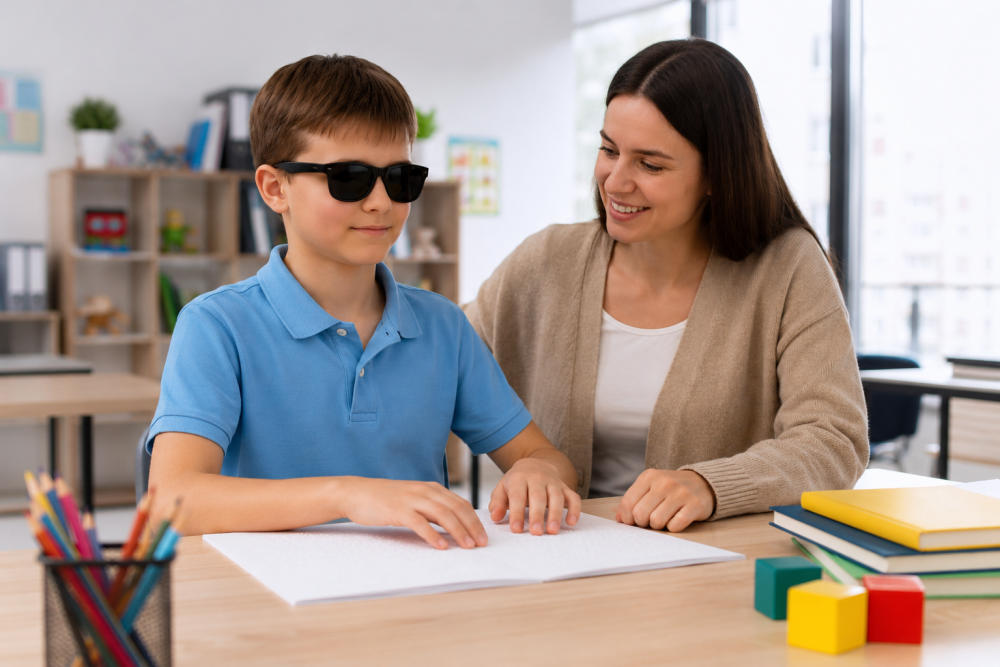
Confidence, mobility, and life skills are fundamental to a child’s independence and long-term wellbeing. For children who are blind or partially sighted, these areas require thoughtful, structured support that goes beyond traditional education. Charities working in this field play a vital role in bridging gaps in access, learning, and participation—helping children build the skills they need to navigate both everyday environments and future opportunities with assurance.
Building Confidence Through Early, Structured Support
Confidence in blind and partially sighted children is often shaped by how early and consistently they are supported. Charities focused on visual impairment typically begin by creating safe, accessible learning experiences that allow children to explore the world without fear or limitation.
This includes tailored educational resources, sensory-based learning tools, and guided activities that encourage participation. When children are given the opportunity to succeed in small, structured steps, they begin to develop self-belief. Over time, this grows into resilience—an essential trait that supports independence in school, social settings, and later life.
Equally important is emotional support. Many organisations provide programmes that help children understand their condition positively, reducing feelings of isolation and building a sense of identity and pride.
Developing Mobility Skills for Independence
Mobility is one of the most critical life skills for blind children. Charities working in this space often focus on orientation and mobility training, helping children understand how to safely navigate both familiar and unfamiliar environments.
Training may include teaching spatial awareness, route planning, and the use of mobility aids. Children are encouraged to build confidence in moving independently, whether within school environments, public spaces, or recreational settings.
A key element is real-world practice. Structured environments such as simulated street layouts or guided community walks help children gradually transition from supervised movement to independent travel. This progressive approach ensures safety while steadily increasing autonomy.
Mobility training also fosters problem-solving skills. Children learn how to respond to unexpected changes in their environment, such as obstacles or route disruptions, which strengthens adaptability and decision-making.
Strengthening Essential Life Skills
Beyond confidence and mobility, charities for blind children place strong emphasis on practical life skills. These skills include communication, organisation, self-care, and digital literacy—each of which contributes to long-term independence.
For example, children may be supported in learning daily routines such as preparing simple meals, managing personal belongings, or using accessible technology. These tasks are broken down into manageable steps, ensuring that learning is achievable and consistent.
Assistive technology also plays an increasingly important role. Screen readers, audio learning tools, and tactile resources enable children to engage with education and everyday tasks more effectively. Charities often ensure families and educators are equipped to support the use of these tools at home and in school.
Social development is another key area. Group activities, peer interaction, and communication exercises help children build relationships and develop confidence in social environments.
The Role of Family and Educational Support
The development of confidence, mobility, and life skills is most effective when families and schools are actively involved. Charities often provide training and guidance for parents and educators, ensuring consistent support across all environments.
This joined-up approach reinforces learning and helps children apply skills in multiple contexts. It also empowers families with practical strategies, reducing uncertainty and increasing confidence in daily routines.
Conclusion
Charities for blind children play an essential role in developing independence through confidence-building, mobility training, and life skills education. By combining structured learning, emotional support, and practical tools, they help children move toward a future defined not by limitation, but by capability and opportunity