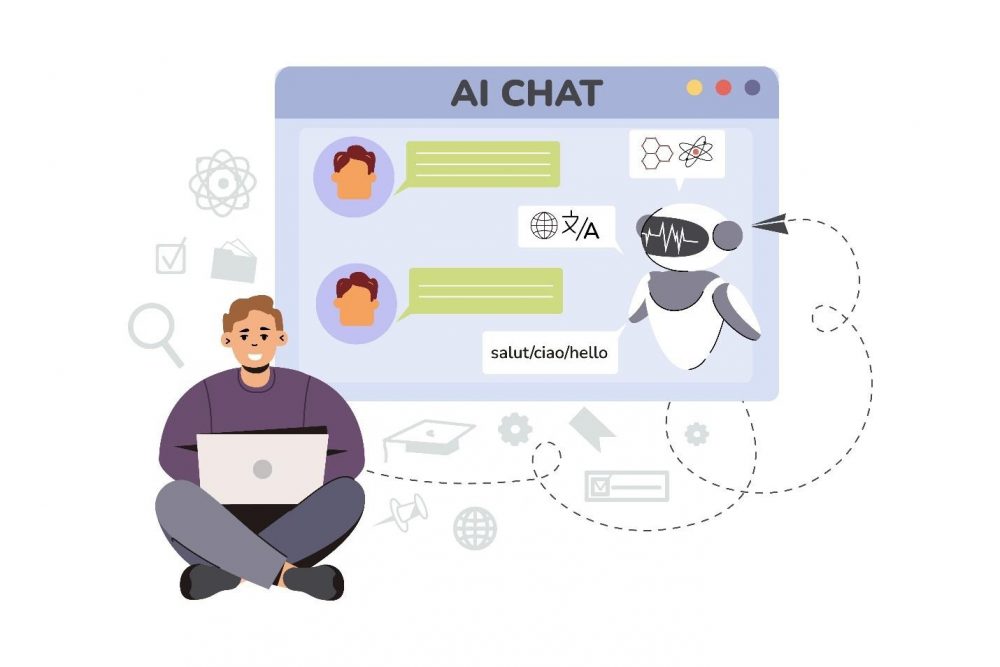
In the rapidly evolving landscape of digital transformation and interaction, the barrier between human as well as machine communication is blurring. As artificial intelligence becomes a primary factor in customer service, personal productivity, along with entertainment, as the focus has shifted from mere functional utility to emotional resonance as well as conversational fluidity. Designing human-like AI is not just about making a machine sound smart; it is about creating a psychological bridge that fosters trust, reduces friction, and enhances the user experience.
1. Mastering Contextual Awareness and Continuity
The hallmark of human conversation is the ability to remember what was said five minutes ago. Also, AI needs to move beyond single-turn interactions to understand the broader arc of a dialogue between the customer.
- Memory Management: Implementing short-term memory helps in allowing AI to position previous questions or preferences, which in turn helps prevent the user from repeating themselves.
- Situational Context: AI should recognize the user’s current digital state, as if they are frustrated after a failed checkout or browsing casually as well as adjust its tone accordingly.
2. Crafting Persona and Consistent Voice
Also, a faceless algorithm feels like clinical and to humanize the experience, the designers must develop a discrete identity that aligns with the brand’s identity.
- Linguistic Consistency: If AI starts a conversation with “Hey there!”, it should not switch to prohibitively high latency detected in the next sentence as well as always try to maintaining a consistent vocabulary is key.
- Tone Flexibility: While the person remains stable, the tone must be dynamic, and the human-like AI should be empathetic during support crises as well as celebratory when a user hits a milestone.
3. Implementing Natural Language Nuance
The humans which do not speak in perfectly structured code use fillers, varied sentence lengths, as well as subtle cues to signal understanding.
- Acknowledge and Validate: The simple phrases such as I see, Got it, and others act as conversational factors which in turn helps in making the user feel heard.
- Graceful Error Handling: When an AI fails to understand, and says I am sorry, I missed that could you try explaining it differently? is significantly more human than Error 404: Input Not Recognized.
4. Anticipating User Intent through Proactive Engagement
Human-to-human interaction often involves reading between the lines. Additionally, the advanced conversational AI design utilizes predictive modeling to offer solutions before the user explicitly asks.
- Guided Discovery: As an alternative of waiting for a prompt, the AI has the ability to suggest next logical step based on user patterns, such as since you are looking at flights, would you like to see hotel options near the airport?
- Minimizing Cognitive Load: The quick-reply buttons are designed for clarifying questions, as AI helps in reducing the effort required by the user to sustain the conversation.
The Evolution of Conversational UX
The evolution from command-based interfaces to conversational represents a fundamental shift in how we view technology. Earlier, humans had to learn the language of computers to get results but today, the obligation is on computers to learn the language of humans. Further, this reversal requires a deep dive into semantics, feeling, as well as data science.
One of the greatest challenges in this field is the valley of conversation. If an AI sounds too human without having the actual cognitive depth to back it up, users often feel deceived or creeped out. Hence, the transparency is a vital component of design as a human-like AI should never pretend to be a real person; significantly, it should use human-like traits to make the machine-human interface more comfortable as well as efficient.
Furthermore, the integration of multimodal feedback such as haptics or visual cues that synchronize with the conversational flow adds another layer of realism. Moreover, for digital platforms, this means the chat bubble, the voice assistant, as well as the visual avatar must work in a unified symphony. Also, as we look toward the future, the goal of conversational design is to move away from transactions toward relationships, where the AI acts as a digital companion that understands not just what we say, but what we mean.
Summary
The design of human-like AI conversations is a multi-dimensional regulation that merges technical powers with psychological insight to bridge the gap between silicon as well as soul. At the objective is to transform digital interfaces from rigid, transactional tools into fluid, interactive entities that mirror the warmth as well as efficiency of human dialogue. To achieve this, designers prioritize four critical pillars which include contextual awareness, persona development, language note, as well as proactive intent. Additionally, contextual awareness helps to ensure that the AI possesses a memory, which helps in continuous narrative rather than fragmented exchanges. Further, the character development grants the machine a consistent voice, which in turn helps in ensuring that the brand’s identity is communicated through a stable and relatable character. Natural language tone introduces the details of human speech such as validation as well as empathy, which are essential for building user trust and reducing the clinical feel of traditional automation. Finally, the proactive engagement leverages predictive data to anticipate user needs, effectively which in turn helps in reducing cognitive load and making interactions feel intuitive rather than forced.
Further, the consequence of evolution lies in the decision making of technology by making machines speak like human, we remove the barriers of technical literacy, allowing users to interact with complex systems through the most natural interface conversation. The designers must navigate the valley, which helps in ensuring that while the AI is relatable, it remains transparent about its synthetic nature to maintain ethical standards. Also, the digital platforms continue to integrate these advanced conversational agents, and the focus shifts from merely solving problems to enhancing the quality of the interaction itself.