Packing carefully is only half the job. Even a perfectly packed box can end up damaged if it’s loaded wrong or left to slide around in the back of a truck. The team at Paramount Moving relies on a mix of loading strategy, protective materials, and plain old experience to make sure your things arrive looking the way they did when they left your old house.
Getting Things Ready
It starts with the boxes themselves. Cheap, flimsy boxes are a liability — you want ones sturdy enough to hold real weight without buckling. And it’s not just about strength; overpacking a box is just as risky, since a bottom that gives out mid-lift can undo all that careful wrapping in seconds. On the flip side, a half-empty box isn’t safe either. Without something to fill the gaps — packing paper works fine — the contents just rattle around and bang into each other.
Once everything’s boxed, it gets sorted by weight and fragility before it ever touches the truck. Heavier boxes go down first, forming a solid base on the floor. Lighter ones stack on top so nothing gets crushed underneath. Anything fragile — glassware, electronics, that vase your grandmother gave you — gets labeled clearly and tucked somewhere it won’t take pressure from heavier items nearby.
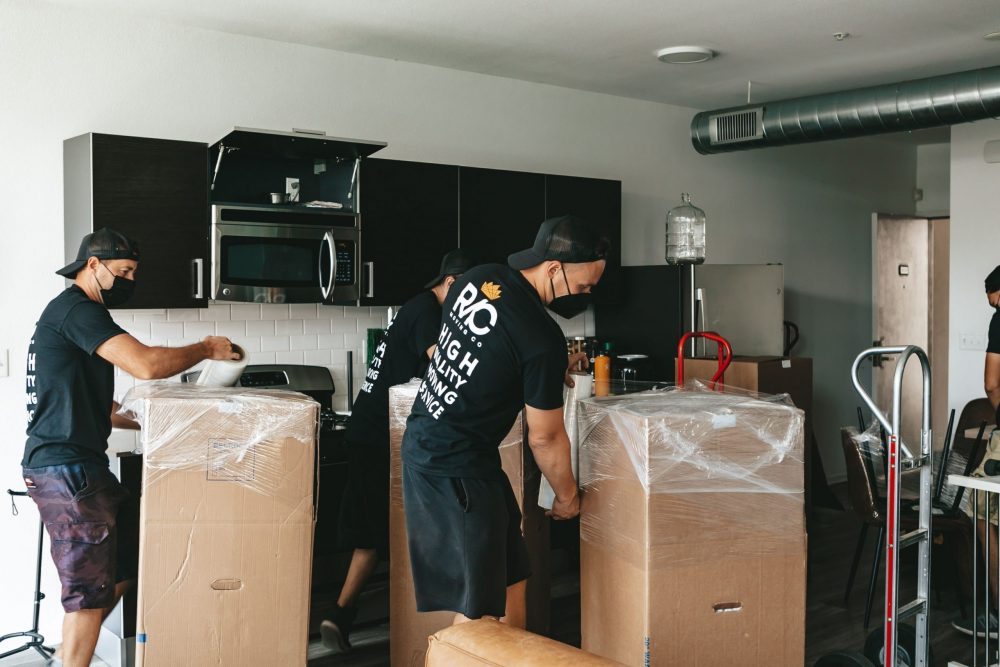
Furniture needs its own approach entirely. Sofas, dressers, mattresses, wardrobes — these usually get wrapped in moving blankets or stretch wrap before they’re loaded. It’s not just about avoiding scratches and scuffs; wrapping also keeps drawers and doors from swinging open mid-transport, which happens more often than people expect.
Loading the Truck
The way a truck gets loaded matters almost as much as the packing itself. Big furniture pieces go in first, building a kind of frame that the rest of the load can fit around. Boxes fill in the gaps after that — and movers try hard not to leave empty pockets of space, since anything with room to move is something that can shift, tip, or get damaged once the truck starts moving.
Securing the load is its own step. Straps, tie-down rails, load bars — most trucks come equipped with some combination of these, and they’re what keep furniture and stacked boxes from sliding when the driver brakes hard or takes a corner a little too fast.
Odd-shaped items get special treatment too. Bikes, mirrors, lamps, exercise equipment — these don’t stack neatly, so they need to be positioned carefully so nothing delicate takes pressure it shouldn’t. Wherever two large pieces might touch or rub against each other, padding usually goes in between.
Careful Handling, Start to Finish
A few other things matter throughout the process, not just at the loading stage:
- The right equipment. Dollies, lifting straps, appliance carts, furniture sliders — these aren’t just for speed. They keep heavy items from being dropped, and they protect your walls, floors, and staircases along the way.
- The way the truck is driven. Smooth acceleration, easing into stops, taking corners slowly — none of it feels dramatic, but it’s what keeps everything sitting still in the back instead of sliding around, especially on a longer drive.
None of these steps are complicated on their own. What makes the difference is doing all of them consistently, every time — which is really the whole job of a professional mover.