Building an app business rewards a specific set of habits. Long hours at a screen, decisions made late, meals that fit around a release, travel booked around investor calls. Those habits are usually treated as the price of admission, and for the first two years they mostly work.
The bill arrives later, and quietly.
Physical capacity declines from roughly the fourth decade onward unless something loads it. Muscle mass falls first, then the ability to recover from a bad week, then the energy that made the eighteen-hour days possible in the first place. None of it shows up in a quarterly review.
The population data in Singapore makes the shape clear. Residents live to roughly 83.9 years and stay in good health to roughly 74. In 2024, 84.7% of residents met physical activity guidelines, but only 24.7% of that activity was leisure-time exercise. The rest is commuting and moving through the day.
So a founder here can be technically active, hit the guideline through the walk to the office, and still lose capacity every year. Walking is movement. It is not a load, and muscle only responds to load.
Measure four things, then measure them again
Founders are comfortable with instrumentation. Apply the same discipline here. Four measures carry most of the signal.
Body composition rather than scale weight, because muscle and fat often move in opposite directions at the same time and the scale hides both.
Cardiorespiratory fitness, using the same protocol each time so the trend is real.
Stability, which almost no training programme includes, and which decides how well you move decades from now.
Strength, tested rather than assumed from what you lifted at university.
Grip strength is worth adding as a fifth reading, because it is the cheapest test on the list and it tracks closely with how well people function decades later. It takes under a minute and needs one piece of equipment.
Take a baseline, write it down, and repeat the same tests sixteen weeks later. The retest date is the whole method. Without one, a training plan is a subscription that renews while nobody checks whether it worked.
Building it around travel
The version that survives a founder’s calendar is two or three sessions a week built around compound loading, plus a plan for the weeks you are not in the country. Remote work is the norm in this industry, and online personal training Singapore exists precisely so that a month of travel becomes maintenance rather than a restart.
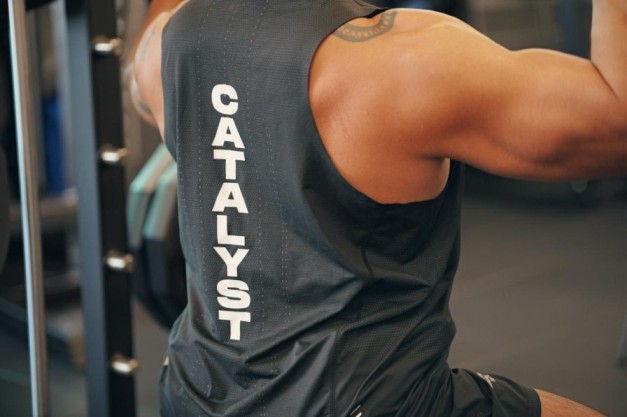
For anyone based here who wants it run properly, the best personal trainer in Singapore for this job is the one who measures those four pillars before writing a programme and retests on a fixed date. Catalyst Performance, a longevity focused personal training studio at Manulife Tower, 8 Cross Street, in the Singapore city centre, works that way, with training systems overseen by Dr Luqman Haris, MBBS. That is the standard to apply whoever you train with.
The founder question
You track burn, runway and retention to the decimal. Do you know whether your own physical capacity is higher or lower than it was twelve months ago?
If not, start with a baseline this week. It costs an hour, and it is the only version of this that produces an answer rather than a feeling.
The company you are building has a longer horizon than the next release. Your capacity to keep running it should be measured on the same horizon.